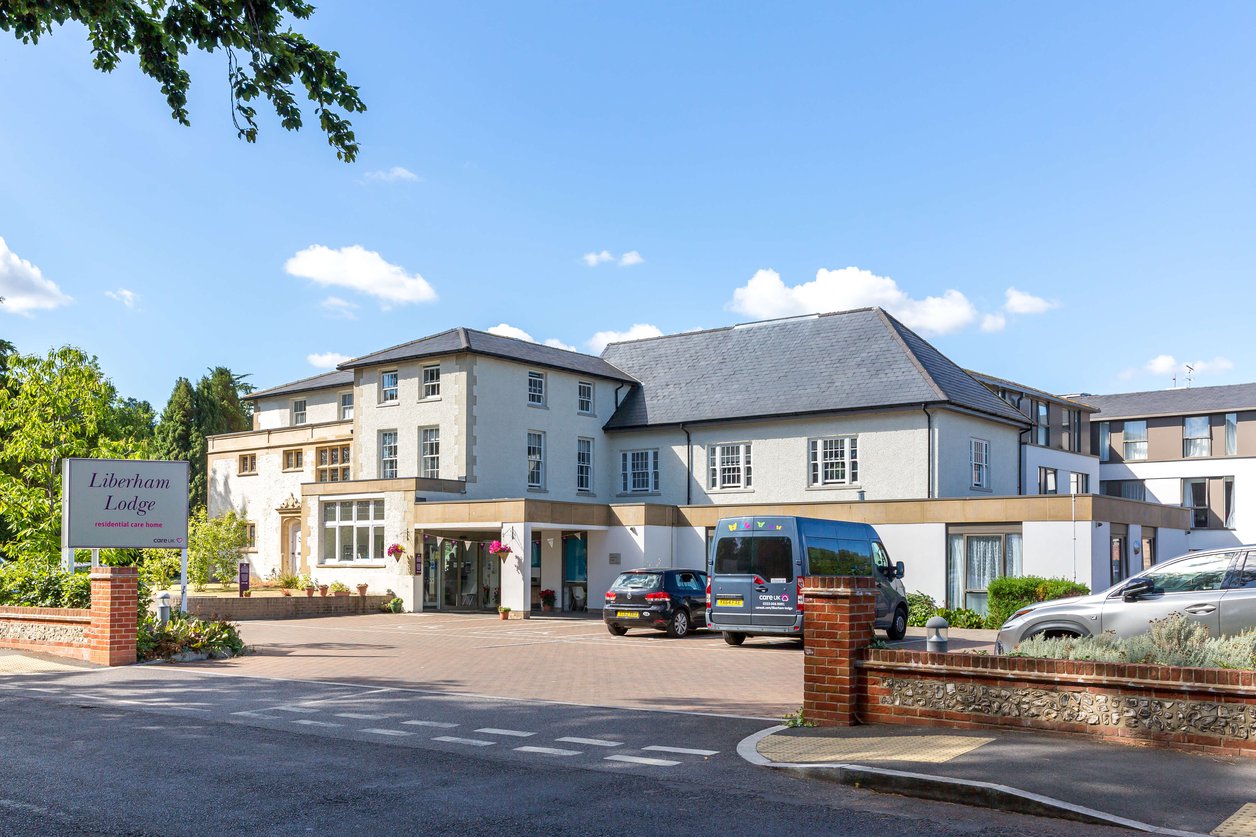
Care Home Refurbishment

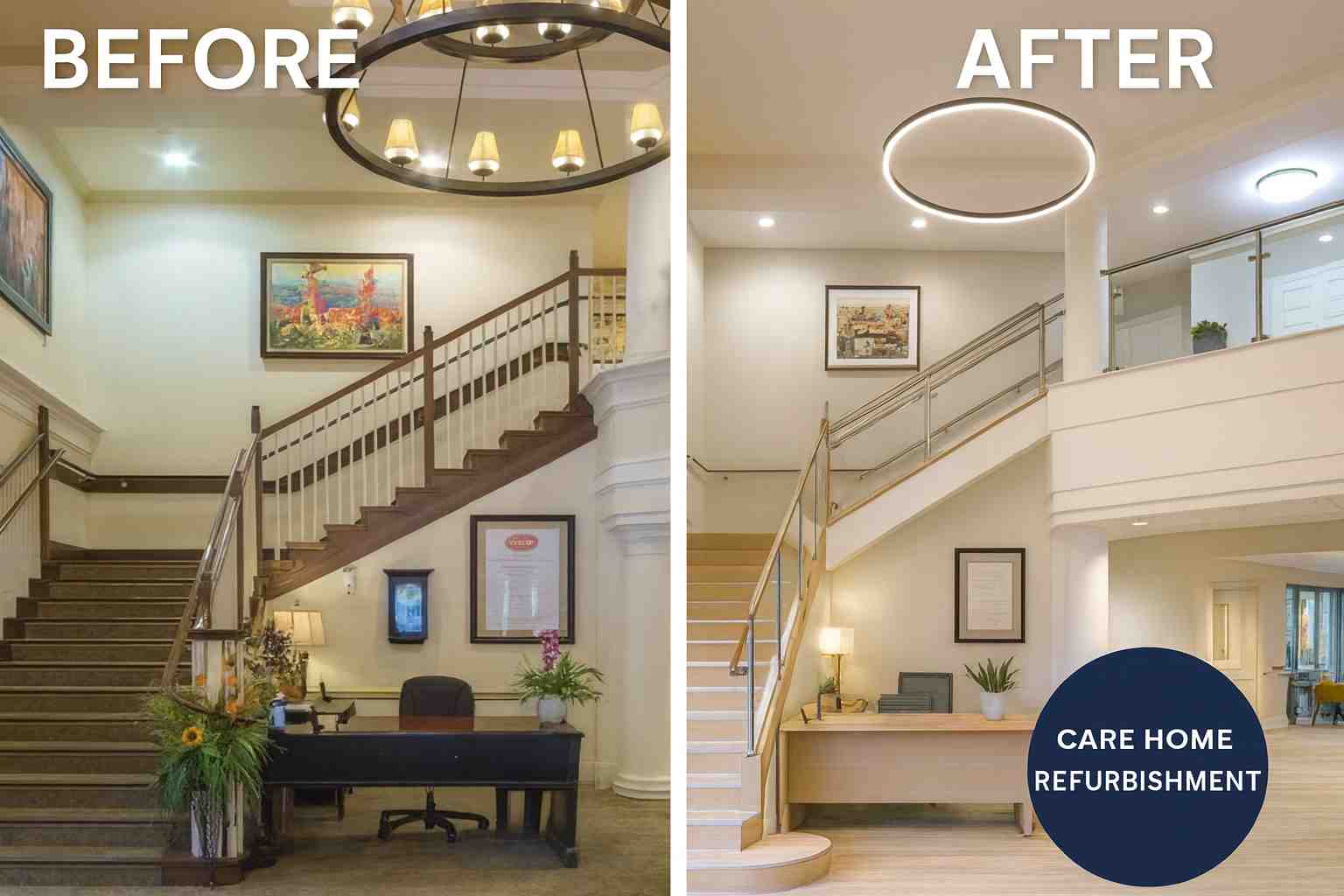
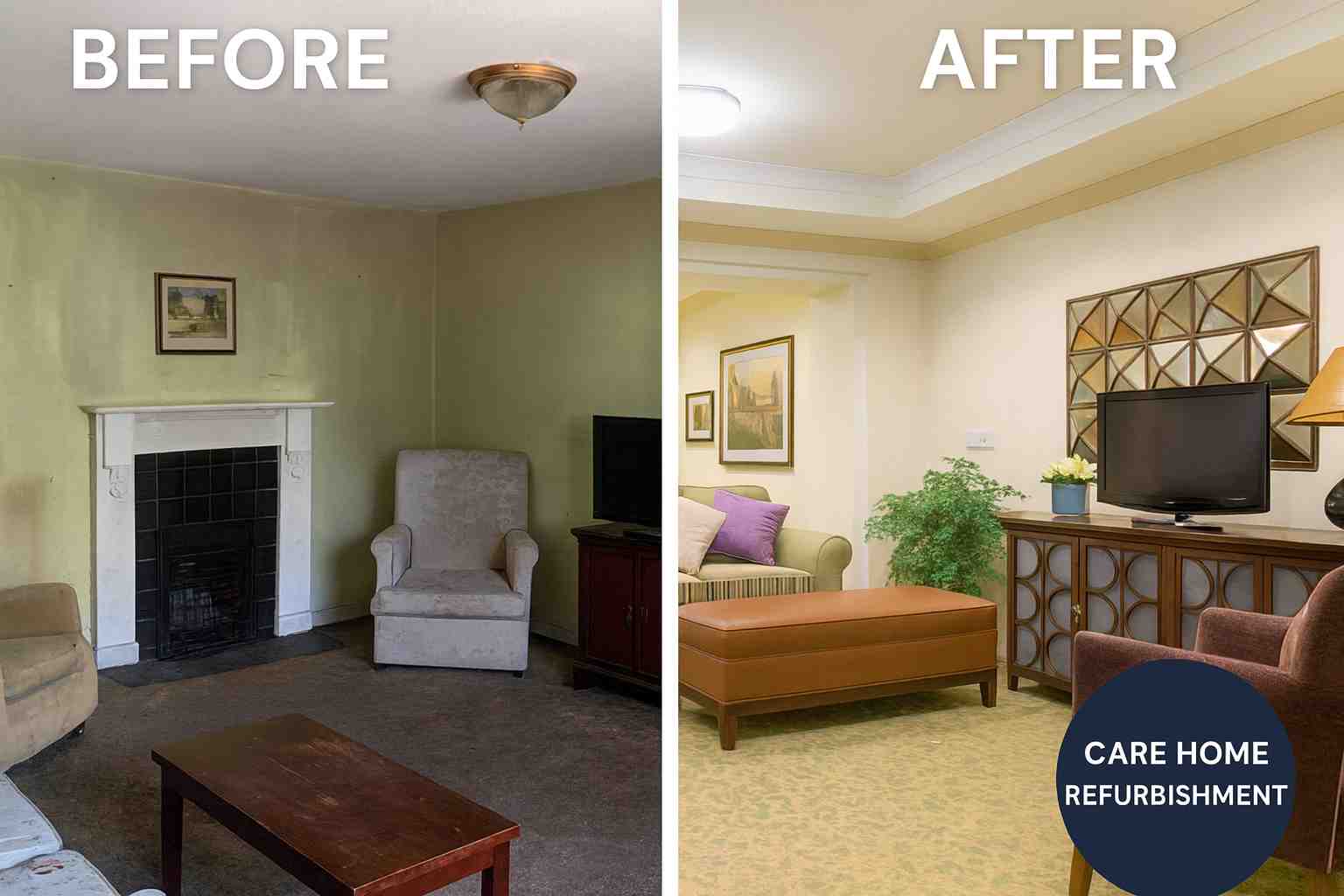
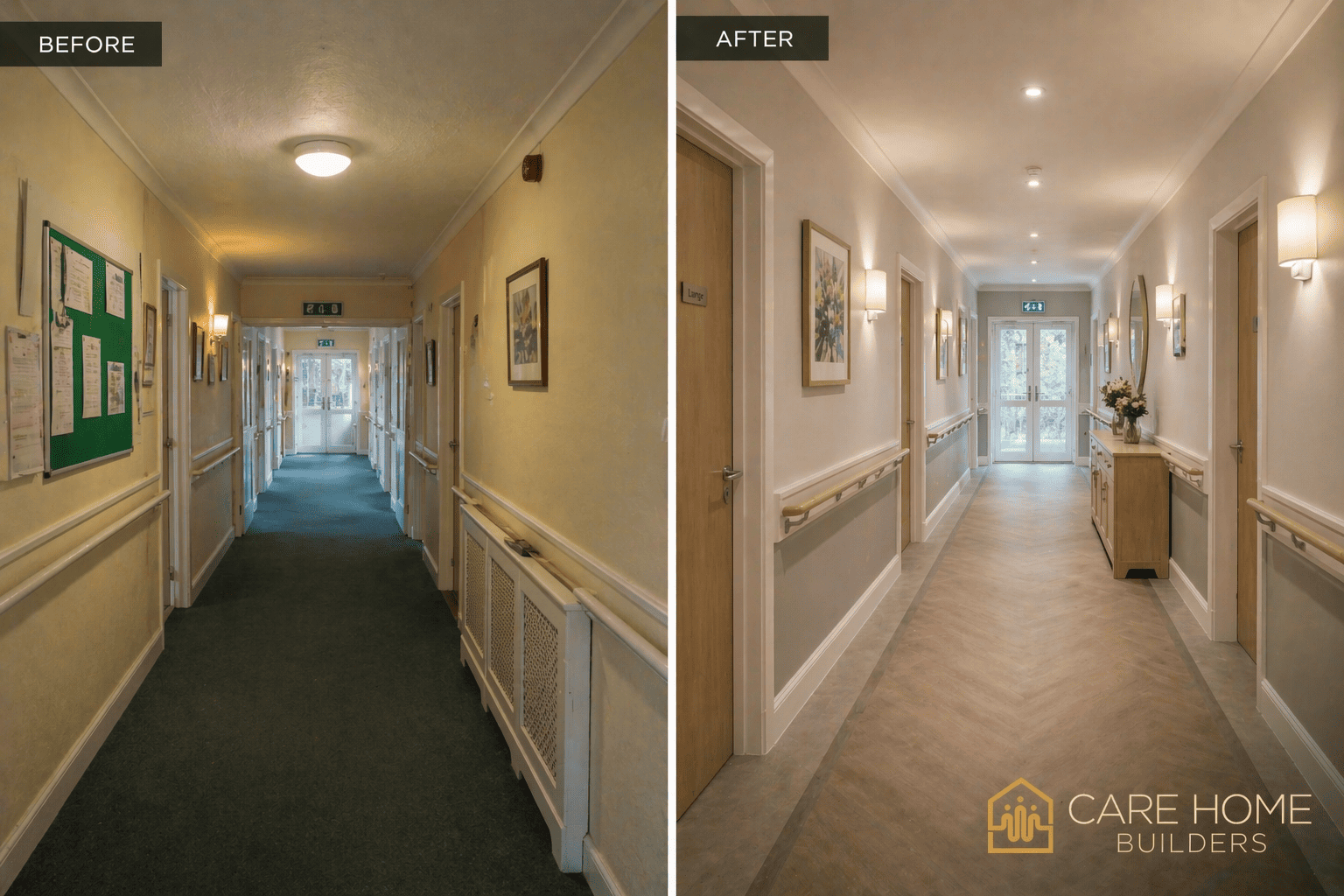
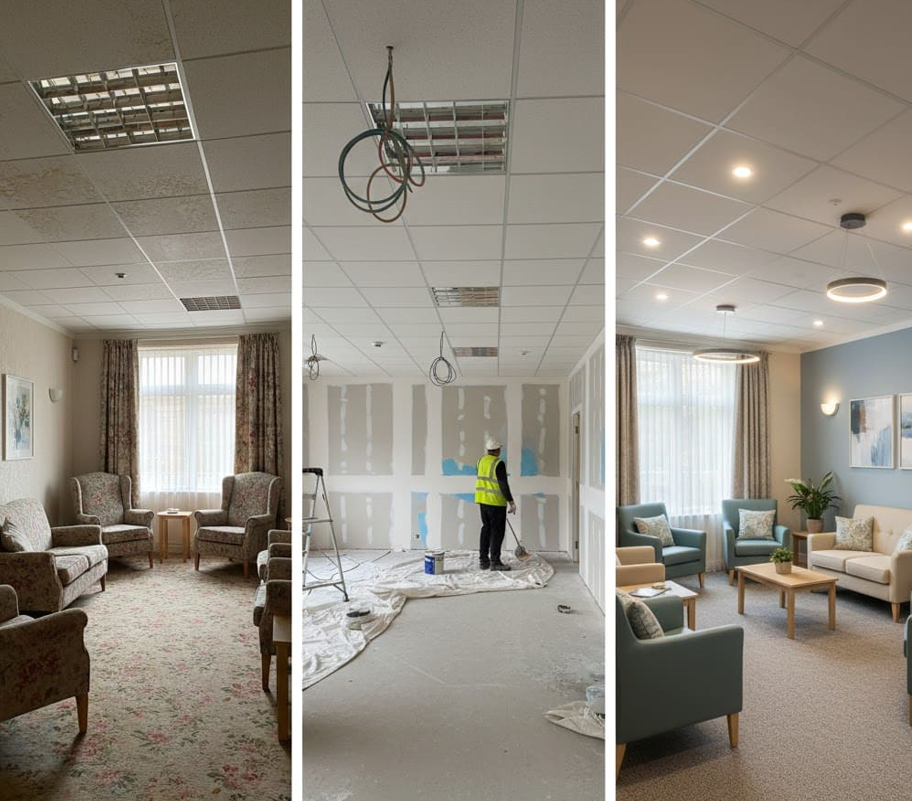
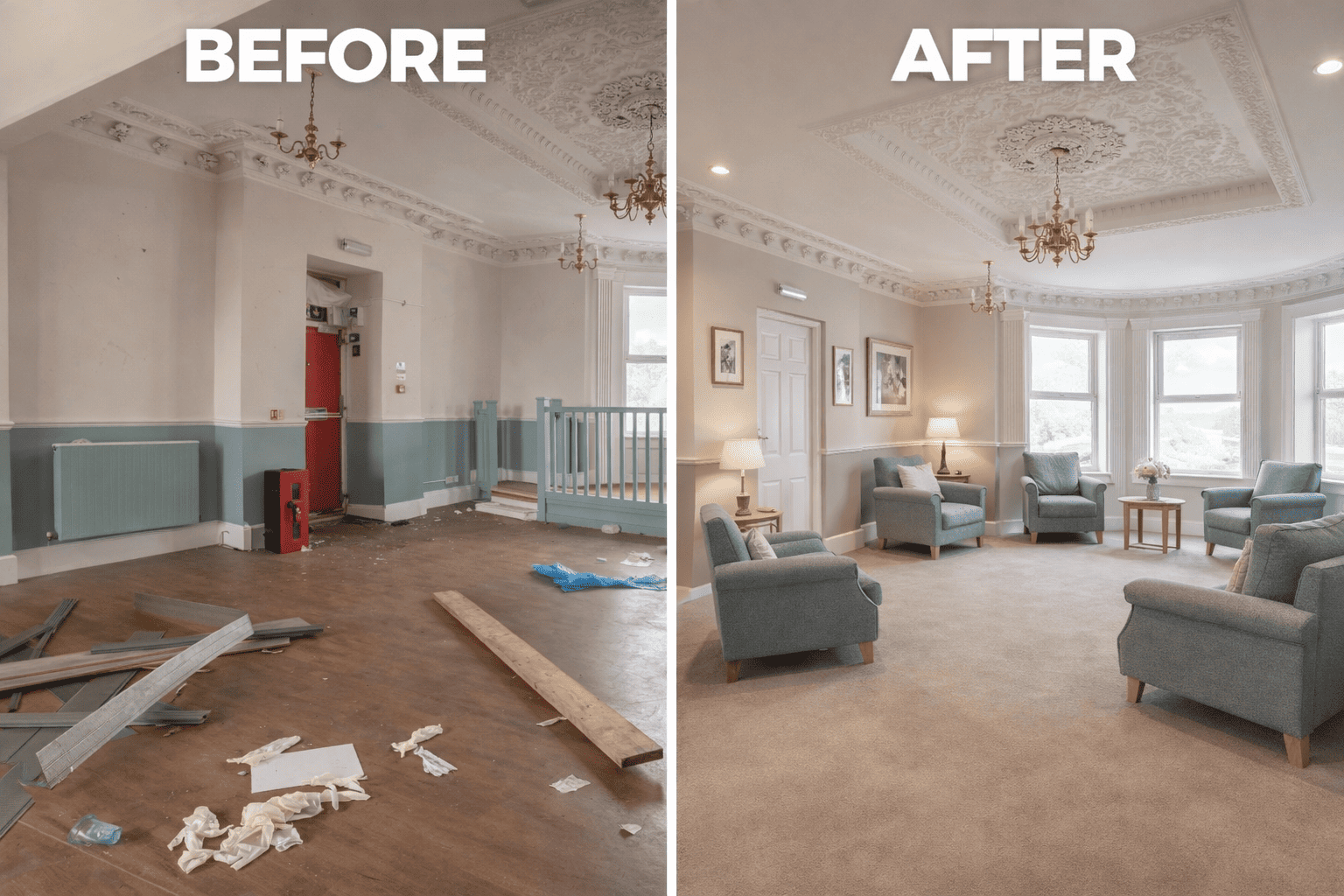
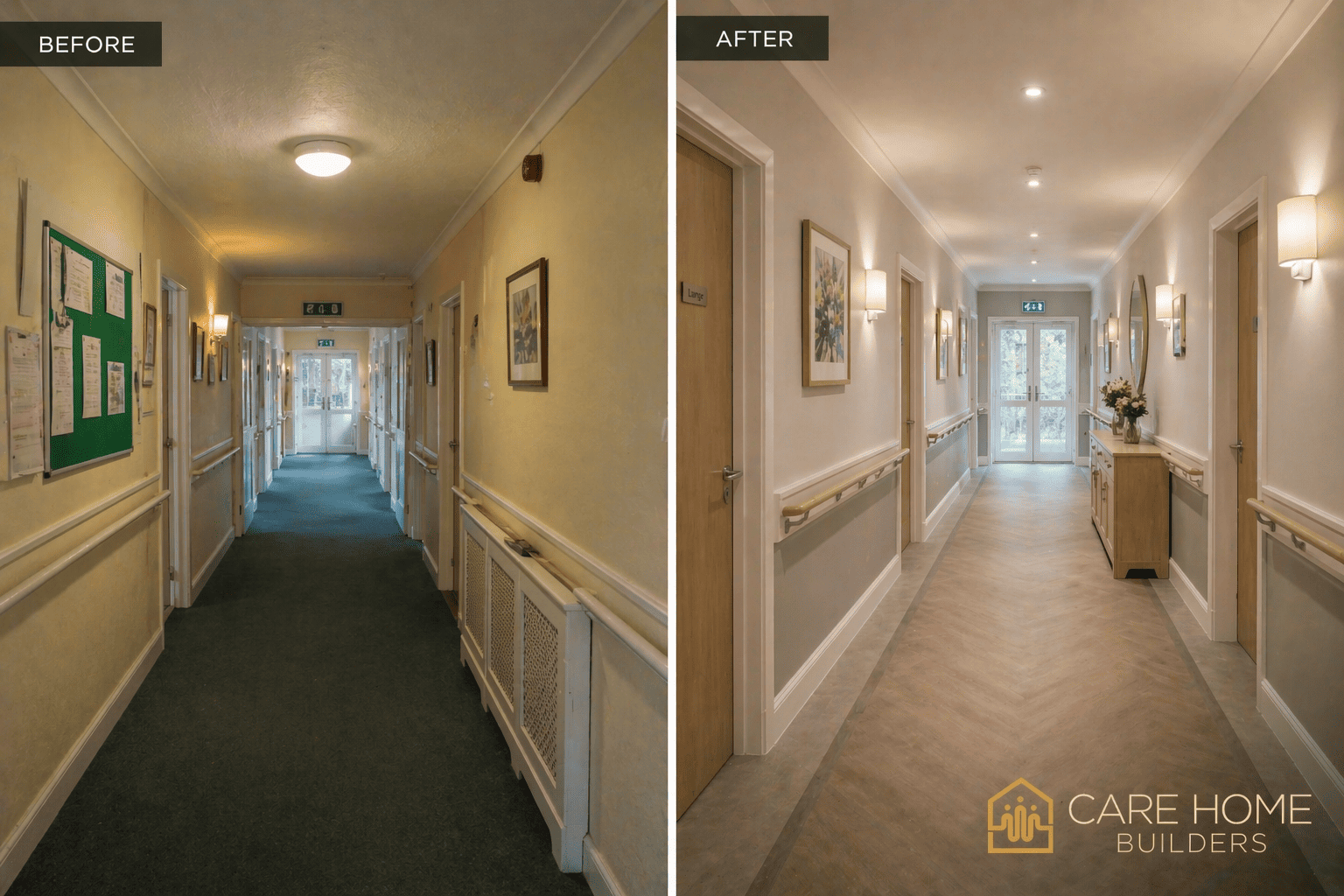
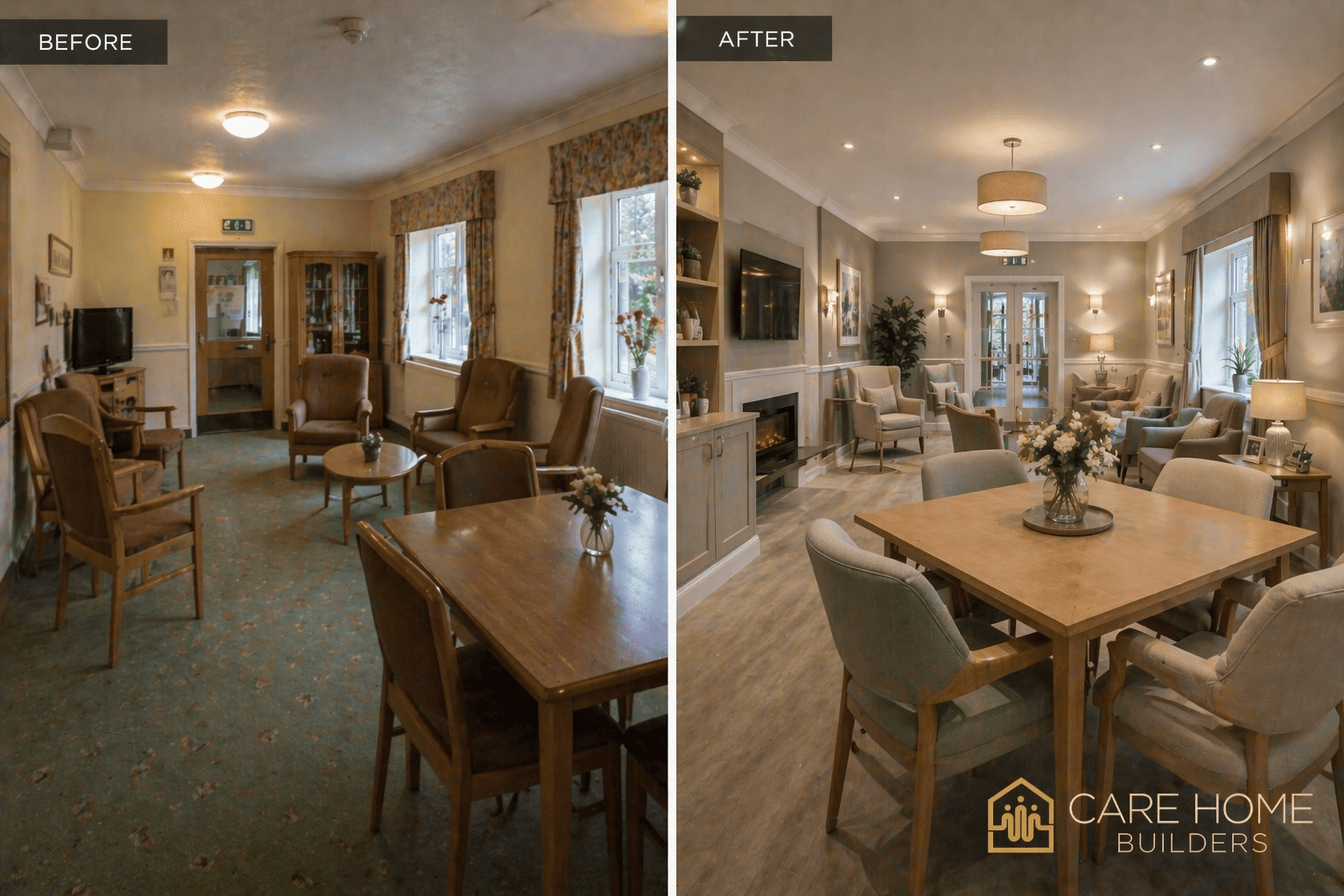
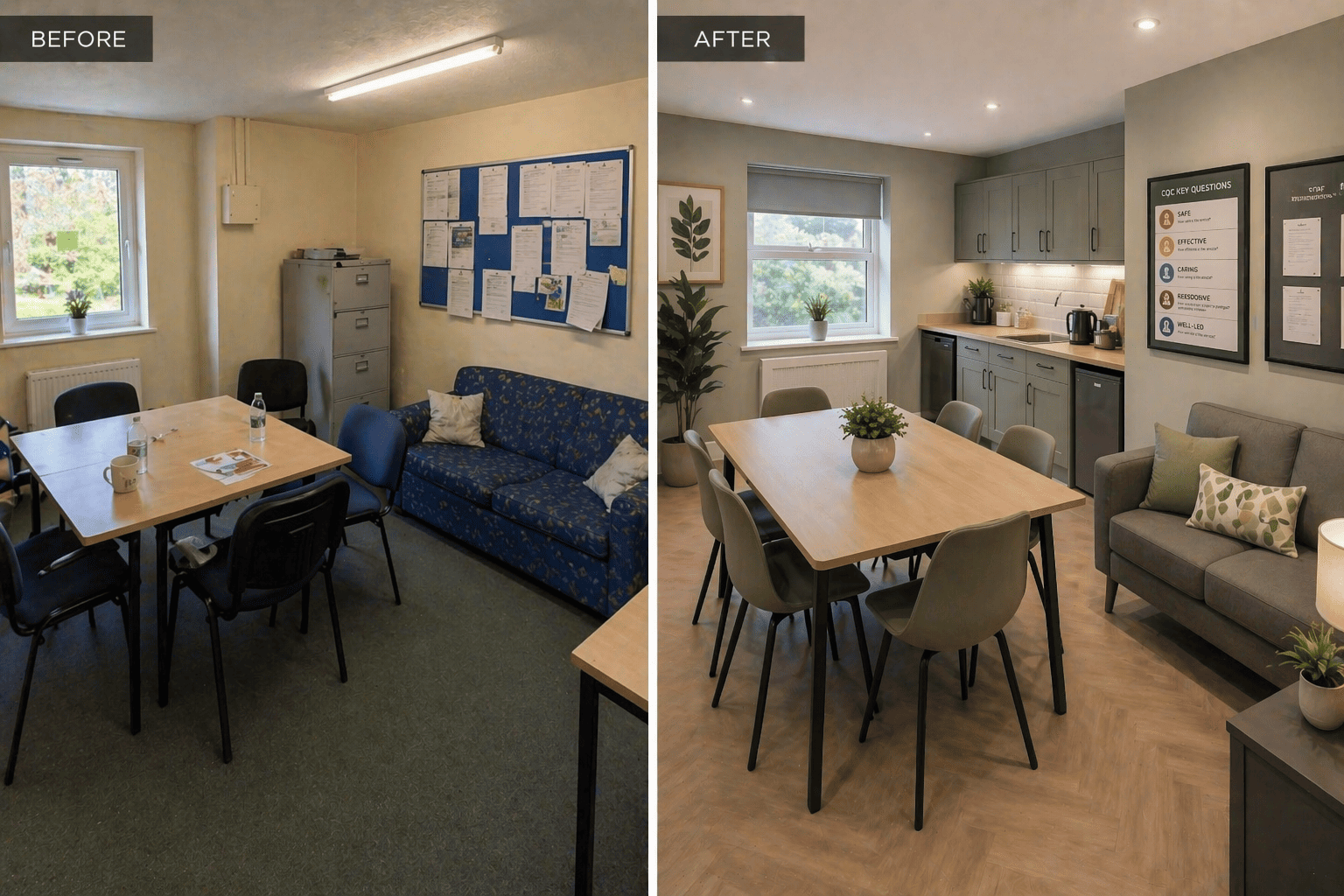
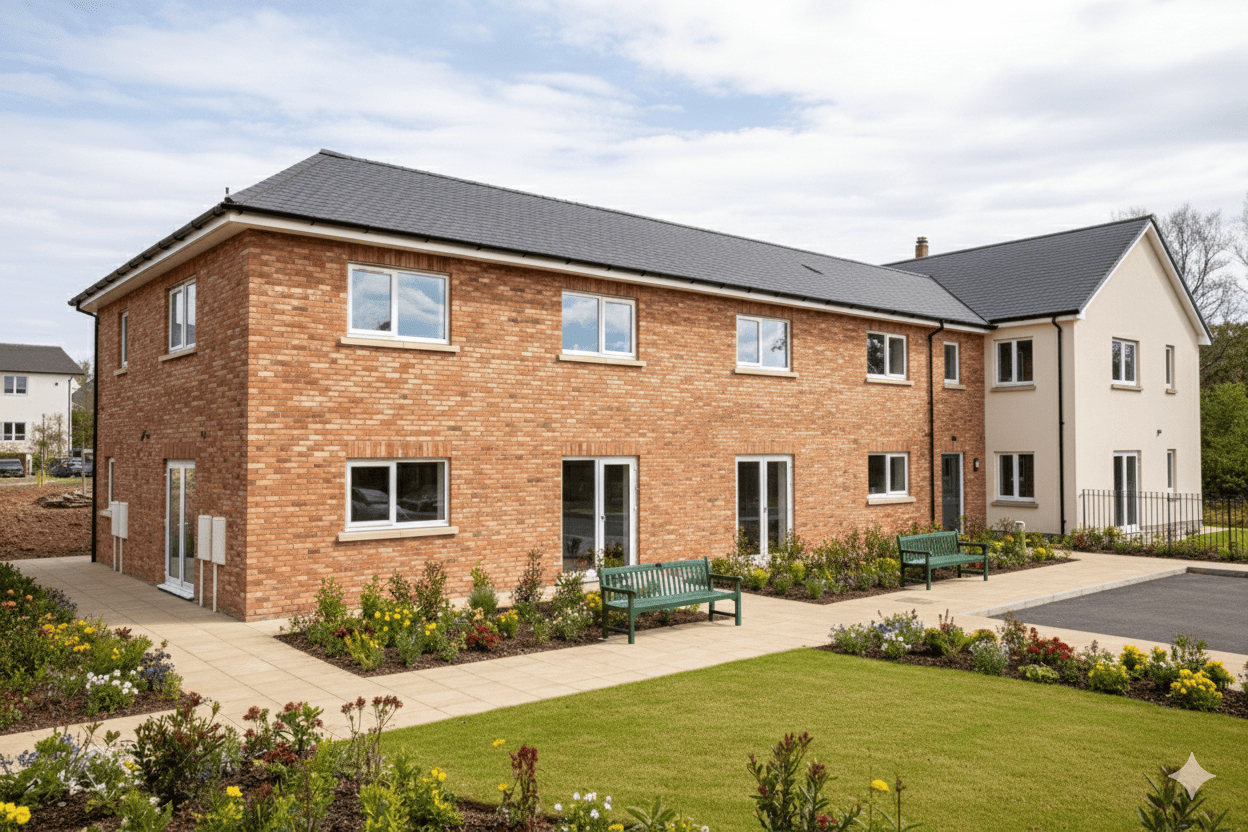
We offer a comprehensive range of care home refurbishment services in London and the South East to support and enhance your care home property. We can renovate your care home whilst minimising disruption to your residents. Care Home Builds aims to improve the standards of living and quality of life for our customers across London and beyond. We can help you with remodelling living areas, bedrooms, and bathrooms, installing new wet rooms, and many other projects.

Care Home Refurbishment Specialists

Planning a care home refurbishment? We deliver high-quality upgrades across the UK, designed to improve resident wellbeing and operational efficiency.

Running a care home means balancing exceptional resident care with the ongoing demands of building management. When your facility starts to feel tired, whether it's ageing bathrooms, worn flooring, cramped corridors, or layouts that no longer work, the pressure to act is real. But so is the fear of disrupting the people who live there. If the building is beyond what refurbishment can fix, it may be worth considering an extension or a full new build instead, we can help you assess which route makes more sense."

At Care Home Builders, we've spent over two decades refurbishing active care homes across London and the South East. We understand this world because we work exclusively within it. We know the CQC requirements, we respect your residents' routines, and we've solved every practical challenge that comes with renovating a building that's home to people who depend on you.

From a single wet room installation to a full phased refurbishment, we work around your home, not against it.

What we typically help with:

Most care home operators come to us for bathroom and wet room installations, living space improvements, or compliance-related upgrades. We also handle kitchen renovations, accessibility modifications, and external works like safe garden areas.

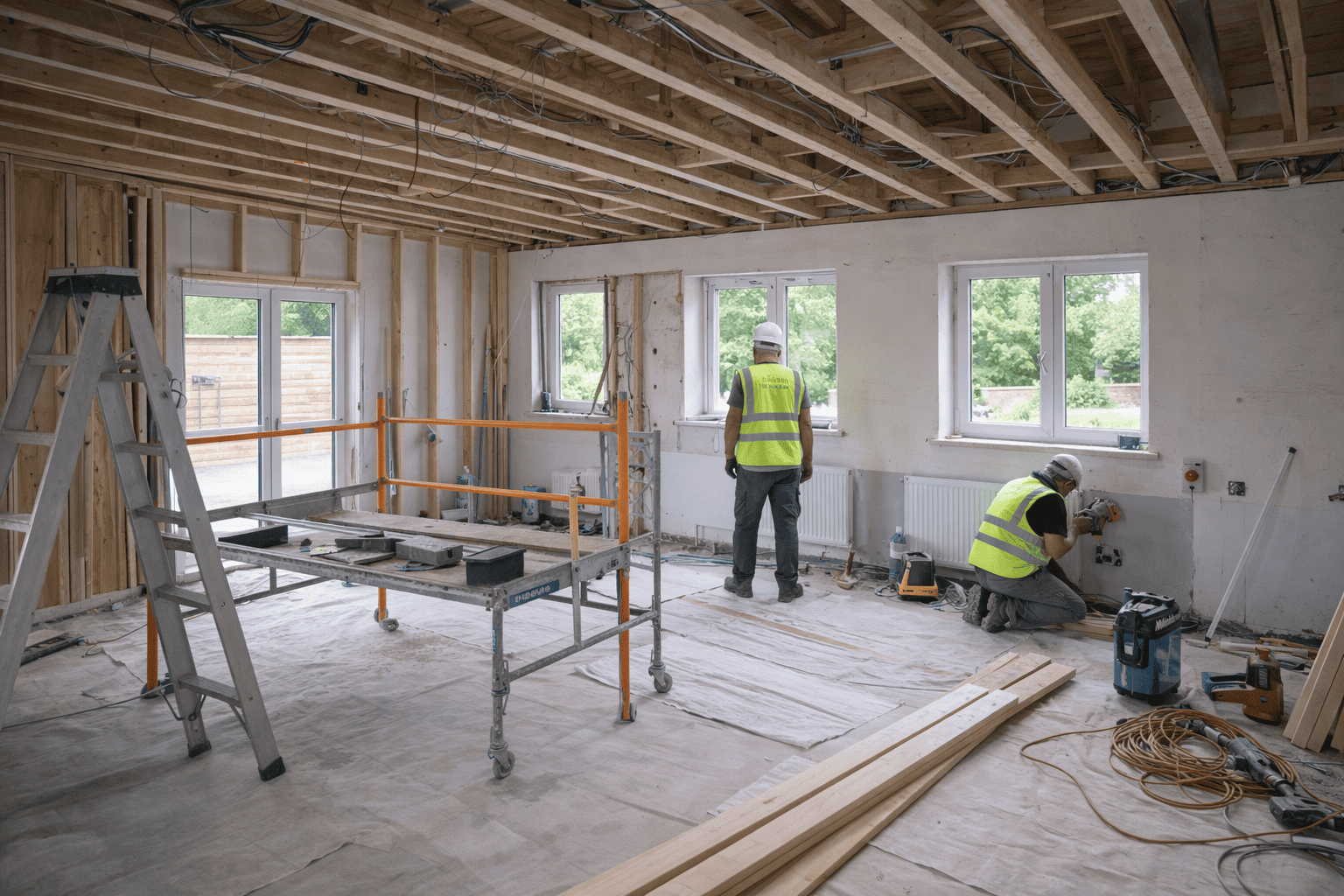
Every project starts with understanding how your care home actually operates. We visit your site, talk to your staff, and create a phased plan that works around meal times, medication rounds, and resident routines. If you need to stay fully operational, we section off work areas and schedule noisy tasks for specific times.

Is It Time to Refurbish Your Care Home? 

Most care home operators don't wake up one morning and decide to refurbish. It's usually a gradual recognition that something isn't working as well as it used to. A bathroom that feels unsafe. A corridor that's harder to navigate. A lounge that families hesitate to praise. A CQC inspection that flagged your environment.

If any of the following sounds familiar, it may be time to have a conversation:

Signs your care home may need refurbishment:

       Bathrooms or wet rooms that no longer meet accessibility or hygiene standards

       Flooring, walls, or furnishings that look tired and are harder to keep clean

       Layouts that make it difficult for staff to provide safe, efficient care

       Communal spaces that feel clinical, unwelcoming, or underused

       Ongoing maintenance issues that are costing more than a proper renovation would

       A CQC rating of 'Requires Improvement' linked to your physical environment

       Difficulty attracting private residents or retaining good staff


Why So Many Care Homes Need Refurbishment

There are over 17,000 care homes in the UK, many of which were built long before current design standards were in place. Layouts often no longer suit the way staff need to work. Bedrooms may lack privacy or accessible bathrooms. Ventilation and insulation may be well below today’s expectations. And in some cases, older buildings make infection control harder to manage. Since the COVID-19 pandemic, families are asking more questions before placing a loved one in care. The Social Care Institute for Excellence reports that average occupancy in care homes fell from 87 per cent to 81 per cent. That figure is starting to recover, but many care providers are still feeling the pressure. Refurbishment can be part of the solution. A modernised care home can be more appealing to residents and families. It can also help with staff retention, operational efficiency, and CQC compliance.
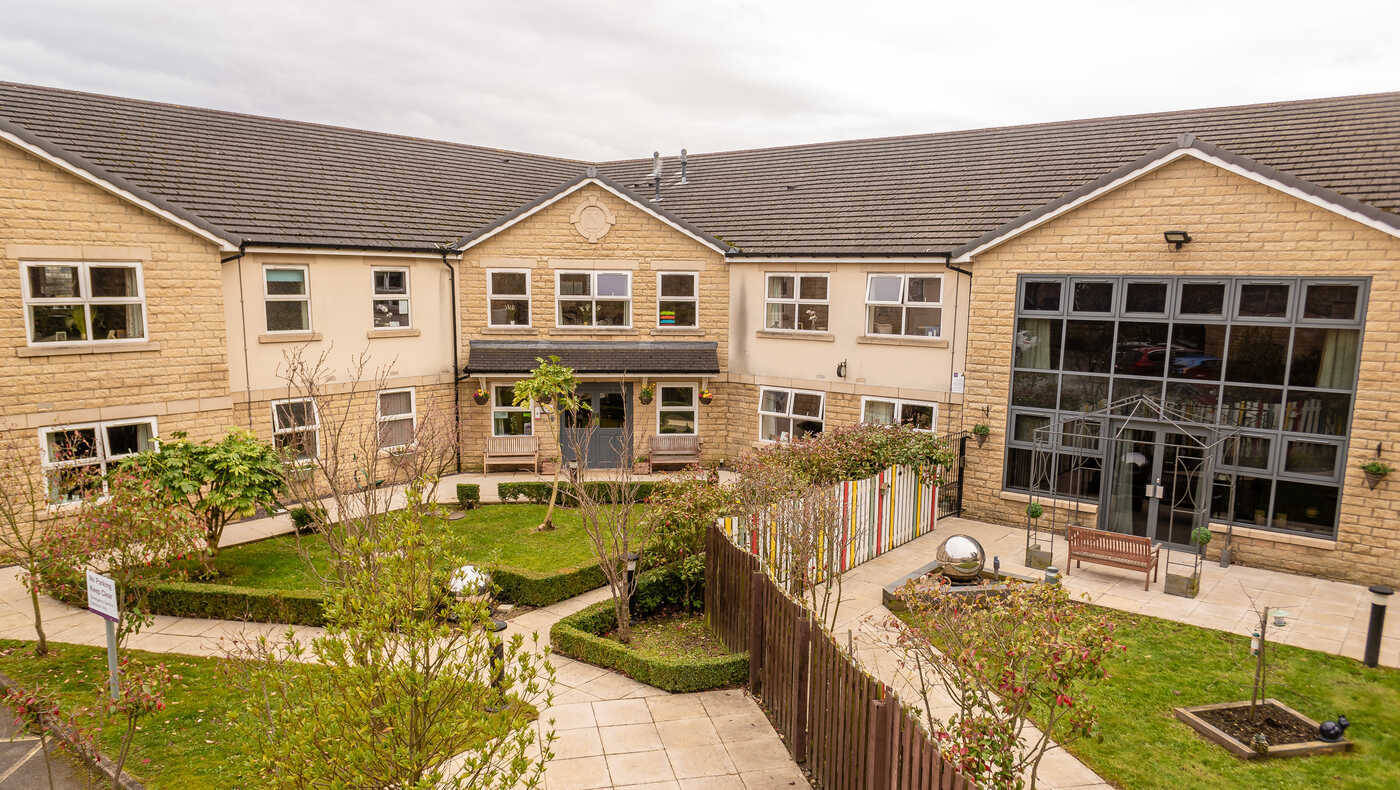
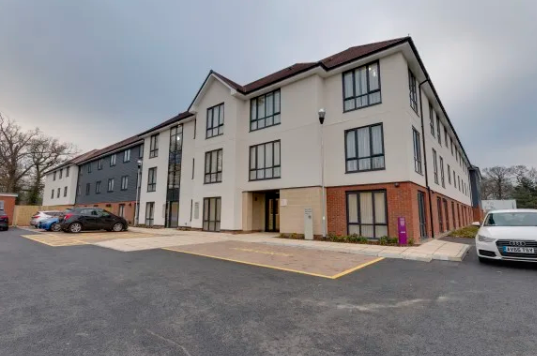
care-home-builders-east-midlands2.jpg

Who We Work With

We work with a wide range of care providers across London and the South East, from single-site independent operators to regional care groups managing multiple homes. Our clients typically include:

Independent Care Home Owners

Whether you're managing one home or a small group, we offer the same care and expertise we'd give to any major provider with communication and flexibility to match your pace.

New Care Home Acquisitions

Buying a care home that needs work? We regularly help new owners assess, plan, and carry out refurbishments before or shortly after opening, keeping downtime to an absolute minimum.

Homes Improving Their CQC Rating

If your most recent inspection highlighted concerns about your environment, we can help you develop a prioritised improvement plan that tackles the issues that matter most to inspectors first.

Multi-Site Care Groups

We understand the logistical and reputational demands of refurbishing across multiple sites. We can manage rolling programmes and ensure consistency across your portfolio.

care-home-builders-kent2.png

How We Approach Refurbishment within a Care Home

We have worked on many care home refurbishment projects, from simple upgrades such as refreshing bedrooms or shared areas to larger jobs requiring major changes and full service updates. No matter the project, we always remember that we are working in someone’s home, not just on a building. Our team includes skilled tradespeople who know the care sector well, and project managers who understand how important it is to work carefully in a busy care home. We do not just look at schedules and deadlines. We also think about how our work affects residents, families, and staff every day.
Three principles guide everything we do.
First, we respect your residents. We work to keep noise down, keep spaces tidy and safe, and make sure everyone knows what is happening so no one feels worried or unsure.
Second, we are reliable. When we agree on a plan, we stick to it. We know care providers need things to run smoothly for staff, residents, and inspections. We keep you updated and are always honest about progress.
Third, we focus on lasting results. Refurbishment should not just look good for a short time. We make sure everything, from floors to fire doors and all systems, is done right and built to last in a busy care home.
We also help with more than just the building work. This can mean helping with planning, working with building control, or giving advice on meeting CQC standards. We keep up with the rules so you can be sure your care home is both compliant and comfortable. Our job is to make your care home stronger in every way, while always treating it with the care and respect it deserves.

How to Refurbish a Live Care Home

care-home-builders-surrey2.jpg

Types of Care Home Refurbishment

There are many different types of care home refurbishment. Each has its own set of priorities (the extent of work), timing (how urgent) and objectives (what the client wants). We typically provide six types.

1. Compliant refurbishment
A CQC inspection finds or a Regulation 15 notice is issued.
You need to act rapidly if a CQC inspection report identifies an issue with your physical environment. We assess the inspection report with you, determine which aspects of your physical environment contributed to your overall CQC rating, and develop a priority-based action plan. Typical scope includes wet rooms, fire doors, handrails, infection control surfaces, and lighting. We can also attend your re-inspection as the contractor of record to confirm that the works have been completed.

2. Wetroom & bathroom refurbishment
This is the most commonly undertaken single-element refurbishment and provides the largest improvement in resident satisfaction and CQC ratings.
Older bathrooms are one of the most frequent reasons why care homes receive 'requires improvement' ratings. We design and fit new wetrooms to Part M standards, which include anti-slip flooring, thermostatic controls, reinforced walls for grab rail and hoist installations, and sealed surfaces for infection control. These wetrooms are fitted room by room, so residents do not lose their access during the installation process.

3. Fire safety refurbishment
Enhancing fire compartmentalisation, fire door provision, sprinkler system installation and evacuation routes for residents who cannot self-evacuate
While replacing fire doors may be included in a fire safety upgrade to a care home, there is much more to providing effective fire safety than simply replacing doors. This includes re-establishing compartmentalisation, installing fire doors compliant with HTM 60 specifications, commissioning sprinkler systems in occupied premises, and developing evacuation plans for residents who require assistance in evacuating the premises. Our team works closely with specialist fire engineers and local Building Control teams.

4. Full phase refurbishment
An end-to-end modernisation of your care home whilst maintaining full operation of the home.
The most comprehensive form of refurbishment available - including bedrooms, bathrooms, communal areas, kitchens, M&E services, and external spaces. We undertake this in phased stages, ensuring that residents experience the least possible disruption to normal daily routines. The duration of these programmes varies widely depending on the size of the care home, but can range up to 18 months. A successful full-phase refurbishment can move homes from requiring improvement to good status, increase occupancy rates, and allow higher fees within weeks/months of completion.

5. Partial or Targeted Refurbishment
Improvements focused on a specific area(s) - ideal when budgetary or time constraints are limiting.
Not all homes need a full refurbishment program. Sometimes one area of your home is holding back others - such as a tired lounge, a kitchen that is on the boundary of acceptable condition, or a garden that has not seen maintenance in years. We assist you in identifying what will deliver the greatest positive benefit first, complete that work with the minimum required disruption, and create a long-term plan for the remainder.

6. Post-acquisition refurbishment
Refurbishing your recently purchased care home prior to/shortly after opening.
One of our most common forms of business involves assisting clients in acquiring a care home that requires upgrading. We can begin assessing your requirements at the survey stage - i.e., prior to completing the acquisition - so that you can implement your refurbishment program immediately upon taking possession of the property. When acquiring vacant properties, we can work on each area of the building concurrently. When we purchase an operating care home, we can phase out existing residents. Regardless, we ensure that you have prepared all necessary premises documentation for CQC registration purposes.

Still unsure as to which category best suits you? Please contact us to arrange a complimentary site visit and assessment. If you have already received a CQC report, please bring it along, and we will work through it together to establish the quickest route to achieving Compliance.

Read More on Our Care Home Refurbishments

Care_Home_Refurbishment4.jpg

How a Care Home Refurbishment Works: From First Call to Handover

Many of our clients approach us at the beginning of their journey. There is little formal understanding of what is required. Typically, an issue has arisen, such as an unsafe bathroom, a Care Quality Commission report highlighting concerns about the environment, or a recently purchased home that requires an upgrade before opening. This is precisely the correct moment to call upon us.
From this initial discussion, the following sequence of events then follows:

1. First telephone/email/initial meeting and site visit
After the initial telephone/email/conversation, we meet to discuss your requirements. At this time, please advise us on the issues that prompted the need for the project. We listen to your needs; we ask the relevant questions; and if both parties consider the project suitable for us, we arrange a site visit to review your premises. The site visit is free. Upon visiting your site, we will accompany you as you walk the property. In addition, we shall engage in discussions with your Manager/Care Team members. We will assess the property through the lens of a person with knowledge of the regulations and guidelines associated with CQC Standards, how care is delivered, and which elements of the property are likely to require modification to provide a safe and functional environment for live-in care. It would also be beneficial if you could provide any inspection report(s) you have received. We will review these documents with you, room by room.

2. Site assessment and scope
Upon completing the site visit, we will gather a complete understanding of what is required to modify your premises. Clearly, not everything will be an emergency. Additionally, clearly not everything will be possible within a single phase. We assist you in identifying which modifications should take precedence (e.g., compliance, health & safety) and which could be progressed in phases (e.g., cosmetic enhancements, communal area upgrades, garden development).

We provide you with a clear project scope, a realistic cost estimate/budget range, and an honest appraisal of what is feasible within your timeframe. We do not pad our costs nor provide vague estimates.

3. Planning your project program
Most care home refurbishment projects fail due to inadequate phasing of the construction process — i.e. working in a live care home environment is very different from working in a vacant/empty building. Your residents' routines need to continue uninterrupted. There are scheduled medication rounds. Meal times cannot be disturbed. Some residents experience distress through excessive noise or unfamiliarity with new people entering their living space.
We develop a construction program that considers all aspects of your residential facility, including resident routines. When are certain areas of the building available for renovation? During what hours of the day are renovations permitted? How will your residents be relocated during renovations? What information will be disseminated to your residents/families/staff regarding the renovation activities?

Your project will have a designated site manager assigned to your home throughout the duration of the project — providing you with a singular point of contact for all aspects of your project. Our site managers are present on-site daily and understand your home as well as your own teams do.

4. Delivery of Construction Work
Construction commences. We segregate active renovation zones using necessary barriers and signage. Renovation activities occur during pre-determined 'quiet' windows. Deliveries are coordinated to avoid meal times. We maintain a clean and safe work environment in accordance with the applicable standards for healthcare environments. Tradespersons engaged on your project are DBS-checked.

You receive frequent updates on the status of your project, not just when things have gone wrong. We provide weekly progress updates, proactively notify you of any changes to the original plan, and provide unlimited access to your project site manager at any time.

5. Project Completion — Handover and Aftercare
Once each phase is completed, we formally hand over the renovated area back to you. We conduct a comprehensive walk-through of the newly completed area with your Manager; identify any defects/snags and address them prior to accepting final completion of that phase; and provide all certification/documentation related to regulatory compliance (e.g., Fire Door Certification, Electrical Sign-Offs, Building Control Acceptance, etc.). We compile this information in a format that can easily be accessed by any Inspectors from the Care Quality Commission.

Although we do not intend to abandon you once the project is complete, we recognise that minor adjustments may be needed post-completion. Therefore, if such needs arise subsequent to project completion, please feel free to contact us, and we will gladly return to facilitate resolution.

Why_Refurbishment_Benefits_Compressed.jpg

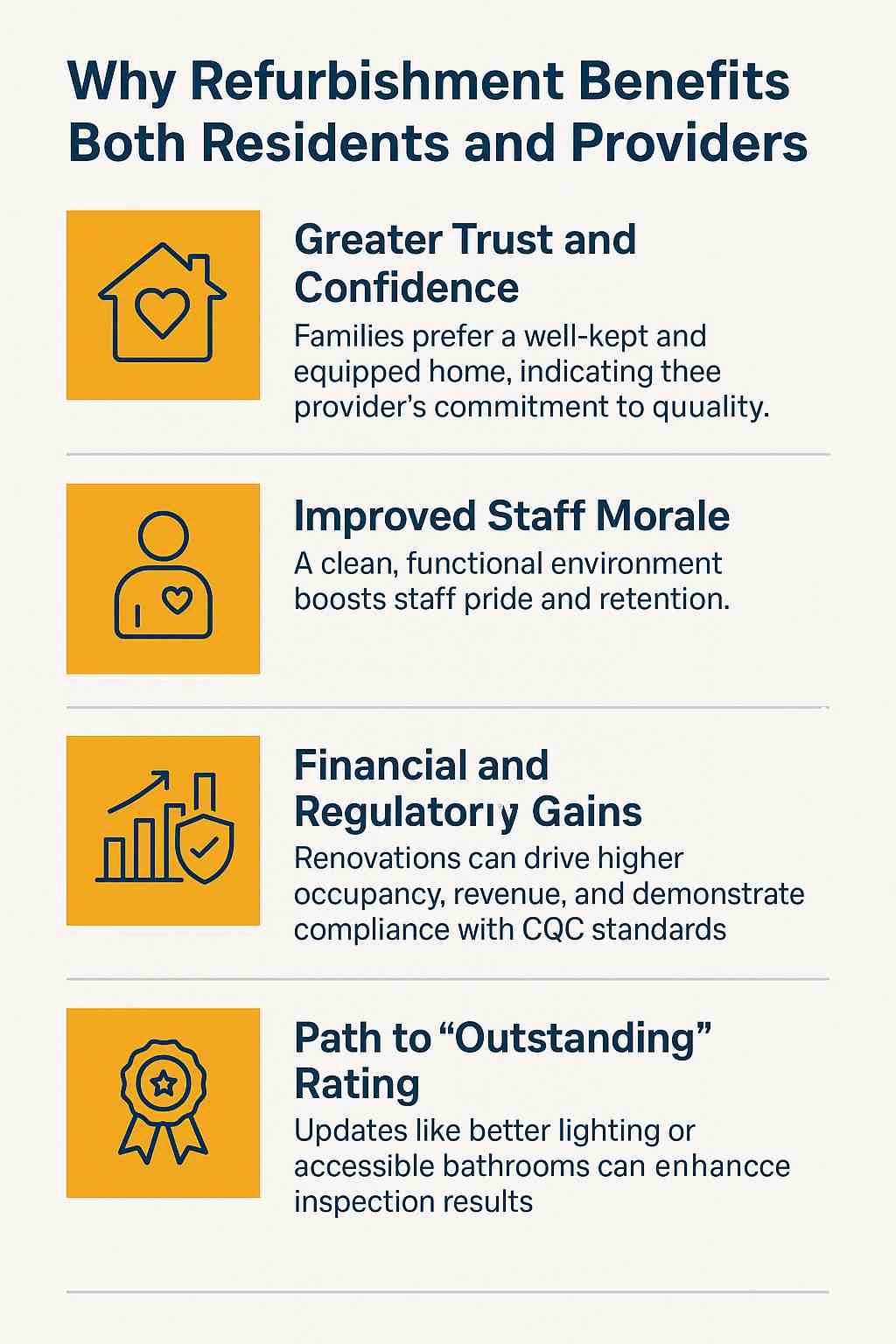
Why Refurbishment Benefits Both Residents and Providers

When done with care and purpose, a refurbishment does more than refresh a space. It strengthens a care home’s position in the eyes of inspectors and the wider community.

One of the most significant gains is trust. Families are likelier to choose a home that looks well-kept, thoughtfully laid out, and properly equipped. A well-executed refurbishment clearly states that the provider is committed to quality. That impression matters, especially when confidence in the care sector still needs rebuilding.

The benefits also extend to staff. We have seen firsthand how a well-planned renovation improves morale. When staff work in a clean, functional, and welcoming environment, they are more likely to take pride in their work and stay long-term. This matters in a sector where recruiting and retaining qualified carers is an ongoing challenge.

Refurbishing also contributes to financial performance, driving higher occupancy and stronger revenue. Many care homes we have worked with see an uplift in enquiries and admissions after refurbishment. This can create a more stable foundation for reinvestment in the home’s future.

Another crucial area is regulatory performance. The Care Quality Commission (CQC) inspects homes across England and rates them on five key criteria: safety, effectiveness, and the environment. A well-maintained, modern care home can help demonstrate that a provider meets the right standards. For operators considering whether refurbishment or a full care home conversion makes more commercial sense, we cover the key differences on our conversions page."In 2021, CQC data showed that 14 per cent of care homes were rated as requiring improvement. Many of those homes were flagged for outdated facilities or poor layout, which can be addressed through refurbishment.

The building itself cannot be overlooked if you want to move from a “Good” to “Outstanding” rating. Simple updates like wider corridors, improved signage, better lighting, or accessible bathrooms may help improve inspection outcomes, alongside the care.

At Care Home Builders, we work with providers who want to improve their homes to meet compliance requirements and achieve long-term success. Our goal is to help you create an environment that supports great care, encourages confidence, and grows with the needs of your residents.

Care_Home_Refurbishment5.jpg

Disruption Management

The most common concern we hear from care home operators is simple: "I can't put my residents through a building site." It's a fair concern. The people in your care may be frail, living with dementia, or have spent decades building the comfort of their daily routine. Even small disruptions, unexpected noise, unfamiliar faces, and changes to familiar spaces can cause real distress.

Our entire approach to refurbishment is built around that reality.

Before Work Starts - 

1. Full site briefing with your care team on our schedule, protocols, and contacts.

2. Resident and family notification letters were prepared and issued in advance.

3. A dedicated site manager is assigned as a single point of contact for your staff.

4. Work zones are clearly cordoned off with appropriate signage and barriers.

During Refurbishment

1. Noisy or disruptive tasks scheduled around medication rounds, mealtimes, and rest periods.

2. Strict dust management and infection control protocols are in place at all times.

3. Daily site checks and clear-up before the evening handover.

4. Any unexpected changes are communicated to your team immediately, never left until the next day

Read on the Challenges of Care Home Refurbishment

care-home-refurbishment-uk1 (1).png

Our Speciailist Refurbishment Services

Every care home is different. Below are the areas we most commonly help with, though our work is always tailored to the specific needs of your building, your residents, and your team.

Living Space Improvements

We make bedrooms, lounges, and shared spaces feel calm, safe, and welcoming for the care home residents. Sometimes this means adding new flooring, furniture, colours, or lighting. We can also adjust the layout as per how you want it, so everything feels more open and simple to use.

Wet Rooms and Bathroom Upgrades

Bathrooms are among the most common and important areas to refurbish in any care home. Outdated bathrooms can pose genuine safety risks for residents with mobility issues and create unnecessary challenges for staff. We design and install fully accessible wet rooms and bathrooms with anti-slip flooring, level-access showers, reinforced grab rails, ceiling hoists, and thermostatic controls. Every installation meets the latest Part M accessibility requirements and infection control standards.

Kitchen and Dining Renovations

Care home kitchens must meet strict food safety and hygiene standards while also functioning efficiently for kitchen staff. We carry out full kitchen renovations, including the installation of commercial equipment, improved ventilation, and HACCP-compliant layouts. Dining rooms are designed to feel welcoming because mealtimes are one of the most important parts of any resident's day.

Dementia Friendly Design and Sensory Places

Good design can have a profound effect on the wellbeing of residents living with dementia. We design and build sensory rooms, activity spaces, and dementia-friendly corridors using contrasting colour schemes, intuitive signage, natural lighting, and calming acoustic materials. These aren't cosmetic changes; they actively support memory, reduce anxiety, and help residents maintain their independence for longer.

Activity Rooms and Sensory Spaces

We design activity and sensory spaces, like flexible lounges and areas for people with dementia. These spaces help people stay active, engaged, and connected with others. 

Accessibility and Safety Upgrades

We often add ramps, widen doorways, put in grab rails, install ceiling hoists, and improve lighting and fire systems. These changes make it safer and easier for everyone to move around the care home. From widening doorways and installing ceiling hoists to upgrading fire doors, improving lighting, and adding compliant handrails throughout, we carry out the full range of accessibility and safety improvements. We can also advise on and install nurse call systems, door access controls, and other assistive technology as part of a wider refurbishment programme

External Works and Garden Areas

We also make outdoor areas better with landscaping, seating, safe paths, and sheltered gardens. This means people can enjoy being outside year-round. Outdoor space matters enormously to care home residents, particularly those with limited mobility. We design and build safe, accessible garden areas with level pathways, sheltered seating, raised beds, and sensory planting. External works can also include car park improvements, entrance upgrades, and CCTV or security installations.

care-home-refurbishment-uk2.png

Refurbishment and CQC Compliance

The physical environment significantly influences how regulators assess whether a home is "safe" and "effective." Regulation 15 (Premises & Equipment) states that the premises should be suitable for delivering care, properly maintained, and that the equipment available meets the needs of the individuals residing within them. This Regulation is frequently cited when a care home receives a "Requires Improvement" or "Inadequate" rating directly due to the condition of its building. If your latest inspection report referenced Regulation 15, the issue lies in your physical environment, and therefore, refurbishment is likely to provide a solution.

Regulation 15 does not specify exact requirements; inspectors assess if your building provides active support to the delivery of safe, dignified care. Therefore, inspectors want to see evidence of comfortable living accommodation for residents; safe bathroom provision; cleaning surfaces capable of meeting infection control standards; layouts that enable staff to supervise and respond effectively to resident needs; and fire safety systems to protect vulnerable residents who would require assistance to exit the building in the event of an emergency.

We have considerable knowledge of the CQC framework, having provided services to clients under this framework for over 20 years. Our assessments do not simply identify what needs replacing; they identify potential areas of concern in future inspections and possible enhancements that could lead to improved ratings.

Physical Environment Inspection Criteria:

-Accessible bathrooms and wet room facilities with adequate handrail provision and hoist provision where required
-Provision for adequate infection prevention and control through floor coverings, surface materials and adequate hand washing facilities
-Layouts and sight lines that facilitate staff supervision and response times to residents
-Dementia friendly design elements such as signage, colour contrast, and sensory support
-Fire doors that comply with HTM 60 standards; clearly marked evacuation routes; and operational emergency lighting
-Resident private space/comfortable spaces that maintain dignity and respect individual identities

We will also assist you with the regulatory process for planning permission, building control approval, or listed building consent. We are familiar with what local authorities and Building Control Officers look for in terms of healthcare environments. As such, our involvement minimises delay and reduces uncertainty.

If you have recently had an inspection report referencing Regulation 15 or identifying environmental issues with regard to your property, we will review the report with you to develop a prioritised action plan based on the work necessary to address the aspects that will have the largest positive effect on your residents and your overall rating.

Thinking About the Next Steps?

If you're thinking about refurbishment, whether you have a clear brief or just a sense that something needs to change, we'd be glad to talk. There's no obligation and no sales pitch. We'll ask the right questions, share what's worked in similar homes, and give you an honest view of what's realistic.

Most operators find the initial conversation clarifying. You leave with a better understanding of what's involved, what it might cost, and whether now is the right time. From there, you decide.

care-home-refurbishment-kent7.png
care-home-refurbishment-surrey3.png
care-home-refurbishment-uk1 (1).png
care-home-refurbishment-uk2.png
care-home-refurbishment-uk3.png
care-home-refurbishment4.png

FAQ

How much does care home refurbishment cost?

-

The cost depends on the scope of work, the size of your home, and the materials you choose. Minor works, such as a single wet room or a flooring update, might cost a few thousand pounds. A full phased refurbishment of a 40-bed care home could cost between £150,000 and £400,000, or more. We provide transparent, itemised quotes after a free site visit, with no hidden costs.

How long does a refurbishment project take?

-

It depends entirely on the scope of work. A single bathroom installation might take two to three weeks. A phased full-home refurbishment might take 6 to 12 months, with different areas completed in sequence. We provide a realistic schedule at the proposal stage and keep to it, and we always tell you early if anything changes.

Is it safe to renovate a care home while residents are still living there?

-

Yes, this is one of our core areas of expertise. We have carried out dozens of refurbishments in fully occupied care homes. We plan all work in phases, schedule disruptive tasks around resident routines, maintain strict dust and infection control protocols, and keep your team informed throughout. The wellbeing of your residents is our primary concern from day one.

Why should a care home consider refurbishment?

-

Refurbishment improves safety, comfort, and efficiency. It helps care homes meet updated regulations, enhances the quality of care, and makes the facility more attractive to residents and their families.

What should be considered before starting a refurbishment project?

-

Factors such as budget, compliance with care home regulations, resident safety, and the choice of materials should be carefully planned. We assist with all these aspects to ensure a smooth process.

Do you work outside London?

-

Yes. We regularly carry out refurbishments across Surrey, Kent, Essex, Hertfordshire, Berkshire, and Sussex. If you're based further afield and want to check whether we can help, just get in touch.

Can you help us improve our CQC rating?

-

We can't influence the inspection process directly, but we can help you address the physical environment factors that inspectors look for. If your most recent CQC report raised concerns about your building, bathrooms, accessibility, or infection control facilities, we can review the report with you and recommend targeted improvements.

What happens if you find unexpected problems during refurbishment?

-

Older buildings can hide surprises, outdated wiring, asbestos, structural issues, or drainage problems. We have extensive experience dealing with these situations and will always notify you immediately, explain the options, and give you a transparent update on any cost or timeline implications before proceeding. We never make significant changes without your agreement.

Do you handle planning permissions and building control?

-

Yes. Where refurbishments require planning permission, building regulations approval, or Listed Building consent, we can manage the entire application process on your behalf. We have a strong working relationship with local authorities across our operating area and understand what's required for healthcare environments.

Can you help with dementia-specific design?

-

Yes. We have significant experience designing and refurbishing spaces for residents living with dementia, including the use of contrasting colour schemes to support navigation, appropriate signage, sensory room design, acoustic management, and lighting improvements. These elements can make a meaningful difference to resident wellbeing and staff workload.

Do you undertake regular Care Home Maintenance?

-

Yes, if required, we undertake regular maintenance on your care home to test and proactively fix any electrical or mechanical issues that may arise. Read about our maintenance here

Let’s get
started

Would you like to learn more about how we can help you with your next residential or commercial project, fill in your details and a member of our team will be in touch.

This site is protected by reCAPTCHA and the Google Privacy Policy and Terms of Service apply.

Latest From the Blog

care-home-refurbishment-uk1 (1).png
Types of Care Home Refurbishment in the UK

Not all care home refurbishments are the same. The scope, trigger, urgency, and design brief all vary depending on what’s driving the project. Understanding which type of refurbishment applies to your situation is the first step to scoping it correctly and budgeting for it accurately. These are the six main types of care home refurbishment..

Read Full Story »
care-home-builders-berkshire1.png
Why Dementia Care Home Construction Is a Specialist Discipline

It is NOT possible to take an ordinary care home, paint some coloured railings, and say, "This place is dementia friendly." Dementia affects how individuals perceive space, light, colour, sound, pattern, and movement. To be successful, the environment must support these changes rather than contradicting them. Here’s what makes dementi..

Read Full Story »