Care Home Refurbishment & Construction Costs in 2026
February 13, 2026
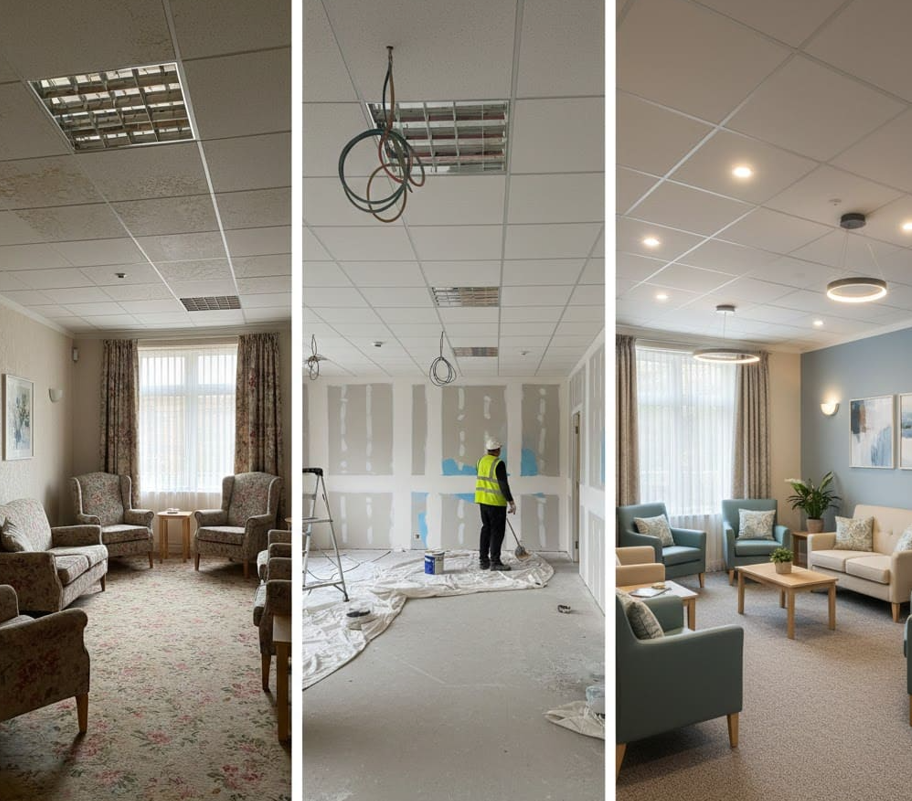
Costs, Compliance, Asset Value & Investment Strategy
In 2026, refurbishing or developing a care home is more than a facilities decision. It is a strategic business decision. Operators face increased government oversight, cautious lenders, rising operational costs, ESG scrutiny, and more sophisticated buyers. In this context, refurbishment and construction focus on strengthening assets rather than just improving buildings.
At Care Home Builders, we see this shift firsthand. Our current discussions focus less on “how much per square metre?” and more on:
- How does this affect valuation?
- Does this reduce compliance risk?
- Will this improve buyer confidence?
- Is refurbishment smarter than rebuilding?
- How does this position the asset for the next 5–10 years?
This guide brings together cost realities, market conditions, compliance pressures, and investment thinking to help you make informed decisions in 2026.
What Does Care Home Refurbishment Cost in 2026?
There is no single figure that fits every home. Age, layout, compliance gaps, and service condition all influence cost.
However, across the UK market, we typically see:
- Light refurbishment: £400–£800 per m²
(Decoration, flooring, lighting, minor updates) - Mid-level refurbishment: £800–£1,500 per m²
(Bathroom upgrades, partial reconfiguration, system updates) - Full compliance-led refurbishment: £1,500–£2,500+ per m²
(Major layout changes, M&E replacement, accessibility upgrades, fire safety improvements)
For investors and multi-site operators, it is often more useful to think in terms of cost per registered bed, particularly when modelling capital deployment across a portfolio.
However, focusing solely on cost overlooks the broader context.
The key consideration is what the investment delivers.
What Actually Drives Refurbishment Cost?
1. Compliance & Regulatory Upgrades
In many homes, refurbishment is driven by compliance rather than appearance.
Common upgrade areas include:
- Fire alarm and emergency lighting systems
- Compartmentation and passive fire protection
- Nurse call systems
- Ventilation and air quality
- Accessibility (Part M) compliance
- Infection control design improvements
These upgrades lower regulatory exposure and improve inspection outcomes. While they may increase upfront costs, they help mitigate future risks.
2. Mechanical & Electrical (M&E) Infrastructure
Older care homes often operate with ageing heating systems, inefficient electrical systems, and outdated plumbing.
Buyers and lenders now scrutinise M&E conditions during due diligence. If systems are nearing end-of-life, they represent deferred capital expenditures, which can influence valuation.
Replacing or upgrading M&E is a significant investment and provides substantial risk mitigation.
3. Hidden Building Issues
Refurbishing older stock can uncover:
- Insulation deficiencies
- Drainage problems
- Structural wear
- Asbestos requires controlled removal.
A detailed pre-refurbishment survey is essential. For most projects, a 5–10% contingency is advisable, especially for older properties.
What About New Build Costs in 2026?
For purpose-built care homes, typical construction costs in 2025 range between:
- £2,000–£3,500+ per m²
- £120,000–£180,000+ per bed, depending on location and specification
However, construction costs are only one component of total development expenses.
A full development lifecycle includes:
- Land acquisition
- Planning and professional fees
- Surveys and reports
- Infrastructure and utilities
- Build and fit-out
- Finance costs
- Contingency
From site acquisition to operational opening, new build projects can take 18–30 months. Refurbishment is often faster and less capital-intensive, provided the building is structurally suitable.
Refurbishment as Asset Enhancement
Leading operators no longer view refurbishment as routine maintenance.
They consider it an asset strategy.
An outdated building creates uncertainty:
- Buyers see risk
- Lenders see deferred CapEx.
- Inspectors see vulnerability
- Families see hesitation
A modernised building signals:
- Ongoing reinvestment
- Strong governance
- Reduced compliance exposure
- Lower future capital shocks
This change in perception directly impacts asset value.
Due Diligence: Where Refurbishment Really Matters
When a care home is brought to market, buyers undertake technical due diligence.
They review:
- Fire safety documentation
- M&E condition reports
- Accessibility compliance
- Maintenance backlog
- Energy performance
- Environmental quality
Each unresolved issue becomes a point of negotiation.
Strategic refurbishment before sale reduces price reductions during negotiation. It strengthens buyer confidence and stabilises price discussions.
Refurbishment may not automatically increase valuation, but it reduces uncertainty, which often leads to a lower discount rate.
CQC Perception & Investment Confidence
CQC ratings influence:
- Family choice
- Local authority placements
- Bank appetite
- Investor outlook
While refurbishment alone does not determine inspection outcomes, environmental quality supports:
- Safety compliance
- Infection control
- Resident dignity
- Accessibility standards
Homes with visible investment often demonstrate proactive management, which positively influences perception.
Occupancy, Fees & First Impressions
Investment thinking is rational. Care decisions are emotional.
Families respond to:
- Light
- Layout
- Cleanliness
- Bathroom condition
- Communal warmth
Modern, well-designed environments support enquiry conversion and help justify competitive fees.
Over time, this strengthens operating performance and EBITDA resiliency.
Sustainability & ESG in 2026
Energy efficiency is now financially significant.
Lenders and institutional investors increasingly assess ESG exposure. Homes with:
- LED lighting
- Upgraded insulation
- Air-source heat pumps
- Solar PV integration
benefit from lower running costs and improved EPC performance.
Sustainability is no longer just environmental positioning; it is a form of risk management.
Refurbishment vs Rebuild: Making the Right Call
Refurbishment is often commercially sensible when:
- Core structure is sound.
- Location is strong
- The layout can be adapted.
- Revenue can continue during phased works.
Rebuild may be appropriate when:
- Structural impediments restrict compliance.
- Room sizes do not meet modern expectations.
- Long-term operating efficiency is compromised.
The decision should be based on feasibility and long-term modelling, not instinct.
Live Environment Refurbishment: Protecting Revenue
One advantage of refurbishment is business continuity.
With phased work, sealed construction zones, DBS-checked tradespeople, and carefully planned out-of-hours scheduling, homes can remain operational during upgrades.
Maintaining occupancy during refurbishment protects revenue and minimises financial disruption.
The Strategic Reality in 2026
In today’s care market, construction and refurbishment decisions intersect with:
- Compliance
- Risk
- Occupancy
- Energy performance
- Asset value
- Exit strategy
The most commercially aware operators are not asking:
“How cheaply can we do this?”
They are asking:
“How does this protect long-term value?”
“How does this reduce risk?”
“How does this position us for future sale or refinance?”
At Care Home Builders, we consider this full context in every project. We do more than modernise buildings. We help operators strengthen assets, reduce risk, and position their homes for the next decade. If you are considering refurbishment or development in 2026, the first step is not to request a quote. It is to have a structured conversation about your building, operational objectives, and long-term strategy.
Recent Blogs
- The Care Home FF&E Guide: What It Costs, What CQC Requires, and Where Developers Underbudget
- CQC Registration for a New Care Home: The Full Process, Timeline, and What Goes Wrong
- Care Home Development Finance Explained: Senior Debt, Mezzanine, and Forward Funding
- How Your Building Design Affects Staffing Costs — and Why It’s Worth More Than You Think
- Care Home Insurance and Warranties: What Every Developer and Investor Needs to Know