How to Refurbish a Live Care Home: A Guide to Phased Renovations
February 13, 2026
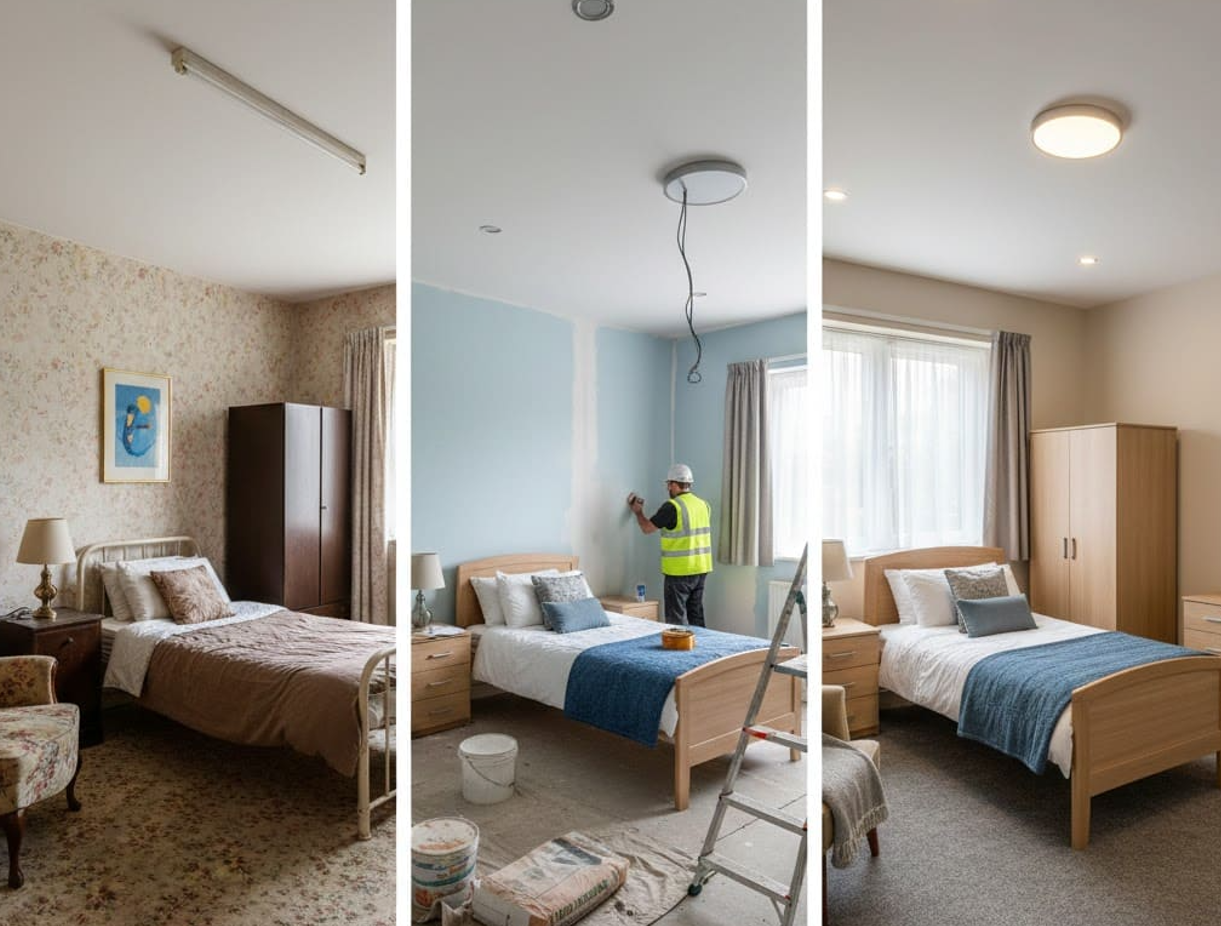
If you run a care home, the idea of refurbishment can feel overwhelming. Upgrades are often necessary for care homes. Bedrooms may appear dated, bathrooms may not meet current accessibility standards, and communal spaces may lack the welcoming atmosphere families expect.
The primary concern is often:
How can improvements be made without upsetting residents or disrupting care?
This is the question we receive most often.
At Care Home Builders, much of our work involves refurbishing fully operational homes. Residents remain on site, staff continue their shifts, families visit as usual, and the surrounding building is improved. This is achievable with careful planning and the right team.
It Starts With Understanding How Your Home Actually Runs
Before discussing drawings, materials, or timelines, we take time to understand how your home operates.
When are meal times?
Which corridors are busiest?
Are there residents living with dementia who rely heavily on routine?
Are there rooms that simply cannot be disturbed?
Which corridors are busiest?
Are there residents living with dementia who rely heavily on routine?
Are there rooms that simply cannot be disturbed?
Every care home is unique. We design the programme around your daily routines, rather than expecting you to adapt to ours.
If residents are sensitive to change, we adjust the project phases accordingly. When certain spaces must remain accessible, we plan alternative routes in advance. Refurbishment should support care delivery, not interfere with it.
Phased Renovation Instead of a Single Large Project
We never treat a live care home like an empty building site. Rather than completing all work at once, we divide the project into smaller, controlled sections. This may involve refurbishing one corridor at a time, rotating bedroom upgrades, or improving communal areas in stages. This approach allows most of the home to operate as usual. Any necessary temporary moves are carefully managed and communicated in advance, ensuring there are no unexpected disruptions.
Our experience shows that residents are often reassured rather than unsettled when they see gradual improvements, such as new flooring, better lighting, or refreshed lounges.
Dust and Cleanliness: Essential Standards
Dust is one of the biggest concerns in any healthcare setting, and rightly so. We use sealed partitions and contained work zones to prevent debris from entering occupied areas. Tools that generate dust are used only in controlled spaces. Shared routes are cleaned regularly throughout the day. Where possible, we use pre-prepared components to reduce on-site cutting and preparation. Fewer on-site alterations result in less mess and disturbance. This work may not be glamorous, but it is essential.
Noise: Managed, Not Overlooked
Noise can cause anxiety, particularly for residents living with dementia. We schedule louder tasks for agreed-upon times and avoid sensitive periods such as early mornings or evenings. For particularly disruptive work, we may use out-of-hours shifts to complete tasks safely and efficiently. Proper sequencing is essential. Decoration and finishing work, which are much quieter, are scheduled thoughtfully to maintain a calm atmosphere.
The People on Site Are Equally Important
All of our tradespeople are DBS-checked and briefed before they begin work. They understand they are entering someone’s home, not just a project. Care settings require a higher standard of behaviour. Professionalism, respect, and awareness of safeguarding responsibilities are essential. We limit unnecessary foot traffic, control access points, and ensure emergency routes remain clear at all times.
Communication Maintains Stability
No refurbishment proceeds exactly as planned every day, and that is to be expected. What matters is communication. Each project has a dedicated manager who works closely with the home’s leadership team. If adjustments are needed, such as changes in resident needs or requirements for quiet areas, we adapt accordingly. That flexibility makes all the difference.
Why Refurbish Without Closing?
Closing a care home to refurbish is rarely practical. It affects residents, families, and revenue.
When refurbishment is handled properly, you can:
Improve compliance and safety
Modernise tired spaces
Increase occupancy appeal
Reduce maintenance issues
Protect your long-term investment
All of this can be achieved without pausing operations.
When Managed Properly, the Process Feels Calm, Not Chaotic
Live care home refurbishment does not need to be disruptive or stressful. With phased planning, effective dust control, DBS-checked tradespeople, and carefully scheduled out-of-hours work, improvements can proceed steadily and safely. At Care Home Builders, we have found that the most successful projects are not those completed the fastest, but those that residents barely notice. And that’s exactly how it should be.
There are many common questions asked about live care home refurbishment.
“Do residents really have to move out during refurbishment?”
In most cases, no.
We break the work into phases so residents can stay in the home while we work in specific areas. Sometimes a resident may need to temporarily move rooms, but we work with your team to keep things simple. Our goal is to maintain routines and familiar surroundings.
“How do you stop dust from spreading through the building?”
We look at this right from the start. We set up sealed work areas, use dust extractors, and plan clear routes for contractors before we begin. We clean shared corridors regularly and keep any cutting inside contained spaces whenever possible. We focus on planning ahead, not just reacting.
“What about residents with dementia who are sensitive to change?”
We pay close attention to this. We avoid sudden changes to familiar routes, keep signs clear, and plan noisy work carefully. In dementia care, sticking to a plan and keeping things predictable is especially important. We always talk with management about residents who might need extra support.
“Are your tradespeople vetted?”
Yes. Everyone working in a live care environment is DBS-checked and briefed on safeguarding and professional conduct before they arrive on site.
They understand they are working in someone’s home — and that changes how you behave.
“Will there be a lot of noise?”
There will always be some disruption with building work, but we keep it under control.
We set time slots for noisy work and, if needed, do the most disruptive jobs outside normal hours. The order we do things in really affects how the home feels each day.
“How long does a refurbishment usually take?”
It depends on the project's size and what needs to be done. Updating bedrooms and bathrooms might take a few weeks in stages. Bigger upgrades, like common areas or compliance work, can take a few months. We always give you a realistic schedule before we begin.rt.
“What if something changes mid-project?”
This happens often, and it’s normal.
Care environments are dynamic. If a resident’s needs change or a particular space becomes unavailable, we adjust. Communication is constant, and flexibility is built into our planning.
“Is it worth refurbishing instead of rebuilding?”
For many care home operators, yes.
Refurbishing lets you modernise, meet compliance, and make the home more appealing without closing or building a new site. It helps keep your income steady and supports your long-term plans.
Recent Blogs
- The Care Home FF&E Guide: What It Costs, What CQC Requires, and Where Developers Underbudget
- CQC Registration for a New Care Home: The Full Process, Timeline, and What Goes Wrong
- Care Home Development Finance Explained: Senior Debt, Mezzanine, and Forward Funding
- How Your Building Design Affects Staffing Costs — and Why It’s Worth More Than You Think
- Care Home Insurance and Warranties: What Every Developer and Investor Needs to Know