Outdoor Spaces in Care Homes: Why Gardens Aren’t a Luxury — They’re Essential.
December 4, 2025
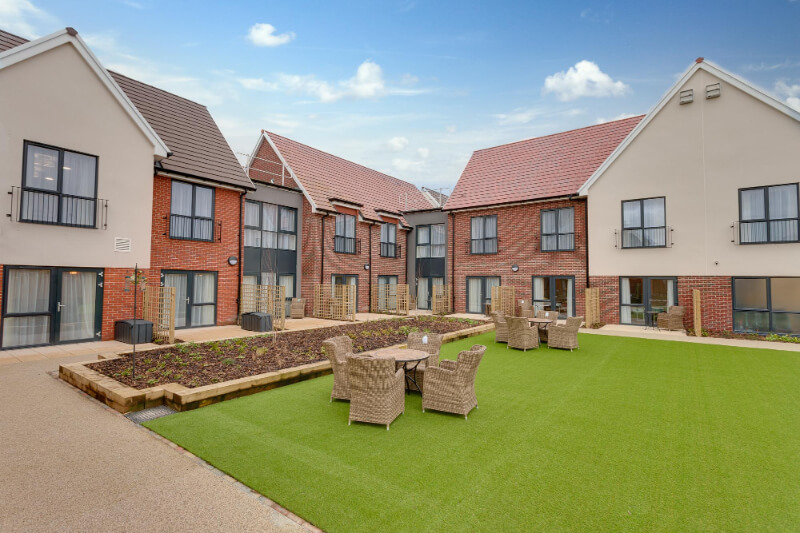
Nowadays, these care homes talk a lot about high-quality bedrooms, safe interiors, and infection control. One of the most significant contributors to healthy senior living isn’t the facility at all; it’s outside.
Spaces outdoors are significant for the well-being of older adults and those living with dementia. This is an essential ingredient in building the kind of homes that help residents grow — physically, mentally, and emotionally.
Regardless of whether your care home design project is a new build or an upgrade to an existing site, this guide explains why gardens, courtyards and outdoor areas should feature in your earliest conversations with designers, and how to ensure they work for residents, staff and families.
Why Nature Matters More in a Care Setting.
You may not realise how impactful outdoor space could be. For care homes, the impact is even greater, as many residents may have trouble getting outside. Other residents may have an advanced need for care, due to illness or disability. But even small outdoor spaces thoughtfully designed have been shown to.
Reduce agitation, anxiety and depression.
Encourage gentle movement and physical activity.
Stimulate memory and sensory engagement.
Improve sleep, appetite and daily rhythms.
Support meaningful social interaction.
Studies show that access to gardens can reduce medication use for dementia and falls in dementia care settings. Simply bringing about better balance, mood and awareness in garden space supports that.
It holds particularly true in care homes for older adults, people living with dementia, and those requiring palliative or long-term residential care. Nature can calm you down and make you feel more grounded. More often than not, residents simply enjoy the fresh air, sunshine, or just watching the birds.
Common Mistakes in Care Home Garden Design.
Many care homes have outdoor spaces, but not all of them are accessible or usable. We’ve been to homes with what was technically a garden, but had steps or uneven paths, making it hard for wheelchairs.
It would not be usable for most of the year as it offered no shade or shelter.
The location of this facility was far from the commons areas, and the staff needed to assist in moving this facility to the commons area.
Residents feel anxious and exposed as it does not feel safe or private.
Outdoor space should never be an afterthought. It should be an essential part of the resident's daily life.
What Makes a Good Outdoor Area in a Care Home?
Outdoor spaces can make an excellent addition to the care market, whether it is as a courtyard sensory garden or a larger framework. Here are some of the key elements.
1. Accessibility is Non-Negotiable.
Paths should be level, wide, and non-slip. Doors should open easily with low thresholds. Residents shouldn’t need assistance to step outside.
2. Safe, Secure and Calm.
Fencing should offer safety without feeling restrictive. Seating areas should be spaced out and offer privacy. It is essential to screen visually from the road or public space.
3. Seating and Shade.
Outdoor areas require seating options, which are not limited to benches. They should have comfortable chairs that are stable, with armrests and back support. Shade is also essential – consider a pergola, a tree, or a retractable awning.
4. Sensory Planting.
Select visually delightful plants with interesting textures, pleasant scents, and gentle movement. Residents can interact with the garden without bending by using raised beds or planters.
5. Year-Round Use.
Installing lighting, windbreaks, and sheltered areas may benefit residents by improving the use of space in winter. Covered walkways between internal and external areas are hugely beneficial.
The Benefits Go Beyond the Residents.
A smart outdoor setup also helps the people living in the house.
Employee breaks in the fresh air, reduces stress and burnout.
Post-pandemic outdoor visits have meaningfully enriched families.
Homes that have nice, accessible gardens are easier to sell, according to operators. They are also more likely to pass CQC as they look at well-being and lifestyles.
Building Outdoor Space Into Your Project.
At care home builders, they believe that gardens should be designed as thoroughly as bedrooms, lounges or treatment rooms. For this reason, we incorporate external space planning at the beginning of each care home build or refurbishment project.
Our team will help you with both small garden spaces and large garden plans for a new site.
Make sure there are routes from the resident wing to the outdoors.
Create sensory spaces that are safe and designed for dementia or palliative care.
Incorporate modular outdoor seating, canopies, or activity zones during phased construction activities.
Make your outside area ready for any season, any time.
In the end, it’s not about size, it’s about access.
You don’t need acres of land to make a difference. If properly designed, a courtyard balcony and terrace can provide the same benefits as a garden. Moreover, benefits include physical and mental health if they are readily accessible and safe.
When we consider nature as an essential component of care home design, rather than an optional extra, we allow residents to enjoy more than fresh air. They are empowered and dignified in a way that creates a connection that no indoor space can replace.
Recent Blogs
- Fire Safety and Sprinklers in Care Homes
- Grey Belt and Care Home Planning: What the 2026 NPPF Changes Mean for Developers
- The Care Home FF&E Guide: What It Costs, What CQC Requires, and Where Developers Underbudget
- CQC Registration for a New Care Home: The Full Process, Timeline, and What Goes Wrong
- Care Home Development Finance Explained: Senior Debt, Mezzanine, and Forward Funding