What are the challenges of Refurbishing a Care Home?
February 26, 2026
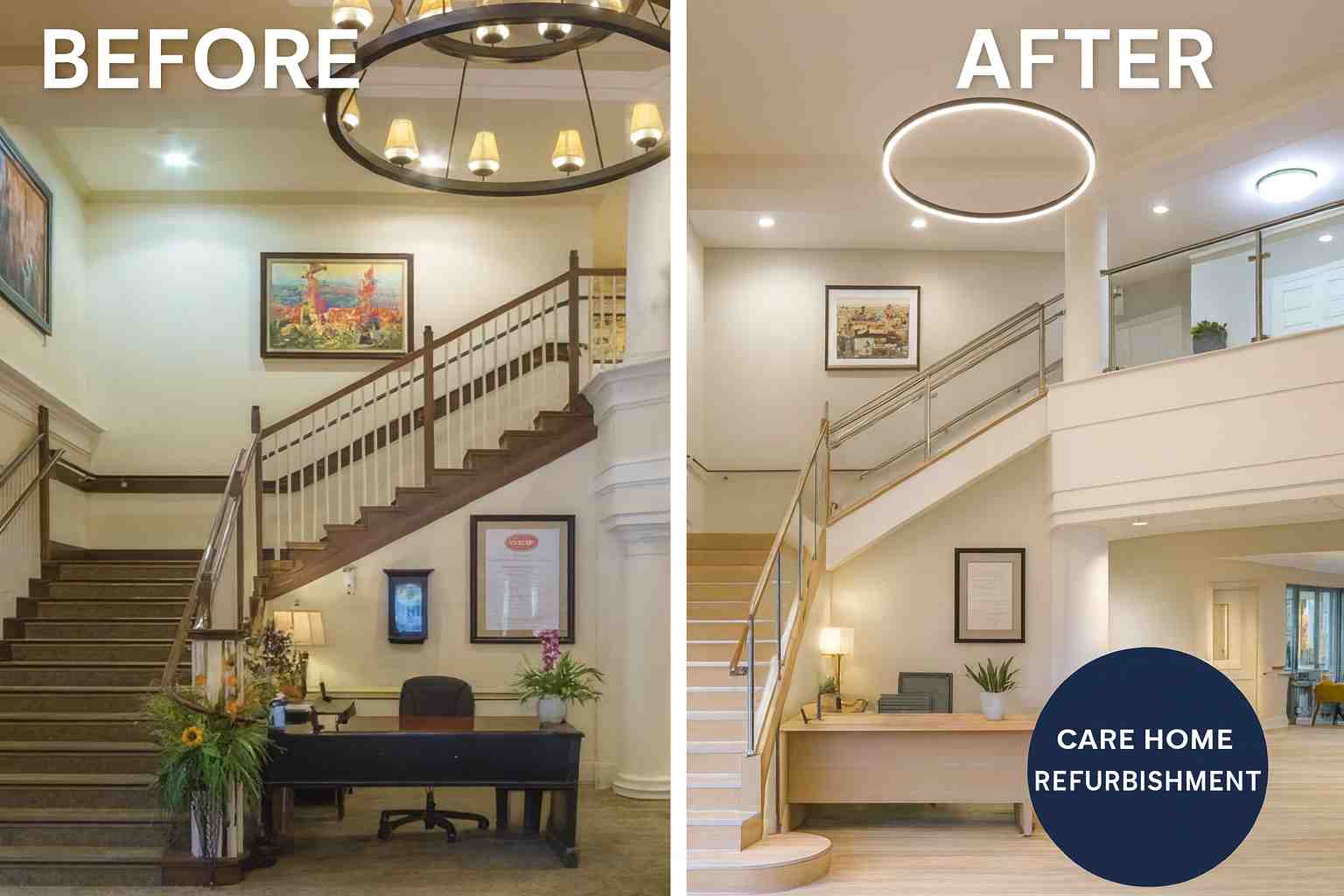
Refurbishing a care home is nothing like working on an empty office or a house. Here, the building is full of life. Residents and staff are there every day, and our work happens alongside their routines and care. One of the main challenges is minimising disruption. Many residents are older or living with dementia, and even small changes or loud noises can be unsettling. Staff also need to carry on providing care, so it’s important that our work doesn’t get in their way.
How We Address These Challenges
Our Refurbishment Process
What Refurbishment Really Means for Residents
If you run a care home, you already understand that the environment shapes experience. How a house looks, feels, and functions affects how residents live, staff work, and families judge the quality of care. At Care Home Builders, we have spent years working inside active care homes and seen the difference a thoughtful refurbishment can make.
The best changes are not cosmetic. They respond to the day-to-day needs of older people. For example, one care home we worked with had narrow corridors, poor lighting, and noisy communal spaces. These weren’t structural flaws, but they made residents anxious and limited their mobility. The atmosphere changed completely after reconfiguring the layout, introducing quieter flooring, and adding more natural light. Residents were spending more time together, and staff reported fewer behavioural incidents.
Modernising a space can also mean improving care quality. Updating bathrooms, replacing outdated hoists, and creating clearer sightlines for staff can all reduce risk and enhance dignity. In homes supporting people with dementia, we’ve helped introduce sensory rooms, contrasting colour schemes, and more intuitive signage. These design features are simple but support memory, reduce confusion, and help residents maintain independence longer.
Comfort is equally important. Older care homes often feel clinical. That’s not a criticism; many were built to meet standards that are now outdated. A refurbishment can introduce warmth without compromising safety. Small things like wood-effect floors with anti-slip ratings, handrails that feel less institutional, and bedrooms with familiar textures make a real difference to how residents feel.
None of these changes happens in isolation. We work closely with care providers to understand the people living in the home, not just the building itself. Our role is to recommend the right improvements, support the planning and construction process, and ensure that the finished space supports resident well-being and operational efficiency.
We’re happy to walk you through it if you're unsure where to begin. You can learn more about our approach to care home refurbishment here, or contact us directly to speak with someone who understands the pressures of running a care home.
Recent Blogs
- Grey Belt and Care Home Planning: What the 2026 NPPF Changes Mean for Developers
- The Care Home FF&E Guide: What It Costs, What CQC Requires, and Where Developers Underbudget
- CQC Registration for a New Care Home: The Full Process, Timeline, and What Goes Wrong
- Care Home Development Finance Explained: Senior Debt, Mezzanine, and Forward Funding
- How Your Building Design Affects Staffing Costs — and Why It’s Worth More Than You Think