Care Home Builders Lincolnshire

We build, extend, and refurbish care homes across Lincolnshire, including new developments in Lincoln and Grantham and refurbishments in Boston, Spalding, Louth, and the county's rural market towns. As specialists in the care sector, our architects, engineers, and project managers are well-versed in HTM/HBN compliance, CQC standards, and the operational requirements of care home management. Lincolnshire is England's second largest county by area and remains one of its most under-supplied care markets. Currently, 23% of residents are over 65, exceeding both regional and national averages. This population is projected to rise by 41% by 2043. Combined with a 50:50 self-funder split that supports development economics, the case for building in Lincolnshire continues to strengthen.

Care Home Builders Lincolnshire

What we do in Lincolnshire?

We provide a full design and build service for care operators, developers, and investors in Lincolnshire. Our work focuses on four main areas:

New Build Care Homes

We build care homes from planning approval to handover, ready for CQC registration. Most projects range from 40 to over 80 beds. We handle every stage, including healthcare architecture, structural engineering, compliance with HTM and HBN, M&E design, fit-out, and commissioning, all under one contract.
Lincolnshire has low land costs, an older population above the national average, and a self-funder market that makes up half of all residential placements. These factors make it a good location for new care home development. The county has seen less investment from national operators than the South East, so there are still opportunities for first-movers in the right locations.

Care Home Refurbishment

Lincolnshire has a high number of independent care home operators, with 44% of residential beds in independent homes compared to the national average of 38%. Many of these homes are older converted buildings with delayed M&E investment, few wet rooms, and layouts that no longer meet current CQC standards or resident needs.
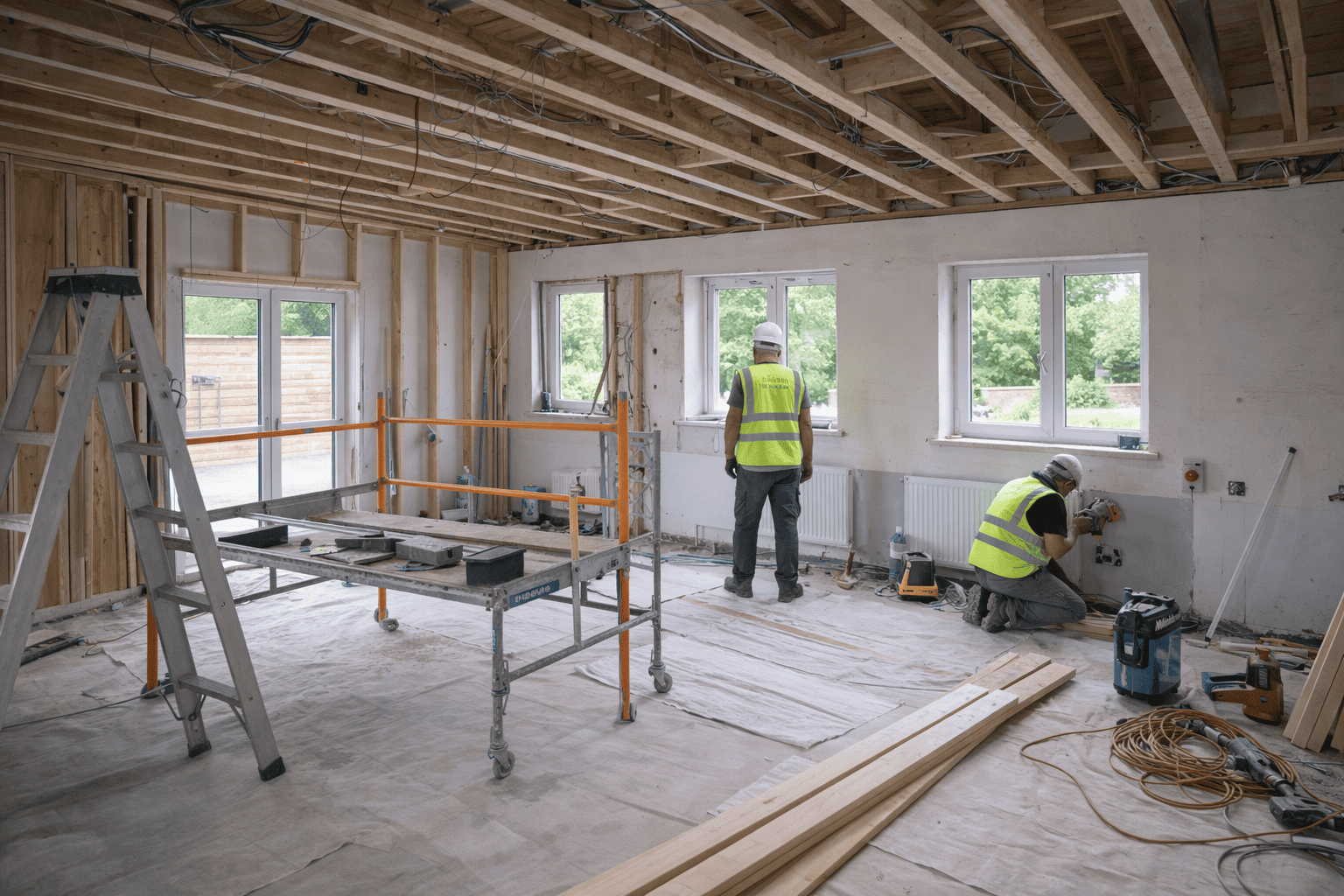
We complete full and partial refurbishments while homes remain open. This includes installing wet rooms, upgrading bedrooms, redesigning communal spaces, updating kitchens to meet HACCP standards, improving fire safety, and overhauling M&E systems. We phase all work to avoid disrupting residents and care. By making these improvements now, you can lower regulatory risk, improve CQC ratings, and increase asset value before refinancing or selling.

Care Home Extensions

For established operators in Lincolnshire, extending an existing home is often the quickest way to add registered beds without the higher cost and longer timeline of a new build. The site is already familiar to local commissioners, planning history is in place, and the back-of-house infrastructure exists.
We design and build extensions that fit with your existing building, meet current CQC capacity and Part M access standards, and are phased so your home stays open throughout. Because Lincolnshire has large distances between towns, established providers with extra capacity often fill beds faster than new entrants in the same area.

Dementia and Later Living

Dementia is expected to become a major care challenge in Lincolnshire over the next 20 years. NHS Lincolnshire Integrated Care Board data shows that up to 7,000 more dementia cases could appear in the county if current trends continue. By 2035, more than half of people aged 65 to 74 are likely to have at least two long-term conditions, so both the number and complexity of care needs are increasing.
We design and build dementia units and later living facilities using DSDC design principles. This includes clear wayfinding, good lighting and contrast, secure outdoor access, and layouts that help staff supervision and reduce resident agitation. Good dementia design improves CQC inspection results and helps attract both NHS-funded and self-funded residents.
care-home-builders-berkshire3.png

The Lincolnshire Care Market: What the Data Shows

An Ageing Population Running Significantly Ahead of National Averages

Lincolnshire has one of the oldest population profiles in England. Currently, 23% of residents are aged 65 or over, exceeding both the East Midlands and national averages of approximately 19%. By 2043, the NHS Lincolnshire ICB projects a 41% increase in the over-65 population, from around 180,000 to over 250,000.
The most notable change is a projected 94% increase in residents aged over 85 by 2043. As this group is most likely to require residential or nursing care, such growth signals a significant shift in demand that current facilities cannot meet. This gap between future need and existing supply represents a key market opportunity in Lincolnshire.
A 50:50 Self-Funder Split, Stronger Than Many Comparable Counties
Lincolnshire's market sustainability data shows a 50:50 split between local authority funded and self-funded placements. This is better than in many similar rural counties. It reflects a population with significant homeownership and accumulated wealth in market towns and coastal areas across the county.
New build activity in Lincolnshire has mainly come from operators who focus on the self-funder segment. The county council's data shows that recent capacity additions have come only from larger organisations with a focus on self-funders. This shows the commercial model works here. The independent part of the market, which makes up 44% of residential beds, is now more distinct in age and quality compared to the newer, purpose-built homes entering the market.
care-home-builders-east-midlands2.jpg

Rural Scale and Distribution Creates Localised Supply Pressure

Lincolnshire is England's second largest county by area, spanning roughly 50 miles north to south and 40 miles east to west. This size means care home supply is not a single county-wide market but instead divides into distinct catchments around Lincoln, Grantham, Stamford, Boston, Spalding, Louth, Skegness, Gainsborough, and the Wolds market towns.
In a rural county where travel distances significantly affect families and visiting patterns, being the best-specified home within a 15 to 20 mile radius offers a strong commercial advantage. Many of Lincolnshire's market towns and rural districts have limited modern, purpose-built options. This gap presents an opportunity for operators willing to build to modern standards in underserved areas.

Hospital Discharge Pressure Is a Consistent Pressure Point

Like most counties, Lincolnshire faces sustained pressure on hospital discharge. With United Lincolnshire Hospitals NHS Trust covering a large, dispersed area, finding appropriate bed-based care quickly is a significant challenge. Social care capacity delays account for a meaningful share of delayed discharges nationally, and Lincolnshire's rural distances add to this difficulty.
Homes built with the right clinical infrastructure, such as nurse call systems, assisted bathrooms, appropriate communal space, and nursing registration, are consistently better positioned to receive NHS-funded discharge placements. This income stream, combined with self-funder revenue, provides the strongest financial model for a new Lincolnshire care home.

Independent Market Dominance Creates an Opening for Modern Stock

Lincolnshire's residential care market has a larger-than-average independent operator presence, with 44% of residential beds run by independent homes compared to 38% for England overall. Many of these are smaller, older homes with sunk capital costs, which has historically allowed them to operate at competitive rates. However, they increasingly face a quality gap compared to newer purpose-built homes entering the market.
As CQC standards tighten, resident and family expectations rise, and commissioners seek homes that can meet more complex needs, older independent stock faces increasing pressure. This creates a clear opportunity for well-specified new builds and for operators considering acquiring and refurbishing underperforming independent homes as a faster route to market entry.
care-home-builders-kent3.png

Where we work across Lincolnshire

We serve the entire county, from Lincoln city to Stamford and the South Kesteven corridor, across to Boston and the Fenland towns, through the Wolds to Louth and the East Lindsey coast, and west to Gainsborough and West Lindsey.
Lincoln is the strongest urban market, attracting older residents from nearby districts and benefiting from steady hospital discharge flow through United Lincolnshire Hospitals. South Kesteven, which includes Grantham, Stamford, and Bourne, is one of the most undersupplied districts relative to projected demand. Stamford, in particular, offers strong self-funder potential due to its affluent demographic.
Further east, East Lindsey has some of the oldest age profiles in Lincolnshire. The coastal towns, including Skegness, Mablethorpe, and Alford, have a significant retirement population, and modern purpose-built provision outside Louth is limited. South Holland, which covers Spalding and Holbeach, has an established care market with a strong presence of independent operators. However, the stock is ageing, and the Fenland geography often limits local options for families.
Boston Borough is a growing market with a documented need for care. West Lindsey, which includes Gainsborough, Market Rasen, and Caistor, has reasonable bed numbers per capita but ageing stock and limited modern competition. North Kesteven, the fast-growing commuter district south of Lincoln, has a younger population that is ageing into care demand faster than current provision can accommodate.
Wherever you are in the county, we can assess your site, evaluate your local commissioner market, and provide a clear assessment of what is viable.
care-home-builders-surrey3.jpg

What we do

We ensure transparency throughout the entire process, from initial contact to project completion.
Project Stages:
1. First Meeting: 
We discuss the project scope, including location, services, number of beds, budget, and timeline. We provide an honest assessment of the project's potential and the planning context for your area.
2. Feasibility & Site Evaluation
We prepare a feasibility report for the proposed site or property, covering planning constraints, estimated costs, timelines, and market support. This stage is without obligation for either party.
3. Design & Planning
Our healthcare architects design layouts that meet CQC Standards, HTM/HBN Guidelines, and Part M Requirements. We also manage pre-application engagement and planning submissions to local councils.
4. Construction & Project Management
We oversee all construction activities, including structural and mechanical/electrical fit-out, with a dedicated project manager providing regular progress updates.
5. Hand Over & Commissioning
Upon completion, we deliver a facility that meets all CQC registration criteria and remain available after handover to address any outstanding issues.

FAQ

Is Lincolnshire a viable market for a new build targeting self-funders?

-
es, more than many people expect. The county maintains a 50:50 self-funder to LA-funded ratio, which is strong for a rural area. Self-funders are concentrated in market towns and coastal areas with high homeownership, such as Stamford, Grantham, Louth, Horncastle, and the Wolds. Site selection and specification are critical. A premium new build in the right area can achieve self-funder rates, while the same building in a lower-income area may require a mixed funding model. We can help you assess catchment and fee assumptions before you commit to a site.

What's the planning environment like for care homes in Lincolnshire?

-
Lincolnshire has seven district and borough councils, each with its own local plan. Care home applications on suitable sites are generally supported, and most districts are receptive to well-evidenced proposals that demonstrate local need. South Kesteven and East Lindsey include areas of landscape sensitivity that require careful design, and parts of the coast and Wolds have designated landscape status. We manage the planning process from start to finish, including pre-application submissions. Engaging early with the relevant authority, before submitting, consistently leads to better outcomes for timelines and conditions.

We run an older care home in Lincolnshire with a 'Requires Improvement' CQC rating. What are our options?

-

A Requires Improvement rating usually reflects both environmental deficiencies and care quality issues. Environmental factors such as wet rooms, room sizes, M&E systems, infection control infrastructure, and fire compartmentation can be addressed through targeted refurbishment. Many older Lincolnshire homes can be significantly improved with a phased programme that does not require closure. While care quality issues are separate, a refurbished environment often supports better care by improving conditions for staff and residents. We can conduct an initial site review to provide a clear assessment of the building’s potential, costs, and phasing options for your residents.

How do you approach dementia design for a Lincolnshire new build?

-
Dementia design begins at the layout stage, not as an afterthought. Key decisions such as circulation routes, entrance sequence, garden access, internal zoning, and natural light levels must be integrated into the floor plan from the outset. We follow DSDC design principles throughout, including clear wayfinding with appropriate colour contrast, reduced visual clutter, access to safe outdoor space, and layouts that support staff sight lines. For mixed residential and dementia homes, we create a distinct dementia unit within the building, with a separate entrance where possible, dedicated garden access, and appropriate sensory considerations, while ensuring the overall building remains cohesive and welcoming. With Lincolnshire projected to see 7,000 additional dementia cases over the next 20 years, homes that address these needs early will be well positioned.

Let’s get
started

Would you like to learn more about how we can help you with your next residential or commercial project, fill in your details and a member of our team will be in touch.

This site is protected by reCAPTCHA and the Google Privacy Policy and Terms of Service apply.

Latest From the Blog

care-home-extension-berkshire5.png
Care Home Build Cost vs Fee Income: The Numbers That Actually Matter for Investors

Most care home feasibility models focus on build cost. But build cost on its own tells you nothing. What matters is whether the fees the home will earn justify what it costs to build. And a lot of investors get that calculation wrong — u..

Read Full Story »