Later Living Home Builders

Later living isn’t a care home construction. It’s a different sector with its own rules, residents, and expectations. But it overlaps enough that getting the construction wrong creates the same problems – layouts that don’t work, buildings that don’t meet regulations, and developments that don’t attract the people they’re built for. At Care Home Builders, we deliver later living schemes that sit at the intersection of residential construction and care provision. Retirement apartments. Extra care housing. Assisted living developments. Purpose-built communities where older people can live independently, with the right support built into the fabric of the building.

Later Living Home Builders

Purpose-built retirement living, extra care and assisted living homes – designed around independence, community and long-term care needs.

What Later Living Construction Actually Involves

Later living encompasses an array of products and services. On one side of the product line are independent retirement units that provide very few community-based resources. On the opposite end are "extra-care" or assisted-living schemes. Extra-care includes an on-site team providing care assistance, 24-hour emergency response systems, and community-based amenities. The most obvious similarity is that both are homes first. Older adults do not view either option as an institution. Instead, they see each option as a place where they can continue to live independently. As their need for assistance changes, the housing will also adjust to meet those new needs.

For Construction:
• A self-contained apartment, which has its own kitchenette and bathroom; rather than just a bedroom with a shared bath.
• Fully accessible from the entrance to the top floor by way of steps or elevators
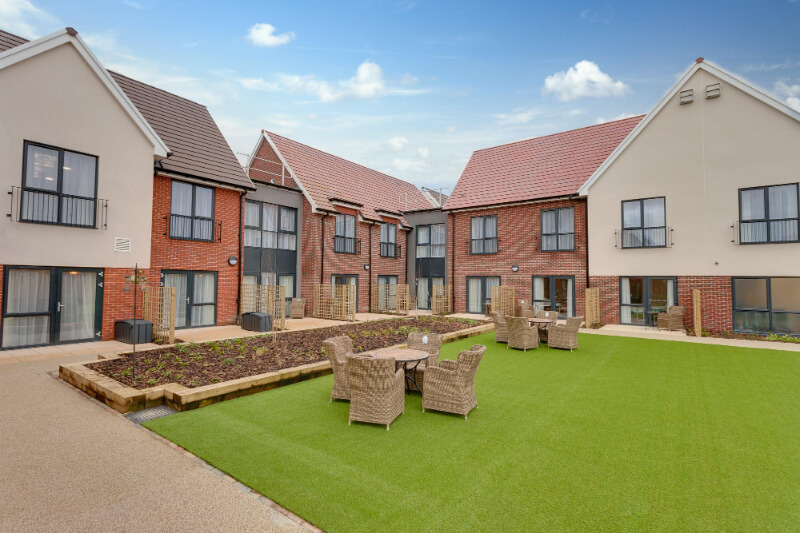
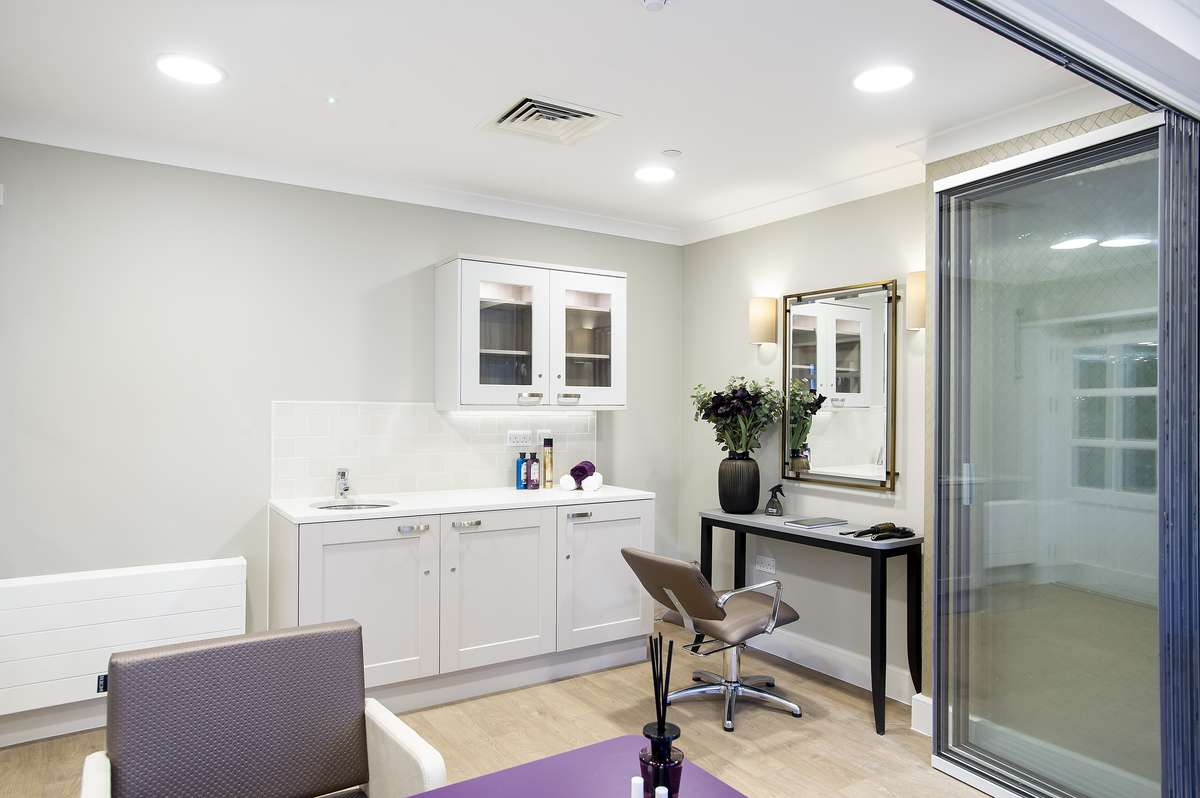
• Spaces that invite socialising through lounge areas, cafes, hobby rooms, library, salon, exercise room and landscaped garden areas
• The physical structure incorporates some level of health care provision, such as a nurse call system, treatment area, on-site staff quarters, and adaptable space for evolving resident needs.
• Energy efficiency to keep operational expenses low, including energy-efficient boiler systems and/or solar power

care-home-uk2.jpg

What we Build

We work across the full range of later living construction from retirement housing to assisted living schemes: 
Retirement Housing (also known as Retirement Apartments or Bungalows):
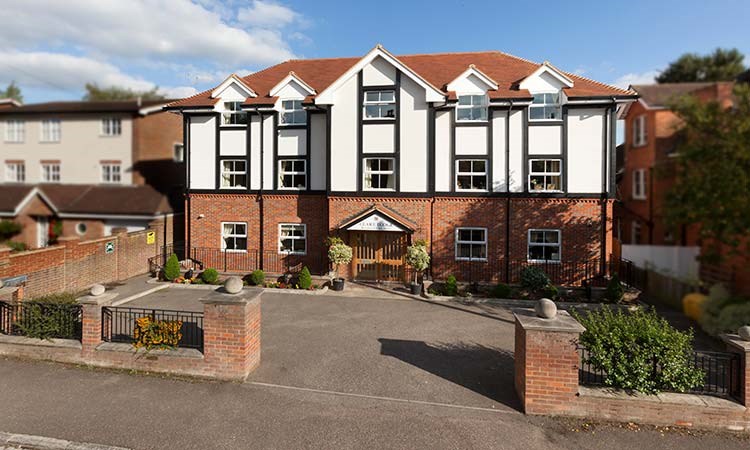
Buildings designed specifically for people aged 55+ or 65+ who want to continue an active lifestyle. Self-contained units with common areas, including lounges, gardens, and a guest suite. Units will be relatively low-maintenance and include an accessible design throughout.
Extra Care Housing:
Large-scale developments (typically 60 units or more) which provide separate accommodation for each resident but also offer access to shared care services, meals, social events, etc. Many Extra Care developments are mixed-tenure, offering both rental and private sale/ownership opportunities within one building. Commercial kitchen facilities, office space for care team members, therapy/treatment rooms and bike/scooter stores are required in addition to residential elements.
Assisted Living Schemes:
Situated somewhere between Extra Care and traditional care homes. Residents can live independently in their own apartment; they may require additional assistance with aspects of their day-to-day life, e.g., personal care, medication management, and daily tasks. The buildings themselves do not feel like institutions because the care is delivered.
Retirement Villages:
Communities made up of multiple buildings, providing a mix of independent living, Extra Care and a care home on one site. Large developments (typically 100+ units), requiring extensive community facilities including restaurants, wellbeing centres, shopping centres, and various other amenity spaces. Building programs for these types of projects typically take several years to complete.

care-home-contractor-uk3.jpg

Why Later Living Construction Is Different

Why is later living construction different? Simply put, you can’t build a later living scheme like it’s a bog-standard residential block. The differences are myriad: practical, regulatory, and commercial.

Design for ageing

Every last detail has to work for people who (at best) can’t get around very well and (at worst) have impaired senses or a brain that doesn’t work like it used to. Think wider corridors, contrasting colours for wayfinding, non-slip flooring, grab rails that don’t scream “institutional”, walk-in showers, accessible kitchens with handy reachworktops, and lighting designed to support circadian rhythm and prevent nasty falls. For units specifically designed for people with dementia, the requirements are even more radical: circular walking routes, visual cues at bedroom doors, a restful colour scheme, a safe outdoor space with therapeutic planting, and so on.

Communal facilities

The whole later living thing lives or dies on its shared spaces. A residents’ café where the residents actually, you know, want to live, a thoughtfully designed garden, an activity room they genuinely frequent? It’s what sells the units and makes local planners warm to the scheme, as it has real community value. From a build perspective, it means designing and constructing mixed-use buildings, apartments above, commercial-grade kitchens and F&B spaces below, and plant and service systems that work for both.

Regulatory framework

Later living sits across multiple regulatory frameworks, depending on the model in question, you might be dealing with Part M (accessibility requirements), Building Safety Act gateway approvals (for taller residential buildings), CQC (if care is being provided on site), planning conditions around use class, and Section 106 obligations. Getting the compliance landscape right shapes the specification and build programme.

Tenure and funding complexity

Many extra-care schemes involve a mixed tenure (affordable rent, shared ownership, private sale), alongside differing specifications, procurement routes, and sometimes even funders, all on the same build. The on-site team should know how the models work and what they need to do about them.
The UK is currently delivering about 4000 later living homes a year, and with market penetration just letting in just 1% of the over 65 population (vs 5%+ in the US, New Zealand, and Australasia), it is as much a part of the housing ‘crisis’ as the conundrum with which our construction industry seems forever battling to come to terms.

care-home-contractors-uk3.jpg

Our Approach to Later Living Projects

We consider later living a specialist sector. This is how we take on later living projects:
Early involvement – we perform well when we are involved from the very beginning of a project, i.e. feasibility and/or pre-planning. The site characteristics of a potential later living development will impact its viability. These include flat or gentle slopes; an accessible location near shops and transportation; and sufficient space for garden areas and car parking.
• Operator-informed design – if you are an operator, a housing association or a developer building to lease, we plan all aspects of your scheme around the needs of the end-user and the intended care model. We consider layouts that facilitate care staff's workflow; kitchens able to serve 80 people; and corridors wide enough for two wheelchairs to pass each other.
• Phased delivery – many large developments are constructed in phases. We schedule the build sequence so that earlier phases can be occupied before later phases are completed, thereby generating revenue earlier and demonstrating demand for the development.
• HAPPI principles - we apply the Housing our Ageing Population Panel for Innovation design guidelines. These emphasise generous internal space standards, natural light, direct access to external space, communal facilities, and flexibility.
• Sustainability – later living residents experience higher energy costs than most. As such, we select building envelope materials with the highest performance possible; efficient heat generation and control mechanisms; and, where possible, achieve BREEAM ‘Very Good’ or ‘Excellent’ ratings and EPC ‘A’ or ‘B’.

care-home-contractor-uk1.jpg

The Mid-Market Opportunity

In recent years, there's been a widening gap within the U.K's Later Living Market. At the upper end of the spectrum, high-end Retirement Villages offer affluent retirees an array of luxurious features and prices that reflect their opulent status. In contrast, the lower end of the spectrum benefits from assistance via Housing Associations and Local Authority Funding.
However, in terms of the mid-range market, i.e., older homeowners who have substantial equity (£150k - £250k), with modest incomes, there is a considerable void. This demographic would like quality, independence & community as part of their living experience. They wish to live in a "home" that feels aspirational rather than institutional.
This particular demographic represents the greatest commercial potential for developers within the later living sector. However, delivering these homes will require a new approach to construction:
Efficient Design that provides a Quality Build without unnecessary specification
• Standardised floor plans & repetitive components to minimise costs
• Modern methods of construction (MMC), where appropriate, off-site manufacturing, modular bathrooms, prefabricated structural elements
• Optimized Space Planning @ approx. 50-65 sqm. per dwelling unit - Compact but NOT Cramped
• Value Engineering that reduces costs without diminishing the aspects of the build that Residents Care About (Natural Light, Outdoor Spaces, Good Kitchens, Warm Community Areas)

We're seeing increasing demand from Developers who wish to focus on this demographic, developing schemes that are financially viable at mid-market price points without compromising build quality or care infrastructure. 

care-home-construction-company1.jpg

Community and Placemaking

The most effective new-build later-living schemes, in our opinion, do not simply represent quality housing; they create a quality place. This has implications for how we think about:

1. Location - Later-living schemes need to be located within an easily walkable neighbourhood where there are nearby shops, cafes, GPs, etc., as well as access to public transportation. Schemes isolated from other communities will rarely succeed.

2. Integration - Successful later-living schemes will engage positively with the immediate community. They should not be gated or 'walled' off from the community at large. We advocate shared spaces (e.g., schools and community organisations) and areas open to the broader public to encourage positive relationships.

3. Intergenerational Design - In addition to providing homes, the very best later-living developments often provide intergenerational opportunities through nursery provision, co-working spaces, community hubs, etc. As these activities support Planning Consent and improve residents' quality of life, this is an important consideration.

4. Outdoor Spaces - Landscaped gardens, raised planters, covered outdoor seating areas, pedestrian pathways which are both safe and appealing. An accessible and attractive outdoor space is a key factor in deciding whether to occupy a scheme.

We create the physical environment that allows for community development. Management and Programming occur after this point; however, without the correct building environment, it would not be possible.

care-home-construction-uk.jpg

Who Do We Partner With?

We build later living construction for:
Specialist Housing Associations creating additional (affordable) housing for Extra Care and Retirement Homes;
• Private Developers developing and selling/leasing Later Living & Assisted Living Schemes;
• Care Operators expanding into Later Living as part of their existing portfolio of Care Homes;
• Fund Managers and Real Estate Investment Trusts (REITs) forward funding Later Living Developments on a Pre-Let/Turn-Key basis.
• Regional Authorities purchasing Extra Care to provide for the housing needs of their ageing population.

Regardless of whether you are planning a scheme consisting of 30 Apartments or a 150-unit village, we have the necessary construction expertise to make your scheme operational, commercial, and suitable for those who will be calling it “home”.

Planning a Later Living Development?

The construction of later living projects is distinct as a professional discipline from conventional residential projects. In addition to meeting the normal residential accessibility standards, there are additional access requirements. There will be greater complexity in the communal infrastructure (e.g., communal kitchen areas, treatment areas, nurse call systems). In addition, the mechanical and electrical system specification must support the care delivery model rather than simply provide a comfortable living environment. Also, since the building must provide for residents' current needs while also offering sufficient flexibility to accommodate those same needs 10-20 years down the line, it is essential that this is factored into all aspects of the design and construction.
We have developed our expertise through our experience working on retirement living, extra-care and assisted living schemes. This includes knowledge of the specific environmental requirements required by CQC-registered settings. We understand how to incorporate treatment rooms, nurse call systems and other communal kitchen areas within a single building design that still meets the definition of "home." We also understand how to phase construction deliveries on live sites so that early units generate revenue as they are occupied, while the remaining phases are still under construction.
If you're currently undertaking a later-living project, we can assist at any point:
• Site evaluation -- is the proposed site suitable for a later living development? Is it sufficiently flat and accessible, and located close enough to local amenities? We'll tell you whether we believe the site is suitable for later living before committing to the purchase.
• Drafting designs -- we collaborate with your architect and design team to ensure the building operates effectively in practice, and not merely on paper. Our focus includes layout and circulation patterns, communal spaces, and back-of-house functions -- all designed from both a construction and care perspective.
• Cost estimating -- as mentioned above, later living developments exhibit a unique cost profile compared to conventional residential projects. We assist clients in creating accurate budgets for specialised components (e.g., nurse call systems and commercial kitchens), which are common in later living projects. These include accessible bathrooms and BREEAM-compliant features.
• Bidding & Procurement -- regardless of whether clients choose a traditional contract route, a Design-Build route, or a two-stage bidding process, we guide clients through the entire process and confirm that the selected contractor is aware of the demands associated with later living.
• Project Delivery -- we deliver the project. On-time, on-budget, and to an acceptable level where CQC would pass the facility upon completion, and residents would wish to occupy the space.

Regardless of whether you're a Housing Association developing an Extra Care program, a Developer seeking to enter the Retirement Living market, an Investor pre-financing a project, or an Operator looking to expand into later living, we are your construction partner who understands your industry.

Contact our team at Care Home Builders. The sooner we are engaged in your project, the more successful it will ultimately be.

FAQ

What’s the difference between later living and a care home?

-

The main difference between a care home and "later living" is that a care home is a type of care facility with an on-site care team. The care team lives in a separate wing from the residents, while the residents reside in bedrooms (often with an en-suite bathroom) and have access to a shared dining area and other common rooms. A care home has been registered with the Care Quality Commission (CQC) and falls within use class C2.
Later Living, however, refers to all forms of housing. Each resident owns their own apartment, which includes a fully equipped kitchen, bathroom, and living space. The resident can live independently; however, the development is designed to provide support as the resident ages through adaptable design elements throughout the building (e.g., hallways and door widths), shared community resources, and variable levels of care provided at the location. Later Living encompasses retirement housing, extra care and assisted living. Depending upon the nature of the project, some may be registered with the CQC, whereas others will not. Therefore, the construction requirements are different. 

What Types of Later Living Projects Does Care Home Builders Build

-

Care Home Builders builds every form of later living projects; independent retirement apartments for active seniors who are aged 55+ or 65+, extra care housing with on-site care teams providing meal service and/or social activities, assisted living housing with greater levels of personal support and larger-scale retirement villages which include multiple buildings on a single campus. In addition to these stand-alone later living developments, we construct the necessary care components in multi-unit/multi-residential developments that incorporate later living as part of the overall development.

How much does it cost to build a later living scheme?

-

Build costs vary significantly depending on specification, location, and scale. As a very general guide, standard later living apartments might cost £2,000–£2,800 per square metre, with extra care schemes at the upper end due to the communal facilities, commercial kitchens, care infrastructure, and higher accessibility requirements. A 60-unit extra care scheme might have an overall construction budget of £8–14 million, depending on the specification and site conditions. We provide cost plans in detail at an early stage to avoid ‘surprises’.

Do later living schemes need planning permission?

-

Yes. Later living schemes need full planning permission. Depending on the care model, the scheme might fall under Use Class C2 (residential institutions) or C3 (dwellinghouses). Extra care schemes with on-site care typically fall into C2, while independent retirement housing might fall into C3. This use class impacts on other planning obligations such as affordable housing contribution, Section 106 requirements, parking standards, etc. We work closely with planning consultants on scheme applications to ensure they accurately reflect the proposed care model and position schemes properly from the outset.

How long does it take to build a later living development?

-

A typical 60–80 unit extra care scheme takes approximately 18–24 months to build once on site. Larger retirement village schemes can take 3–5 years over several phases. The pre-construction work (planning, design, procurement) lasts a further 12–18 months before that. We programme out for phased delivery wherever possible, so that completed units are ready for occupation and generating income whilst later phases are still on-site.

Can you build later living alongside a care home on the same site?

-

Yes, and there are many examples of this type of project currently underway. Retirement villages can provide residents with a range of accommodations, including independent apartment homes, extra care units (which may be located within apartment buildings), and a dedicated care home, all on the same site. In doing so, the residents have access to a wide range of support services and can move along the continuum of care from independent living to higher levels of support while remaining within their current community. The challenge from a construction standpoint is how to manage multiple different types of facilities, varying degrees of specification, and potentially varying regulatory requirements on the same site. Our company has successfully managed this type of "mixed" later living and care project.

Is there a large unmet demand in the U.K. for what we refer to as "mid-market" later living opportunities?

-

There certainly appears to be. The U.K. later living market is significantly skewed towards two extremes. On the upper end of the market, there are abundant high-end luxury retirement communities. At the lower end of the market, there are limited but affordable senior living options through housing association developments. However, in the middle of the spectrum, older homeowners with equity of £150,000-£250,000 looking for quality, independence and community but unwilling to pay upwards of £500,000 for it, there is a major gap in the market. It is believed that the mid-market represents approximately 25 per cent of the total U.K. later living market. To effectively serve this market segment, will require innovative and cost-effective methods for designing and constructing later living products that meet quality expectations while achieving a price point that makes them accessible to the majority of potential customers. This is likely to be the most rapidly growing segment of the later living market and will likely see the greatest number of new development projects undertaken over time.

Do you work with housing associations and/or local authorities?

-

Yes. While our primary focus is developing and marketing private-sale senior housing communities throughout the United Kingdom, we recognise that a considerable amount of Extra Care Housing, a key component of senior living, is developed with public funds and delivered by Local Authorities or Registered Social Landlords/Housing Associations. As such, we have worked with both, providing various forms of housing types across several sites in the form of rental properties (affordable), Shared Ownership, and Private Sale Units. Additionally, because we have extensive experience working with these types of organisations, we understand their procurement processes, funding models, and the social value obligations associated with projects utilising public dollars to develop later-living initiatives.

How do you minimize disruptions when building on a phased site?

-

As a general rule, all large-scale later living projects involve phased construction. When completing a phased construction process, we design our overall construction schedule to ensure that each phase is completed separately from those phases in which construction activity continues. Therefore, we use a variety of noise-reducing barriers (acoustic), effective dust management systems, clearly marked pedestrian paths, and adequate signage to prevent or mitigate distractions caused by ongoing construction activities for residents occupying other phases. Regarding scheduling deliveries and noisy construction activities, we generally aim to conduct them during times when residents are engaged in their daily routines or participating in community events. The phased construction approach is very similar to how we perform care-home renovation projects, but scaled up for larger later-living projects.

Let’s get
started

Would you like to learn more about how we can help you with your next residential or commercial project, fill in your details and a member of our team will be in touch.

This site is protected by reCAPTCHA and the Google Privacy Policy and Terms of Service apply.

Latest From the Blog

care-home-extension-kent3.png
Top 10 Mistakes in Care Home Refurbishment Projects

Refurbishing a care home is harder than it appears. Residents remain living within the home during refurbishment. Care workers continue to provide their services; CQC inspectors could walk into the home tomorrow. All decisions made by the home will affect its ability to ensure the health, well-being, and dignity of its residents, maintain regula..

Read Full Story »
care-home-extension-surrey1.png
What Is the Ideal Size for a Profitable Care Home Development?

What is one of the first things any developer will ask when evaluating a potential care home development? How many beds? It isn't an easy question. If the care home has too few beds, you'll struggle to meet your fixed costs. On the other hand, if you have too many beds and low occupancy, it may take years for them to fil..

Read Full Story »