Mental Health Care Home Construction

We design and build mental health care homes, supported living, and low-secure settings across the UK, environments where clinical safety and genuine recovery can exist in the same building

Mental Health Care Home Construction

Care Home Builders for Mental Health

Constructing mental health care homes is among the most technically demanding tasks in the UK care sector. Facilities must ensure safety for vulnerable individuals while fostering an environment that supports recovery. When this balance is achieved, the building actively contributes to care. If not, even the most skilled staff cannot overcome the limitations of a restrictive environment.
At Care Home Builders, we deliver mental health environments ranging from community-based residential care homes to low-secure units. Our projects meet key standards, including NHS Health Building Note (HBN) 03-01 for mental health facilities, CQC Regulation 15 on premises and equipment, and the evidence-based design principles of the Design in Mental Health Network. This page outlines the essentials of constructing a mental health care home and what you should expect from an experienced contractor.

Who We Build For

We work with organisations that set up, run, or manage mental health residential settings across the UK.
  • Private care providers moving into mental health or building new specialist homes
  • Developers and investors building mental health settings for established providers, either through funding or leasing
  • Housing associations offering supported living and community care for people with mental health needs
  • NHS-backed providers running low-secure and step-down services under specialist contracts
  • Local authorities commissioning community mental health accommodation to meet their statutory duties
Whatever the route, the construction brief is shaped by the care model. If you are developing across multiple specialist areas, you may also want to consider our broader specialist care home construction capabilities, which cover learning disabilities, autism, acquired brain injury, and more.
care-home-construction-company-uk.jpg

Mental Health Settings: Understanding the Spectrum

“Mental health care home” refers to a broad range of settings, each with distinct physical requirements. The first step in any project is to identify where your setting falls on this spectrum, as this will define the construction brief.
Community Mental Health Care Homes
Registered care homes offer residential support for individuals with mental health conditions who require assistance but not clinical or secure intervention. These homes operate under the standard CQC registration framework. Physical requirements are similar to those of other residential care settings, with an increased focus on risk management, privacy, dignity, and a therapeutic environment. Some settings need limited anti-ligature measures, while others do not. The risk assessment informs the construction brief.
Mental Health Supported Living
These settings support individuals with enduring mental health conditions who seek to live as independently as possible with community support. They resemble supported living more than residential care, typically offering self-contained flats with shared communal spaces and on-site or visiting support staff. Design focuses on promoting independence and community integration while maintaining effective support infrastructure.
Low-Secure Units
These settings serve individuals who require security measures that restrict free movement or access to certain areas, but do not need the intensive clinical staffing of medium or high-secure hospitals. Low-secure units require managed access, comprehensive anti-ligature specifications, staff observation points, and an environment that balances safety with therapeutic quality. They follow the supplement to HBN 03-01 for low and medium secure environments and are usually registered as independent hospitals rather than care homes.
care-home-construction-uk.jpg

Anti-Ligature Design: The Specification That Defines the Building

In mental health settings with a risk of self-harm, anti-ligature design is the most critical specification. This approach requires all fixtures, fittings, and surfaces to be selected and installed to minimise opportunities for ligature attachment. HBN 03-01 states that areas where service users may be unsupervised, especially bedrooms and bathrooms, must be designed, built, and furnished to make self-harm or ligature as difficult as possible.
This process goes beyond a simple checklist. It requires a comprehensive ligature risk assessment that informs the design from the earliest stage. Every room, corridor, communal space, and bathroom is evaluated, and the results guide the specifications. We routinely commission these assessments for all mental health projects where self-harm risk is present.
In practice, anti-ligature specification affects:
  • Door handles: anti-ligature lever handles without horizontal surfaces for attachment, using purpose-designed products rather than standard architectural ironmongery.
  • Shower and sanitary fittings: anti-ligature shower heads, taps, soap dispensers, and grab rails designed with no points of attachment
  • Curtain and track systems: breakaway curtain tracks that release under a specified load instead of supporting it.
  • Windows: restricted openings, typically a maximum of 100mm, with tamper-resistant fixings and glazing assessed for impact resistance.
  • Nurse call and electrical fittings: anti-ligature call points without misusable cords or pull mechanisms, and flush-mounted sockets and switch plates without protruding edges.
  • Doors and ironmongery: anti-barricade hinges and handles, with doors that open outwards or can be released externally in an emergency.
  • Furniture: weight-rated and fixed where necessary, or assessed to present no ligature risk. 
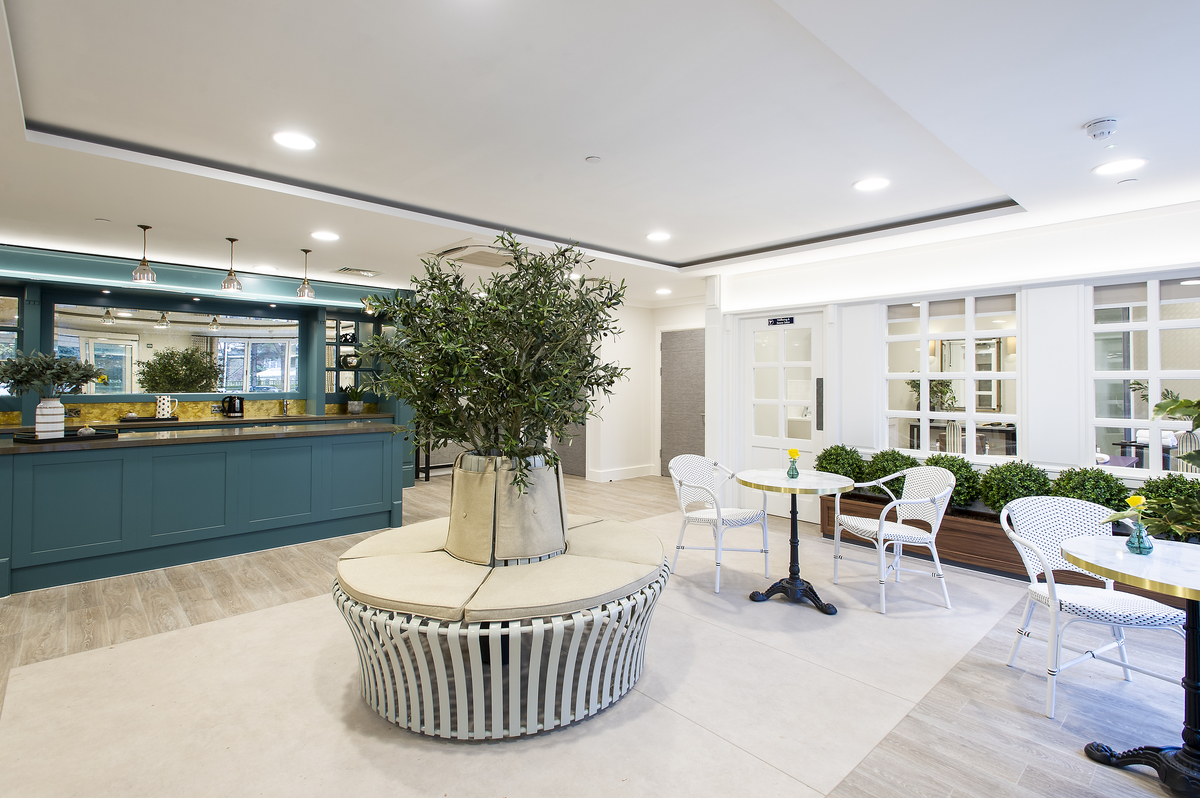
Importantly, anti-ligature design does not require an institutional appearance. The most effective mental health environments are domestic in look and feel. The Design in Mental Health Network has extensively researched products that are both clinically safe and homely. We specify from this evidence base, achieving safety through thoughtful product selection and detailed design rather than through bare walls or visible restraint.
care-home-construction1.jpg
Observation, Sightlines, and Managed Access
Mental health care delivery depends on staff being able to observe residents – discreetly where possible, directly where clinically necessary. The building layout must support this without creating a surveillance atmosphere that undermines residents’ dignity and sense of safety.
  • Staff stations are positioned to provide clear sightlines to communal areas, bedroom corridors, and key transition points.
  • Glazed observation panels are installed where clinically required, using privacy film or frosted lower sections to balance visibility and dignity.
  • Managed access doors are located at strategic points, typically at the entrances to residential wings and between risk zones. These doors are coded or fob-operated, with a staff override function.
  • De-escalation rooms with direct sightline from the staff station, specified with calming finishes, controllable lighting, and robust construction
  • Anti-barricade doors are provided throughout to ensure staff can always reach a resident in distress.
The Therapeutic Environment
A mental health setting that looks and feels like a prison does not support recovery. The evidence is unambiguous: the physical environment has a direct impact on mental health outcomes. Buildings that are warm, well-lit, visually calm, and connected to nature support therapeutic progress. Buildings that are austere, institutional, and cut off from the outside world do not.
We design mental health environments that deliver clinical safety without sacrificing therapeutic quality:
  • Natural light is maximised through strategic window placement and internal glazing.
  • Biophilic design is incorporated through views to gardens, the use of natural materials, and indoor planting where practical.
  • Evidence-based colour palettes are used to create a calming atmosphere without appearing clinical or bland.
  • Acoustic comfort is achieved through sound absorption to reduce echo and background noise, which many residents find distressing.
  • Communal spaces that encourage interaction without forcing it: subdividable lounges, quiet corners alongside more active areas
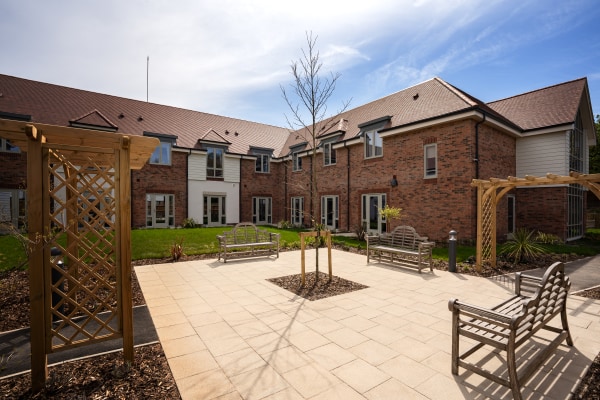
  • Secure outdoor spaces include seating, planting, and walking routes. Access to the outdoors should be considered a right, not a privilege.
care-home-construction10.jpg

Planning and Registration

Mental health care homes use the same Use Class C2 planning route as other care homes. However, applications must address the specific care model, client group, security measures, and the building’s relationship with its surroundings. Local authorities closely review mental health settings, so early community engagement is important. For a comprehensive overview of the planning process, see our guide to planning permission for care homes.
Registration is more complex than for standard care homes. Facilities operating under the Mental Health Act require specific registration. Those providing treatment for mental disorders may be registered as independent hospitals and assessed against CQC standards for that category. We advise on the appropriate registration route at the design stage to ensure the building specification meets requirements from the outset, avoiding costly changes after handover.
What We Deliver
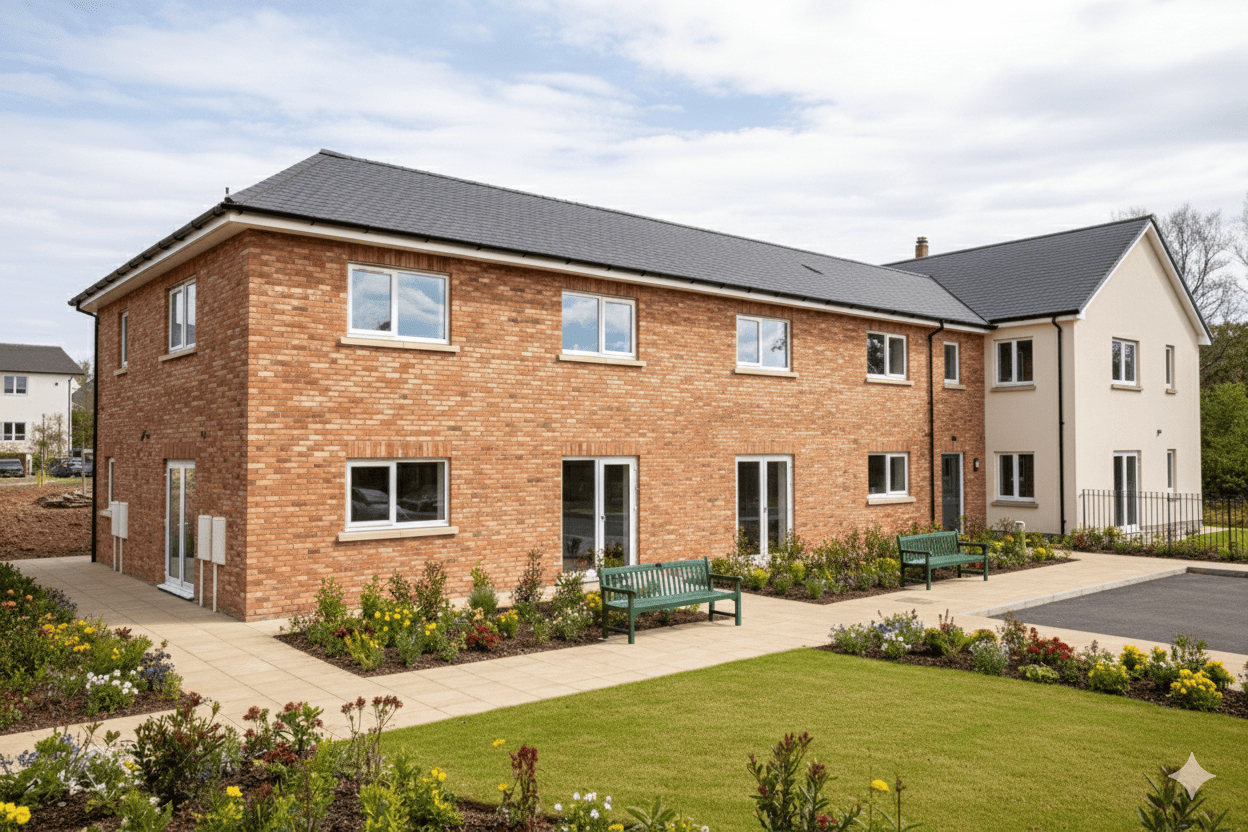
  • New-build mental health care homes: purpose-built community residential settings designed to support the care model from inception.
  • Low-secure unit construction: anti-ligature, managed-access environments built to HBN 03-01 supplement standards.
  • Mental health supported living: self-contained accommodation with integrated support infrastructure.
  • Extensions and reconfigurations: adding capacity, de-escalation suites, or assessment space to existing facilities.
Refurbishment of existing settings: upgrading older mental health environments to current anti-ligature and therapeutic design standards, delivered in operational facilities. See our care home refurbishment service for details on working in occupied buildings.
care-home-construction-uk5.jpg

Why Care Home Builders

Building for mental health is not something just any contractor can do. The risks are significant, and the requirements are detailed. Here is what we offer:
  • Real experience in the sector, including HBN 03-01, CQC registration, ligature risk checks, and understanding how commissioning works
  • We get involved early to help define the type of setting and assess risks before any design work starts. This way, the brief is right from the beginning.
  • We have a trusted network of anti-ligature product experts, mental health architects, and clinical advisors.
  • Our experience covers the wider specialist sector. You can also look at our work in learning disability, autism care homes, and nursing home construction for more on what we do.
  • We deliver projects where therapeutic quality and clinical safety are both top priorities. We do not see them as competing goals.
Planning a Mental Health Care Setting?
If you are a developer looking at a site, an operator moving into mental health, a housing association working on supported living, or an NHS-backed provider planning a low-secure unit, we want to hear from you. Getting us involved early leads to better results. The most important decisions in mental health construction happen right at the start.

FAQ

What building standards apply to mental health care home construction?

-
The main standard is NHS Health Building Note (HBN) 03-01, which addresses the design and planning of adult mental health facilities, including a supplement for low and medium secure environments. All care settings must also comply with CQC Regulation 15 on premises and equipment, Building Regulations, fire safety requirements, and, where there is a risk of self-harm, a thorough ligature risk assessment to inform the detailed specification.

What is anti-ligature design, and is it required in every mental health setting?

-
Anti-ligature design reduces the risk of self-harm by specifying fixtures, fittings, and surfaces that prevent the attachment of ligatures. It is required wherever residents are at known risk of self-harm. The extent of anti-ligature measures is risk-based: community care homes for individuals with mild to moderate conditions may require only limited measures, while low-secure units need comprehensive anti-ligature specifications. We begin each relevant project with a ligature risk assessment.

What is the difference between a mental health care home and a low-secure unit?

-
A community mental health care home is registered with CQC as a care home and supports individuals who do not need physical security. In contrast, a low-secure unit offers managed access, comprehensive anti-ligature measures, and secure boundaries to prevent residents from leaving freely. Low-secure units are usually registered as independent hospitals and are commissioned by NHS England specialised commissioning rather than local authority adult social care.

Who commissions and funds mental health residential settings?

-
Community mental health care homes are mainly commissioned by local authority adult social care departments and NHS Integrated Care Boards. Low and medium secure settings are commissioned by NHS England specialised commissioning. In both cases, operators must demonstrate an appropriate care model and a building that meets the required physical standards. Early engagement on building design before commissioning is strongly recommended.

How long does it take to build a mental health care home?

-
Constructing a community mental health care home with 10–20 bedrooms typically requires 12–18 months on site, following a 12–18 month pre-construction phase. Low-secure units are more complex and may take 18–24 months on site. Anti-ligature commissioning and testing extend the handover period compared to standard care homes.
 

How much does it cost to build a mental health care home?

-
Mental health settings with anti-ligature specifications generally cost 20–30% more than standard care homes of similar size, due to specialist fixtures, managed access systems, observation infrastructure, and robust construction. For a detailed cost breakdown, please refer to our guide on care home construction costs.

Let’s get
started

Would you like to learn more about how we can help you with your next residential or commercial project, fill in your details and a member of our team will be in touch.

This site is protected by reCAPTCHA and the Google Privacy Policy and Terms of Service apply.

Latest From the Blog

care-home-construction1.jpg
Care Home Construction Funding in the UK: Every Option Explained (2026)

The funding approach for a care home development determines the procurement route, design brief, tenure model, and return profile. Securing the appropriate funding structure before finalising the design is as critical as the building itself. ..

Read Full Story »
care-home-building-contractors.jpg
Sustainable Care Home Construction: BREEAM, Net Zero, and Energy Efficiency in 2026

Sustainability in care home construction is now a planning requirement, an investor expectation, and a critical financial concern for operators whose residents face unaffordable energy bills. This guide explains BREEAM certification fo..

Read Full Story »