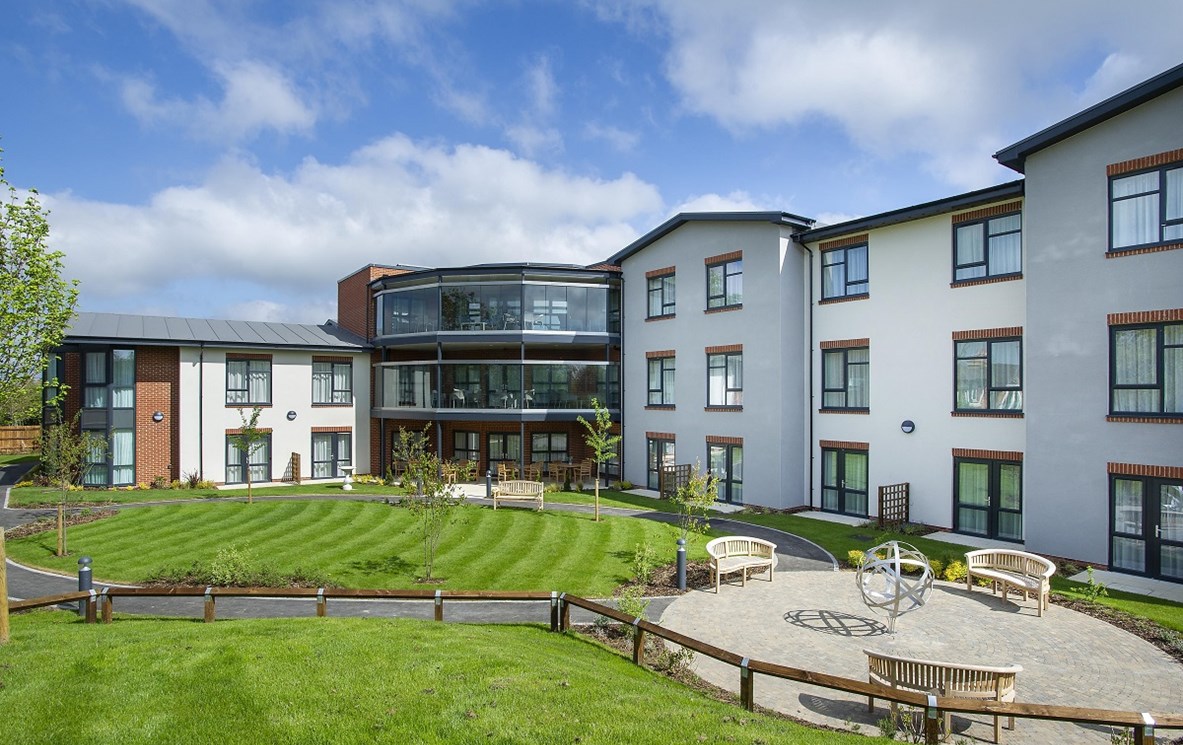
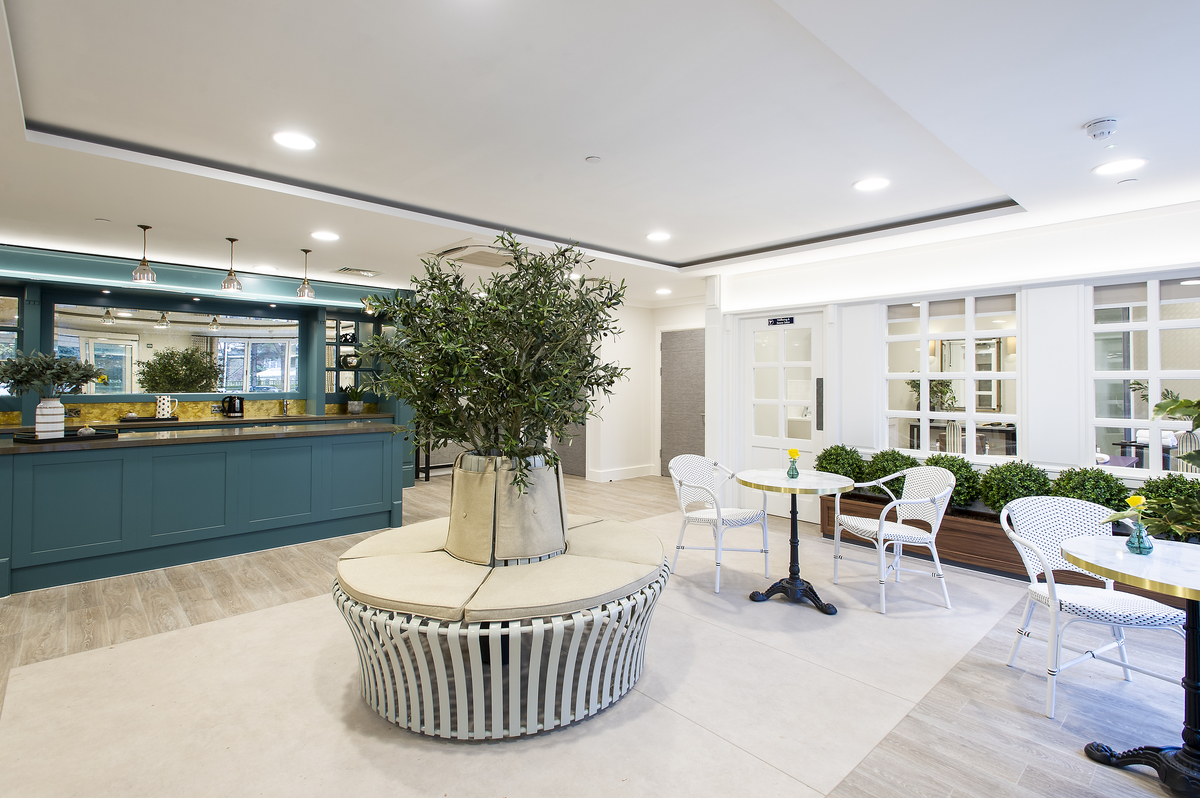
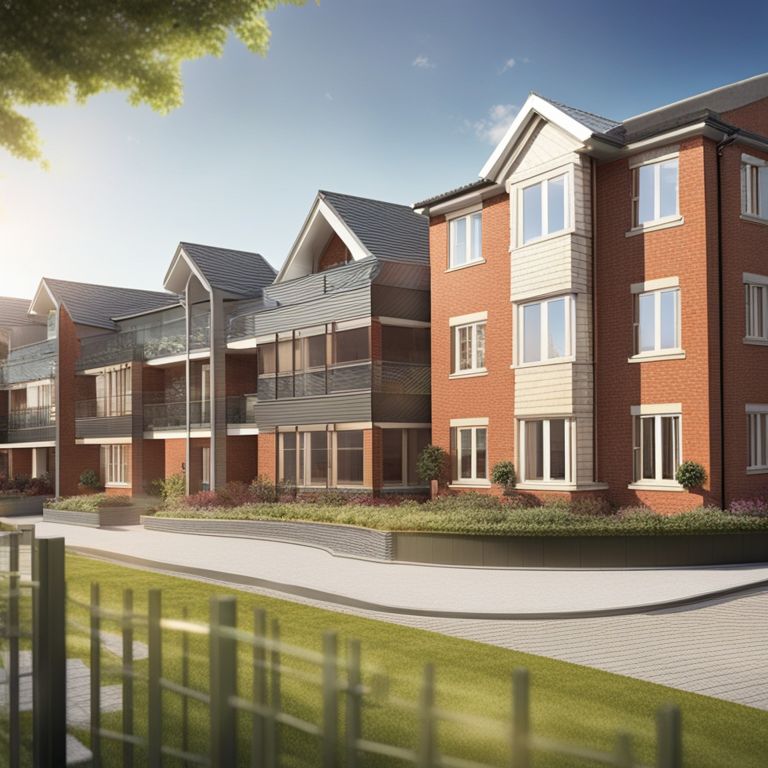
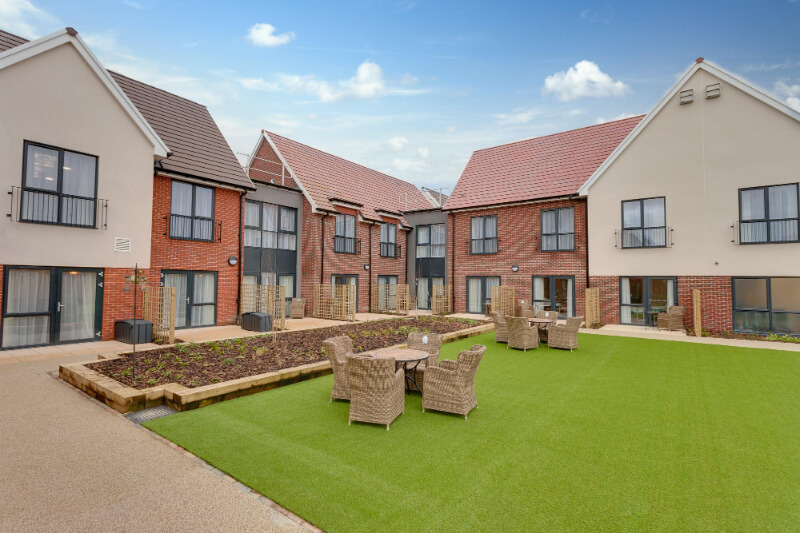
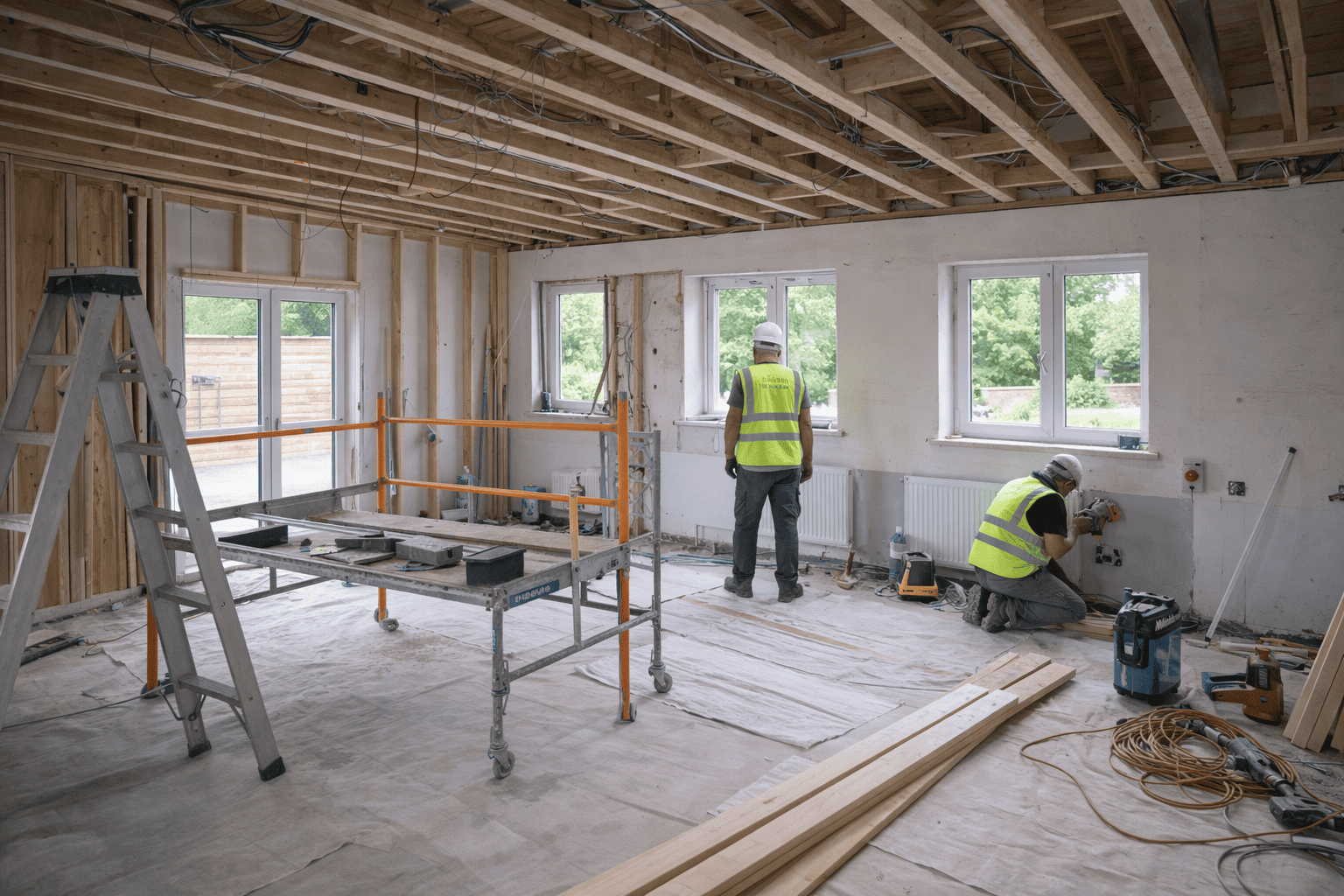
We construct, expand and renovate care homes all over Northamptonshire, including new developments in Northampton, Kettering and Corby as well as renovation work in Wellingborough, Daventry, Towcester and the county's market towns. Since our specialism is in the care sector, all the projects we carry out are designed in accordance with CQC compliance, HTM/HBN standards and the practical demands of managing a care home.
We offer a full design-and-build service to care operators, developers, and investors in both West and North Northamptonshire, and our activities span four main areas:
Northamptonshire has changed considerably in recent years, with new housing, expanding towns and improved transport links continuing to shape demand for health and social care. For anyone considering a new care home development, however, the opportunity varies significantly depending on where in the county you look.
Today, Northamptonshire is governed by two unitary authorities, West Northamptonshire and North Northamptonshire. We work across both areas, helping care operators, developers and investors assess potential sites and deliver new care homes that respond to the needs of the local market.
As the largest town in the county, Northampton naturally has one of Northamptonshire's biggest and most varied care markets. We cover Northampton itself as well as areas including Kingsthorpe, Abington, Duston, Wootton and the surrounding villages.
The presence of Northampton General Hospital is an important consideration for the local care sector, particularly where residential, nursing, rehabilitation or step-down care is required following a hospital stay.
The market also changes considerably as you move across the town. Some suburban areas and surrounding villages have stronger private-pay potential, while other parts of Northampton have greater demand for local authority-funded provision.
From a development perspective, Northampton's location is another advantage. The M1 and A45 provide excellent connections with Milton Keynes, Rugby and the wider Midlands, which can help with staff recruitment, supply chains and access for visiting families.
Western and southern Northamptonshire present a different type of opportunity. Daventry, Towcester, Brackley, Silverstone and the surrounding villages combine rural communities with some relatively affluent market towns.
Towards Brackley and Towcester, proximity to Oxfordshire, Buckinghamshire and Milton Keynes creates a sizeable commuter population. Higher property values and home ownership in parts of this area can also support a stronger self-funded care market.
For developers looking at premium residential, dementia or nursing care, the opportunity is therefore not necessarily about building the largest possible home. A well-located development with good bedrooms, attractive communal spaces, accessible gardens and a strong overall specification may be better suited to the local market.
The A43 also provides an important north-south connection through this part of the county, with access towards both the M1 and M40.
Kettering is one of the principal care markets within North Northamptonshire and serves a much wider catchment than the town itself. Our coverage includes Kettering, Burton Latimer, Rothwell, Desborough and surrounding communities.
Kettering General Hospital plays an important role in the local health system, so the availability of suitable nursing and residential placements is particularly relevant when considering future care provision.
Kettering itself has a mixed funding market. Surrounding villages and market towns can offer stronger potential for self-funded care, while other parts of the catchment have greater demand for local authority-supported placements.
Good access to the A14 and A43 also makes the area practical from an operational perspective.
Corby's care market needs to be considered slightly differently.
The town has experienced substantial housing and population growth. Although its overall population has historically been younger than some other parts of Northamptonshire, the number of older residents will increase as that population ages.
For a developer looking at Corby, this means thinking beyond today's demand and considering what the local population may require over the lifetime of a new care home.
The likely funding mix is also important. A scheme here may need to accommodate a greater proportion of publicly funded residents than a premium development in parts of South Northamptonshire. That affects everything from the initial appraisal and build cost to the eventual operating model.
Wellingborough already has an established care sector, but that does not necessarily mean there is no room for new development.
One of the questions we look at is the quality and age of the existing stock. An area may appear reasonably well supplied when measured purely by bed numbers, yet still have a shortage of modern bedrooms, en-suite wet rooms, specialist dementia environments or purpose-built nursing accommodation.
Wellingborough, Earls Barton, Wollaston, Bozeat and the surrounding villages also have different demographic profiles. Some of the more affluent communities can support a greater proportion of self-funded residents.
With access to the A45 and A509, Wellingborough is also well connected to Northampton, Kettering and the wider North Northamptonshire area.
The eastern side of the county includes Rushden, Higham Ferrers, Irthlingborough, Raunds, Thrapston and a network of smaller towns and villages.
This part of Northamptonshire is particularly interesting because care provision becomes more dispersed as you move away from the larger towns. In smaller communities, families can have fewer options when a relative needs residential, nursing or dementia care close to home.
Rushden and Higham Ferrers provide larger population centres, while towns such as Raunds and Thrapston can serve wider rural catchments.
The area's proximity to Bedfordshire and Cambridgeshire is also relevant. A care home's true catchment does not stop at a county boundary, so feasibility work should consider neighbouring communities as well as the immediate postcode.
When we assess a potential care home site, we don't simply look at the number of people aged over 65 and assume that demand exists.
We look more closely at what is already available.
How old are the existing homes? What types of care do they provide? Are there enough nursing and dementia beds? What are local occupancy and fee levels? How much of the market is privately funded? Where will staff come from? What new housing is being built nearby? And, importantly, does the site itself have a realistic route through planning?
These questions can reveal opportunities that aren't obvious from headline bed numbers alone.
A town may already have several care homes but still lack the type of modern, purpose-built accommodation that today's residents and operators are looking for. Equally, an apparently underserved rural location may not support a large development if the staffing catchment or local demand is too limited.
As specialist care home builders in Northamptonshire, we can become involved at the feasibility stage, before substantial money is committed to a scheme. Whether you already own a site or are considering purchasing land, we can help assess the opportunity, develop the design and take the project through planning and construction.
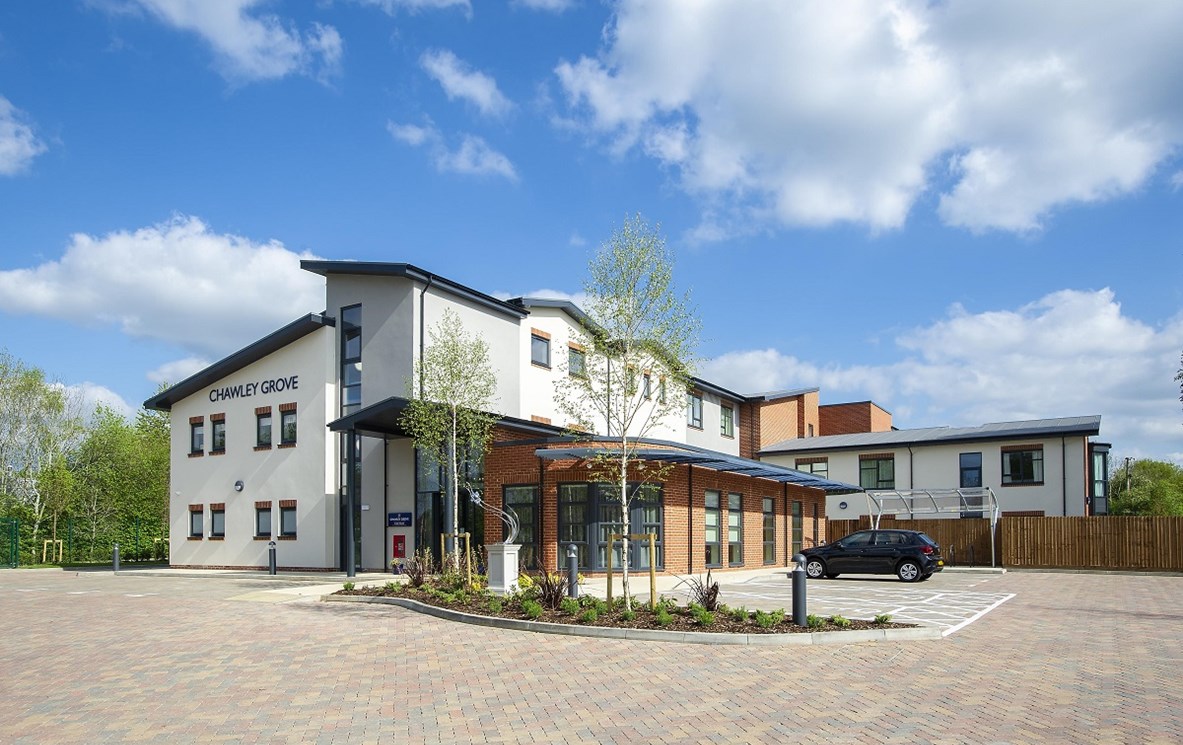
From the first conversation to final handover, we keep the process straightforward and make sure you always know what happens next.
We start by understanding your plans, including the site, type of care, proposed bed numbers, budget and timescale. We’ll also flag any obvious planning or viability concerns at an early stage.
We assess the site or existing building, looking at development potential, planning considerations, likely costs and the local care market. The aim is to establish whether the project works before significant money is committed.
Our team develops a practical care home design around residents, staff and day-to-day operation. We can also coordinate pre-application discussions and the planning process with the relevant local authority.
Once approvals are in place, we manage the build from groundworks and structure through to M&E, fit-out and finishes. You’ll have a dedicated project manager and regular updates throughout.
Before completion, the building is inspected, tested and commissioned. We work through any final items and remain available after handover for snagging and follow-up support.
One team, from early feasibility through to a completed care home.
In the past few years, Northamptonshire experienced financial troubles leading to the abolition of the old Northamptonshire County Council in 2021. The county now comprises two unitary authorities: West Northamptonshire Council (which consists of Northampton, Daventry and South Northamptonshire) and North Northamptonshire Council (Kettering, Corby, Wellingborough and East Northamptonshire). All planning applications are submitted to the relevant Unitary Authority, depending on the location of your proposed project. Both Unitary Authorities have adult social care commissioning roles. Both are also running their own care home DPS (Dynamic Purchasing System) frameworks. For NHS purposes, both Authorities fall within the same Northamptonshire ICS (Integrated Care System). As such, we operate with both Authorities in day-to-day activities and facilitate engagement with both planning and commissioning parties as part of our service.
It means that the Council is currently proactively seeking out new suppliers to provide placements for older adults requiring residential and/or nursing care. Should you be opening a new care home or extending an existing one and subsequently registering with the DPS, you will have access to a direct route to placements funded by the Council. This provides additional funding streams beyond income from private clients, giving you a broader, more financially secure base to cover fill-up rates and ongoing operational costs. The DPS covers all three forms of care (residential, nursing, and respite) for older adults. Registration requires CQC registration and compliance with service and quality standards set by the Council - i.e., a building that meets those requirements as a result of proper construction and registration. We can assist with navigating the commissioning process as part of our handover and post-opening services.
Not necessarily. Population growth leads to more individuals entering the county; however, the care home market is primarily driven by the older adult cohort. Northamptonshire has a higher percentage of older adults than other parts of the country. Between 2010 and 2021, Northamptonshire's 65+ age group increased by 30%, whereas nationally it increased by only 20%. Furthermore, West Northamptonshire estimates that this age group will increase by another 24% in the next decade alone. The total population increase includes many younger adults moving into the county who do not presently require care; however, these younger adults will require care in approximately 20-30 years. Therefore, the current demand pressure among elderly adults is very real. Unfortunately, the current care home stock is not growing at the rate required to meet this demand.
The highest self-funding demographics are found in the rural southern and western areas of West Northamptonshire, namely in the village areas around Towcester, the Brackley area, and the South Northamptonshire commuter belt stretching towards the borders of Oxfordshire and Buckinghamshire. Self-funding potential exists to varying degrees in the surrounding villages of Wellingborough, around Kettering market town, and, to some extent, in the rural areas of East Northamptonshire. Urban areas of Northampton and Corby have higher levels of deprivation in some areas; therefore, they may have a higher proportion of LA-funded mix, which may change the specification and fee structure, although this does not rule out a viable development opportunity should there be evidence of genuine unmet needs.
Planning policies for both West and North Northamptonshire Authorities have historically supported well-evidenced care home developments on suitable locations. Given documented demographic growth and identified future care demand across the county, demonstrating need is relatively easy within planning terms. In some instances, urban expansion sites along with allocated housing land on the outskirts of Northampton, Kettering and Corby have included care provision as part of planning agreements. However, due to considerations of landscape character and settlement patterns in South Northamptonshire, rural applications require much closer scrutiny when selecting sites. We provide end-to-end management services for planning purposes, including pre-application consultations.
Yes, and developing a mixed residential/nursing care facility would appear to be an attractive option, commercially speaking, for the Northamptonshire market. Dual registration for both residential and nursing care allows flexibility to treat a broader range of residents, accept NHS discharge placements which require nursing support, and respond to the increasing complexity of need demonstrated by both councils. Additionally, having dual registration allows you more opportunities under the DPS Commissioning Framework, which covers both categories of care. Design implications are relatively minor - nursing wings require specific clinical facilities, assisted bathroom facilities, etc., nurse call systems throughout etc. - and we build to this specification as standard.
Would you like to learn more about how we can help you with your next residential or commercial project, fill in your details and a member of our team will be in touch.
Land is the scarcest input in care home development. Particularly in the South East, where demand is highest and supply is tightest, the sites that make economic sense are often inside or adjacent to the Green Belt. For most of the last four d..
Read Full Story »
FF&E, short for furniture, fixtures, and equipment, is the line item in a care home development budget that is underestimated more consistently than any other. It is not in the building contract. It does not show up in the QS cost plan. It..
Read Full Story »