Sustainable Care Home Construction: BREEAM, Net Zero, and Energy Efficiency in 2026
May 28, 2026
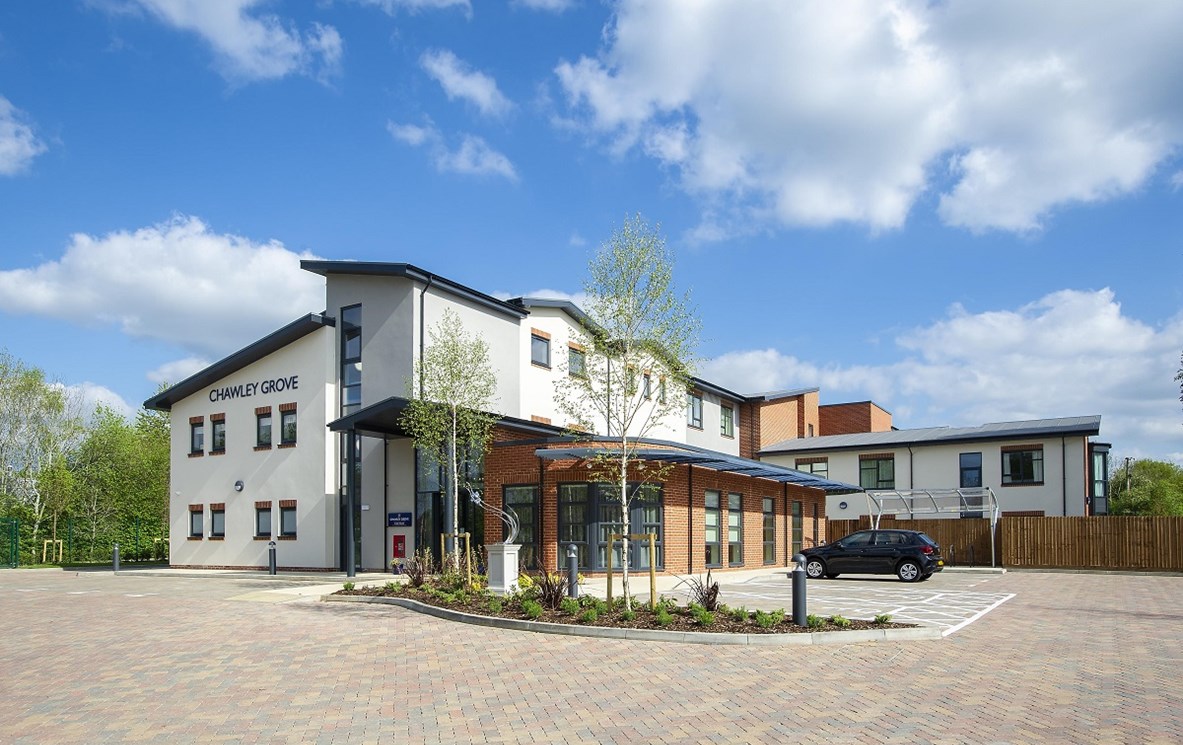
Sustainability in care home construction is now a planning requirement, an investor expectation, and a critical financial concern for operators whose residents face unaffordable energy bills.
This guide explains BREEAM certification for care home developers, outlines net zero design at the care home scale, and details why the commercial case for sustainable construction now outweighs regulatory requirements.
Why Sustainability Matters More in Care Home Construction
Care homes have a unique energy profile. Resident care homes have a distinct energy profile. Residents are present 24 hours a day and require ambient temperatures of approximately 23°C, which is warmer than the 18–21°C range typical of residences. Kitchens, laundry, and care equipment further increase energy demand. Many residents are on fixed incomes, making rising energy costs a direct financial burden. A care home with an EPC A or B rating has materially lower running costs than one with an EPC D or E rating. For a 60-bed home, the difference in energy bills between a poorly specified and a well-specified building can run to £50,000–£80,000 per year. Over a 25-year lease, that's a significant number.
For investors and developers, sustainability credentials are now closely linked to asset value, financing opportunities, and planning approval.EEAM (Building Research Establishment Environmental Assessment Method) is the UK's leading sustainability certification for buildings. The current version, BREEAM New Construction Version 7, was released in 2025 and emphasises whole-life carbon assessment – looking at both operational energy and the embodied carbon in the materials used to construct the building.
BREEAM rates buildings on a five-tier scale: Pass, Good, Very Good, Excellent, and Outstanding. For care home developments in 2026:
- BREEAM 'Very Good' is the most commonly required rating in planning conditions for major care home projects. Most local authorities specifying BREEAM set this as the minimum standard.
- BREEAM 'Excellent' is increasingly sought by premium operators and institutional investors. It can be achieved without significant additional cost when incorporated from the design stage.
- BREEAM 'Outstanding' is rare but attainable in care homes. Oakland Care's Harpenden Springs development is targeting 'Excellent' and reflects the direction of leading market operators.
BREEAM assessment covers ten categories: energy, water, materials, ecology, health and wellbeing, transport, waste, pollution, management, and innovation. For care homes, energy, health, and wellbeing are typically most important. Engaging a certified BREEAM assessor early in the design process is essential, as retrofitting compliance is significantly more costly than designing for it from the outset.
Net Zero Design in Practice
A net zero care home generates as much energy as it consumes annually by combining significant demand reduction with on-site renewable generation. The typical pathway to net zero for care homes includes:
Fabric First
High-performance insulation in walls, roof, and floor, with U-values exceeding Part L Building Regulations minimums. Triple-glazed windows. Airtight construction with mechanical ventilation and heat recovery (MVHR) to maintain air quality and minimise heat loss. A well-designed building fabric reduces heating and cooling loads before renewable systems are considered.
All-Electric Heating
New care homes built in 2026 should exclude gas boilers. Air source heat pumps (ASHPs) are now the standard for care home heating, delivering three to four units of heat energy per unit of electricity consumed. Ground source heat pumps are suitable for larger sites with adequate land, while district heating connections are viable in urban areas where available.
Heat pumps operate most efficiently at lower water temperatures, typically 45–55°C compared to 80°C for gas boilers. They should be paired with underfloor heating or oversized radiators, and the building fabric must be sufficiently efficient to support lower-temperature outputs. These design considerations should be addressed early.
Solar PV
Roof-mounted solar photovoltaic panels are standard in sustainable care home developments. A 60-bed care home typically has enough roof space for a 50–80 kWp system, which can significantly offset daytime energy use, especially in summer. Battery storage systems can extend self-consumption into the evening hours when care activity continues, even as solar generation decreases. The System (BEMS) monitors and controls energy use across the whole building – heating, hot water, ventilation, and lighting. In a care home, BEMS allows staff to control temperatures in individual rooms, identify equipment faults before they become significant failures, and demonstrate to inspectors and investors that energy management is actively governed.
EV Charging and Biodiversity Net Gain
Both are now standard expectations. EV charging in car parks, with at least one point per five spaces and capacity for expansion, is increasingly required by planning conditions. A 10% biodiversity net gain, now mandatory under the Environment Act 2021 for most new developments, must be integrated into landscaping from the outset. Care home gardens with native planting, hedgerow boundaries, and mature trees can achieve biodiversity net gain without extra cost.
The Commercial Case in 2026
The investment case for sustainable care home construction is stronger than ever:
- ESG-focused institutional investors – REITs, pension funds, and impact investors – increasingly require BREEAM certification as a condition of investment.
- Green finance facilities from mainstream banks offer preferential rates for BREEAM-certified or EPC A/B-rated assets.
- Planning consent is easier and faster for projects that exceed sustainability requirements. Proactive sustainability credentials can reduce objections and speed up approval.
- Lower running costs support higher occupancy – residents stay longer in homes where bills are manageable.
- Staff recruitment and retention benefit from a high-quality, well-designed work environment. Sustainable buildings often provide better air quality, improved daylighting, and lower ambient noise.
Oakland Care is the UK's first care home group to achieve carbon neutrality. Their latest development targets BREEAM Excellent, reflecting the market's direction. Developers and operators who lead in this area will gain a genuine competitive advantage.
Thinking About a Care Home Project?
At Care Home Builders, we provide care home construction and refurbishment services across London, the South East, the Midlands, and beyond. Whether you are building a new facility or upgrading an existing one, we welcome your enquiry.
Recent Blogs
- Grey Belt and Care Home Planning: What the 2026 NPPF Changes Mean for Developers
- The Care Home FF&E Guide: What It Costs, What CQC Requires, and Where Developers Underbudget
- CQC Registration for a New Care Home: The Full Process, Timeline, and What Goes Wrong
- Care Home Development Finance Explained: Senior Debt, Mezzanine, and Forward Funding
- How Your Building Design Affects Staffing Costs — and Why It’s Worth More Than You Think