What Is the Ideal Size for a Profitable Care Home Development?
March 23, 2026
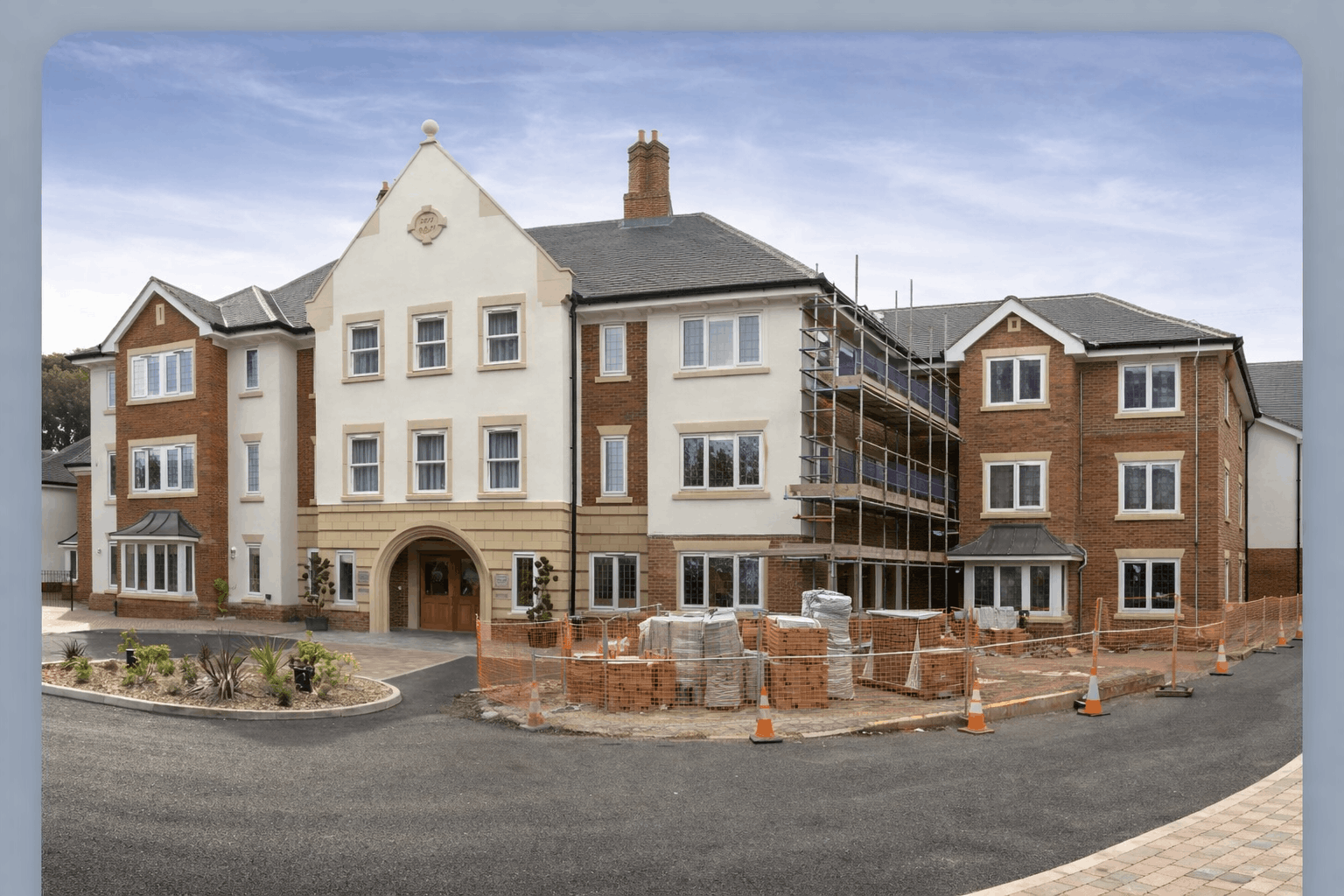
What is one of the first things any developer will ask when evaluating a potential care home development? How many beds?
It isn't an easy question. If the care home has too few beds, you'll struggle to meet your fixed costs. On the other hand, if you have too many beds and low occupancy, it may take years for them to fill up. There are numerous factors to consider when determining the ideal number of beds for a care home: location, local demand for care, the type of care provided, and the capital invested.
However, there appears to be a "sweet spot" that most of the experienced developers and owners have identified. Data also supports this notion.
In this guide, we will review how different care home sizes affect profitability across all stages, including the initial design and planning phases, hiring staff, achieving optimal occupancy rates, and delivering long-term financial returns.
Why Is Care Home Bed Count A Commercial Issue, Not Just An Architectural Issue? The number of beds in a care home determines nearly all of the subsequent elements. This includes determining your build cost per bed, staffing plan, fee structure, CQC compliance approach, and overall profit margin.
Unfortunately, many care home developers view bed count as a function of the physical site - "How many beds can I put on this site?" While this is a good place to start, it is not the right one. The better question is, "What size care home will allow us to provide the care model we desire at a price that will be profitable?"
There are several reasons why the above distinction is important:
• A 30-bed care home and a 70-bed care home require the same Registered Manager, the same kitchen, the same laundry equipment and virtually the same reception and administrative support. However, a 70-bed care home will spread the same fixed costs over two-and-a-half times as much gross income as a 30-bed care home.
Mid-Range: 40–60 Beds
Most care homes in the U.K. fall within the 40-60-bed range. The current national average is approximately 47 beds. While 40-60 beds are a practical size for most care homes, they do not yield the highest profit margins.
While 40-60 beds provide a fair level of economies of scale in both staffing and shared infrastructure, they do not yield enough savings to make the economics particularly compelling.
Some of the trade-offs associated with developing a care home of this size include:
• Financial viability, especially in areas with high demand for private pay.
• Some sensitivity to occupancy fluctuations - 10 unoccupied beds in a 50-bed home represents 20% vacancy, and could potentially wipe out the operating profit.
• Well-suited to conversions of larger buildings such as former hotels, larger homes and office blocks where space is limited.
"Sweet Spot: 60-80 beds"
As Knight Frank's data shows, the majority of the new-build developments will be built to house 60-80 beds. This is because 60-80 beds is the sweet spot for care home sizes in the UK. Average new builds currently house over 70 beds. The fastest-growing segment of the market is purpose-built homes with 60-79 beds. This segment saw approximately 3.6% growth last year.
The 60-80 beds segment is the best range for several reasons:
• Fixed costs are spread across the number of beds to achieve profit margins. EBITDARM for this range is approximately 28-29% of total income.
• Staffing ratios achieve the most efficient staffing ratio. It is possible to have separate units for residential and nursing/dementia patients. This reduces duplication of senior staff.
• The building makes architectural sense. The most common design is two or three stories with 20-30 beds per story. This is a simple and effective design for both care delivery and fire evacuation.
• This size allows for all the amenities that help drive occupancy and CQC scores - lounges, dining rooms, activity spaces and gardens.
• There is a wide range of operators interested in the 60-80 bed range. Whether you're building to sell or lease, this is the most attractive size for potential buyers/lessees.
Large Scale: Over 80 Beds
While some developers build larger care homes, and while there are certainly large-scale homes in operation in the UK, it is often said that "bigger" is not always "better." The advantages of developing larger care homes are many. However, when it comes to developing larger care homes, there are also many disadvantages. Some of the main disadvantages include:
• Obtaining planning permission is more difficult for larger homes. Large care homes generate significantly more traffic and create a greater visual impact. In addition, many neighbours may object to the presence of a large care home in their community. As such, in residential neighbourhoods, anything with more than 80 beds may seem "institutional."
• Building occupancy takes longer. For example, a 100-bed care home could take up to 18-24 months to become fully occupied. Therefore, owners of larger care homes will be required to absorb the costs of the empty beds during this period.
• The quality of care provided to residents can suffer. Many residents and families are looking for a "home" type of atmosphere within a care setting. If a care home is too large, it can provide a very impersonal and "hospital-type" experience for residents. To avoid creating a large, impersonal care home, the care home should be designed as multiple smaller units, each housing 20-25 beds.
• Similarly, there are additional staffing costs associated with larger care homes. For example, in Scotland, care homes with 61-80 beds are now required to have a Deputy Manager who spends 100% of their time as a supernumerary. Care homes with 81-100 beds require a Unit Manager. These positions are additional expenses.
If a developer has identified a high level of demand for care services in a particular area and can design the larger care home to provide a "home-like" experience for its residents, then 80-90 beds may be viable. However, once you exceed 90 beds, you are likely to encounter significant operational complexities that far outweigh the economies of scale.
How Size Impacts Construction Costs for Care Homes
Typically, the construction of a care home of 60 to 80 beds can cost anywhere between £7 million and £12 million. This broad price range is primarily due to the property's specifications, the site conditions of the land being developed, and the general geographic area of the development.
The relationship between size and the cost of constructing a care home is directly related to shared infrastructure. All care homes have similar requirements, such as a commercial kitchen, laundry, plant room, fire safety systems, lifts, reception, offices, and staff facilities. Regardless of the number of residents being served by the care home, the above-mentioned costs remain relatively constant. However, there is an important distinction to consider when assessing the overall cost of the care home. When the number of residents is 40, the overheads associated with the above-mentioned items will be split among 40 residents. Conversely, when the number of residents is 70, the overheads associated with the above mentioned items will be split among 70 residents.
Space Per Resident
Modern-day care home design often uses approximately 50 to 52 square meters of space per resident. This includes the bedroom, en-suite, a portion of the corridor, shared community space, and space used for back-of-house operations. A care home serving 60 residents would have approximately 3,000 to 3,400 sqm of Gross Internal Area.
Current prices for construction costs for one square meter of a standard build care home range from approximately £2,000 to £2,400. Construction costs for a luxury or speciality care home build can range from £2,800 to £3,500+.
Site Requirements
A typical care home for 60 residents requires approximately 1.0 to 1.5 acres of land. Most new build care homes located outside of London use two to three floors and accommodate 20 to 30 beds per floor. Land costs can vary significantly, from approximately £15,000 per bed in lower-valued areas to over £60,000 per bed in high-valued areas.
As construction costs continue to rise, developers are adopting value-engineered designs and utilising efficient spatial standards. Developers are also exploring joint ventures to share the risks involved in developing a care home.
Where Size Makes Its Biggest Impact: Staffing
Staffing costs represent approximately 55% to 65% of a care home's revenue. In other words, it represents the largest expense for a care home and therefore where size has the greatest positive effect on profitability.
All care homes require the following at a minimum:
• A full-time CQC registered manager
• 24/7 care staff coverage (day shifts, evening shifts, weekend shifts)
• A chef or catering team
• Domestic and laundry staff
• Maintenance
• Administrative staff
In a smaller care home, the aforementioned positions account for a significant share of the care home's total annual revenue. In a care home serving 60 to 80 residents, the costs of the aforementioned senior and support positions are covered by sufficient revenue, allowing for a workable profit margin.
While care staff ratios increase with the number of beds, they do so unevenly. For example, a 30-bed care home may employ 3 caregivers during the morning shift. In contrast, a 65-bed care home may employ 5 or 6 staff members. While the number of caregivers per bed decreases as the number of beds increases, this does not continue indefinitely. Once a care home exceeds 80 beds, the need for additional management layers outweighs the benefits of increased staffing efficiency.
Annual staffing costs for a 60-bed care home typically range between £1.2 million and £1.6 million, depending upon the level of acuity, local wage rates, and the amount of agency personnel utilised.
When deciding on the optimal size for a new development, the most important factor is to understand that the number of beds is going to directly affect both occupancy levels and profitability. As an example, if a developer were to open a brand-new 60-bed facility, achieving sustainable occupancy may take approximately 12-18 months. Larger developments (such as 90 beds), may take even longer to achieve sustainable occupancy levels; in some cases, as long as 18-24 months. Each month that a new development falls below expected occupancy rates, equates to a monthly payment of full staff salaries and operational costs while generating less than the maximum possible income.
From our experience working with developers of care home projects, we find the ideal range for the number of beds is typically in the 60 to 80 bed range. This allows for adequate economies of scale to be achieved, yet is small enough so that the 'fill-up' period does not create unsustainable financial pressures.
General Rule of Thumb: When creating your financial models, allow for 12-18 months of sub-optimal occupancy. If your financial models show 90% occupancy from day one, they are incorrect.
The Trend for the Care Home Sector
In summary, the trend in the United Kingdom's care home sector is clearly heading towards consolidation. More specifically, the trend is moving towards larger, purpose-built care home facilities. Some examples of current trends include:
- Purpose-built homes account for 57% of all provision (up from a significantly lower base level ten years ago).
- The average number of beds per care home is increasing as smaller, outdated homes are closed and replaced with larger, purpose-built homes. Today, the average care home has 47 beds.
- Homes containing 60-79 beds were the largest growing size-band in 2025 and increased by 3.6%.
- Homes containing fewer than 20 beds are decreasing at a rate of approximately 6% in a single year.
- New care home developments now contain an average of 70 beds or greater.
- Approximately 100,000 care home beds are likely to be at risk of being lost by 2040 due to them being located in older, non-purpose-built homes that cannot meet the required modern standards.
On the demand side, the UK population aged 80+, is forecasted to increase from approximately 3.4 million today to almost 5 million by 2050. Therefore, in addition to providing replacement beds to meet existing demand, the UK will require hundreds of thousands of additional beds simply to keep pace with growth.
Therefore, when viewed from a developer/ investor perspective, the market is favouring the development of new-build, purpose-built care homes in the 60-80 bed range, which provide a good balance of build-cost efficiency, staffing efficiencies, occupancy resilience and operator appeal.
What is the Optimal Size for a Care Home Development?
No one said there is a single correct answer. However, the following provides a useful framework:
- If your site can accommodate 60-80 beds and there is sufficient local demand for the type of care provided in your proposed care home, then that is the target size for your development. This size provides the best combination of build cost efficiency, staffing efficiency, occupancy resilience and operator appeal.
- If your site is limited to accommodating 40-60 beds, it can still be viable. For example, in specialist care models such as dementia, nursing and complex needs care, the higher fee levels generated by these types of care can more than compensate for the smaller scale of the development. Focus on developing a strong private-pay market.
- If you are considering developing a care home with fewer than 30 beds, be realistic about the economics. Unless you are in a highly specialised niche with high fees, margins will be tight and likely get tighter.
- If you are considering developing a care home with more than 80 beds, ensure that the design includes separate units that have a domestic feel. Also, be realistic about the extended fill-up period and plan accordingly. Additionally, planning for larger-scale developments is more difficult than for smaller developments.
Developing a Care Home that is Profitable?
Deciding on the optimal size for a care home is a construction decision as much as it is a financial one. The layout, floor plan, specifications, etc., need to support both the care model and the business model of the proposed care home. At Care Home Builders, we work with developers from the initial feasibility stage right through to handover. We understand how design decisions affect performance at 50 beds and how different decisions affect performance at 75 beds. If you are at the beginning of a project and would like to discuss how the size of your project, your site and your specification fit together, please contact us.
Recent Blogs
- The Care Home FF&E Guide: What It Costs, What CQC Requires, and Where Developers Underbudget
- CQC Registration for a New Care Home: The Full Process, Timeline, and What Goes Wrong
- Care Home Development Finance Explained: Senior Debt, Mezzanine, and Forward Funding
- How Your Building Design Affects Staffing Costs — and Why It’s Worth More Than You Think
- Care Home Insurance and Warranties: What Every Developer and Investor Needs to Know