Why Dementia Care Home Construction Is a Specialist Discipline
April 20, 2026
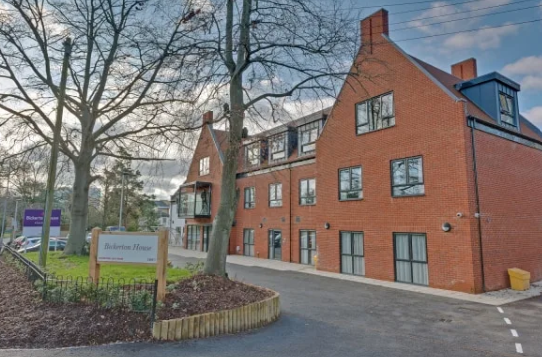
It is NOT possible to take an ordinary care home, paint some coloured railings, and say, "This place is dementia friendly." Dementia affects how individuals perceive space, light, colour, sound, pattern, and movement. To be successful, the environment must support these changes rather than contradicting them. Here’s what makes dementia construction different from general care home building, broken down by every element that matters.
1. Layout & Way Finding
Residents with dementia have reduced spatial awareness, will struggle to remember recent events, and may also have trouble processing new environments. In the past, an individual may have been able to walk around their house for decades, but when entering a care home environment, they can get lost within a few minutes. The way a person navigates a care home should be made easier.
How we do things differently:
• Looped corridors (never end up in a dead end), with no crossing paths, and/or no similar-looking corridors leading into the same area
• Direct lines of sight from bedroom doors to common areas (if possible). If residents can view the dining area/lounge, etc., from their bedrooms, then they are much more likely to find it unassisted
• Different colored zones/different colour schemes/artwork/furniture to help residents identify where they are
• Personalised entranceways to each bedroom (memory box/photo display/objects, etc.) so residents can identify which room is theirs
• Clear signs, written and pictorial, located at eye level. Signage will be clear, readable, contrasting and easy to read for residents
• Toilets need to stand out from all other doors in the building (different colour/handle/symbols/pictograms, etc.). A toilet door being easily recognisable is a simple and effective method of reducing anxiety and disorientation
• Kitchens/dining areas/activity areas will be placed in locations that allow residents to see/hear/smell activities occurring (cooking smells/individuals eating/conversation)
2. Lighting
Lighting in a dementia care home does not refer to how brightly lit it is. Rather, it refers to how lighting affects the residents' perceptions/moods/sleep and behavior. Inappropriately designed lighting can lead to increased agitation, falls, and sundowning. Well-designed lighting can support natural sleep patterns, reduce confusion, and foster a calm environment.
We specify:
• Higher illumination than standard care settings (at least 300 lux in living areas, 500-600 lux in activity areas vs 150-200 lux in standard residential)
• Evenly distributed lighting (no shadows/no black spots); shadows on floors can be seen as holes/steps/obstacles
• Circadian lighting systems (brighter/cooler tone 4000-5000k during daytime hours, transition to warmer/dimmer tone 2700-3000k in evenings). This assists in producing melatonin (the hormone that induces drowsiness) and decreases the likelihood of agitation/confusion caused by sundowning
• No down-lights that create pools or patches of light; we use even surface-mounted/cove lighting to provide consistent light
• Maximum amount of natural light through windows/placement/internal glazing/lightwells/borrowed light. Residents should be able to view vegetation/nature from all communal spaces
• Consistent lighting levels across the threshold between rooms; a drastic change from a bright corridor to a dim bedroom (and vice versa) can cause residents to halt/stop/refuse entry into another room.
3. Colour, Contrast, and Surface Specification
The specification of materials within a dementia unit should include consideration of the altered perception of visual stimuli experienced by individuals with dementia. In addition to altered perceptions regarding movement and colour, the perceived quality of surface finish is also altered. For example, smooth surfaces are often interpreted as resembling water. Flooring that exhibits a change in colour may be seen as creating an appearance of stairs. The dark area at the entrance to the adjacent rooms creates the impression of a void (hole) in the floor.
Therefore, the specification of materials should take into account all of these issues.
• Strong tonal contrast will exist between walls, floors, doors and other essential features such as grab rails; the color of the rail should be distinctively different from the wall behind which it sits; the toilet seat should contrast with the sanitary ware; the door frame should contrast with its surround; the edge of furniture pieces should clearly contrast with the color of the floor.
• No reflective or shiny flooring. Only use flooring products with matt finishes. Examples of flooring products that create a "standing water" illusion when viewed by someone with dementia include high-gloss vinyl, polished concrete, and wet-look laminate.
• No patterned flooring, wallpaper, window treatments, or upholstery. Large geometric patterns can give the impression that they are moving/shifted, thereby causing visual distress and discomfort.
• Consistent colouring of flooring at every threshold. When transitioning from a lighter-coloured hallway floor to a darker-coloured bedroom floor, there appears to be a drop-off in level, and therefore many people either trip over their own feet or simply avoid stepping over the transition.
• Familiar-feeling domestic-type fixtures. Lever tap designs that resemble traditional taps, light switch designs that resemble standard light switches, and door handle designs that operate in a manner consistent with standard door handle operation. Fixtures that do not conform to standard design elements produce disorientation and confusion among users.
• Antimicrobial, non-porous surface finishes in wet areas that still possess a feeling of warmth and familiarity. Not clinical. Coved skirting to remove dirt accumulation. Protection for walls in areas where traffic is frequent due to wheelchair and/or mobility aid use.
4. Sound and Acoustic Design
Individuals suffering from Dementia will often be extremely sensitive to excessive noise. Most people have developed the ability to "tune out" background noises such as clattering dishes, closing doors, TVs in neighbouring rooms, etc. These types of noises often create considerable levels of anxiety, disorientation, and frustration in individuals with Dementia.
The building we design:
• Acoustic Absorption in Ceilings, Walls, and Flooring; to minimise reverberations and background noise.
• A series of smaller communal living spaces, instead of one large area -- lounge space for 6-8 residents is repeatedly proven to create positive results compared to an individual large area containing 20-30 residents.
• Rooms/retreat areas incorporated into our layouts; spaces where residents can go (or be directed to), if experiencing feelings of being overwhelmed.
• Softened closure on all doorways; rubber bumpering around kitchen and laundry equipment; sound barriers separating noisy servicing areas (kitchen, laundry, mechanical rooms) from resident-facing areas.
• Washers and dryers are isolated; the noise and vibrations generated from these devices can generate great stress.
5. Design for Dementia Care Homes Should Balance Safety with Freedom
While all facilities providing long term care have to provide a level of safety (i.e., locking up certain areas of the facility) people with dementia often view those same locks as restrictions. This can result in feelings of confinement and agitation which may also increase anxiety and stress levels.
How We Approach Design
• exit doors are painted to match their surroundings, this could be through murals, wallpaper or other methods to reduce the visual impact of the door without closing off the doorway
• wandermanagement technology built into the physical building allows staff to receive silent notifications when a resident approaches a perimeter boundary while not alerting the resident themselves
• coded key pads installed on each door frame so that staff can access easily yet remain out of sight from the residents
• safe outdoor spaces that allow free roaming by residents; i.e. "walking loop" type gardens that always bring you back to the main entry/exit of the building
• natural-looking perimeter boundaries such as dense planting, hedges, fences, etc. versus institutional metal railings or highly visible barriers.
Our ultimate objective is to create an atmosphere where freedom feels safe.
Recent Blogs
- Fire Safety and Sprinklers in Care Homes
- Grey Belt and Care Home Planning: What the 2026 NPPF Changes Mean for Developers
- The Care Home FF&E Guide: What It Costs, What CQC Requires, and Where Developers Underbudget
- CQC Registration for a New Care Home: The Full Process, Timeline, and What Goes Wrong
- Care Home Development Finance Explained: Senior Debt, Mezzanine, and Forward Funding