Berkshire · In partnership with LAP Architects

Care Home Architects in Berkshire

Care home design by LAP Architects + Interior Designers Ltd, a RIBA Chartered Practice. Costed and built by Care Home Builders.

Berkshire looks like one county, but it's run by six councils, each with its own planning rules and its own care market. A site in Windsor, one near Newbury and one in Slough can need three very different care homes.

So we work with LAP from day one. LAP designs the scheme. Our quantity surveyors cost it at every stage. We build it. You find out whether the scheme works before you apply for planning, not after.

LAP ArchitectsRIBA Chartered Practice no. 3977P
Lead architect S GencoARB registration no. 074578B
Getting startedFirst conversation free

Care Home Builders is a care home construction company, not an architecture practice. Design on our projects is led by our lead design partner, LAP Architects. Where a project needs it, we may bring in another ARB-registered practice with care home experience. You can check any architect on the Architects Register.

Your team

Who Designs and Builds Your Berkshire Care Home

The design

LAP Architects

A RIBA Chartered Practice led by directors A Hill and S Genco, both RIBA Chartered Architects. LAP's care home work includes Lodge Lane in Collier Row, a 92-bed residential home with a high-dependency wing, and Silverwoods in Thorrington, a 72-bed residential home.

LAP is based in Chelmsford, Essex, not Berkshire. What counts most on a care home is experience of the building type, the planning case and the cost. For each Berkshire scheme, we agree at the start who will design it, and you'll know before you appoint anyone.

Meet LAP and see their care home projects →
The cost and the build

Care Home Builders

Our quantity surveyors cost the design at concept, planning and technical design. So you know what the home will cost to build before you commit to the next stage.

Then we build it, under one contract if you want it. Our Berkshire work includes a 12-bedroom extension built next to a home that stayed open.

Care home builders in Berkshire →

Our care home work in Berkshire

This is a Care Home Builders project, not an LAP design.

Start here

Where Are You Starting From?

Each starting point needs different checks. Pick the one that sounds like you, and you'll know what to send us and what you'll get back.

Landowners

I own land or a site

Send us
The postcode, a site plan and any planning history.
We check
Who decides planning, the main constraints, access and services.
You get
A view on whether a care home could work there, and roughly how big.

In Berkshire: Six councils decide planning in Berkshire, so start with the postcode.

Start with your site →
Care home operators

I run a home and want more beds

Send us
Your current plans, bed numbers and CQC registration.
We check
Where a new wing could go, fire routes, lifts, drainage and how to build around residents.
You get
Extension options, with a first cost range for each.

In Berkshire: Nursing and dementia nursing are the common gap across Berkshire's councils.

Start with your home →
Buyers

I'm buying a building to convert

Send us
The sales details and any floor plans, before you exchange.
We check
Stairs, room sizes, space for wet rooms and a lift, fire safety and planning use.
You get
A clear answer: convert, keep part and extend, or walk away.

In Berkshire: Near the River Lambourn, nutrient rules apply to new care homes too.

Start with the building →
Investors and developers

I'm comparing areas to build in

Send us
Your target bed numbers, the type of care and the areas you are looking at.
We check
What each council says it needs, and the planning rules that add time or cost.
You get
A short comparison, so you know where to look first.

In Berkshire: Care home beds per person vary more than threefold, from Bracknell Forest to Wokingham.

Start with your brief →
Local need

What Kind of Care Home Does Berkshire Need?

Berkshire has no county council. Each of the six councils plans its own care market, and the number of care home beds varies hugely between them. In 2023, the Royal Borough of Windsor and Maidenhead compared all six:

Care home beds per 100,000 peopleEngland average (1,089)

Care home beds per 100,000 people in each Berkshire council area, compared with England
CouncilCare home beds per 100,000 people (England: 1,089)Care home beds
Wokingham1,1511,453
Windsor and Maidenhead1,0591,226
Reading735926
West Berkshire726891
Slough506539
Bracknell Forest343317

Source: Royal Borough of Windsor and Maidenhead, Market Sustainability Plan, March 2023. Beds per 100,000 people of all ages, so areas with younger populations, such as Slough, will show lower figures.

Nursing and dementia are the gaps

Wokingham reports a lack of nursing dementia beds. Windsor and Maidenhead sees more demand for nursing than residential. Bracknell Forest calls its complex nursing capacity "significantly low".

Bracknell Forest and Slough have the fewest beds

Bracknell Forest has about a third of the England rate. Its Local Plan allocates sites for 126 nursing home beds and 175 extra care units.

Wokingham and Windsor are well supplied

But much of it is aimed at self-funders. Wokingham says its market is "congested" with homes for self-funders, while affordable beds are short.

These figures are from 2023 and will change. We check the latest position with the relevant council at feasibility, before any design money is spent.

What a nursing or dementia brief means for the design

Complex nursing and dementia care need a different building, not just more staff. Residents need more help to move, and people living with dementia need layouts that are easy to understand.

All of that costs more per bed. Our QSs price it from the first layout, so the care case and the build cost are tested together. Room sizes and space standards

  • Bigger bedrooms and en-suite wet rooms with space for a hoist and two carers
  • Wider corridors and doors, and at least one bed-sized lift
  • Short, clear routes with no dead ends, good daylight and colour contrast
  • Safe gardens that residents can reach on their own
  • Staff bases placed so carers can see and reach rooms quickly, day and night
Planning

Designing Around Berkshire's Planning Rules

Not every rule applies to every site. The council, the site's history and its designations decide which ones matter. These come up most often.

About 82% of the Royal Borough

Green Belt

Most of east Berkshire is Metropolitan Green Belt, including about 82% of Windsor and Maidenhead. A new care home on open Green Belt land is hard to get approved. Extensions, replacement buildings and sites that may count as grey belt have a better chance. Grey belt guide

400 m and 5 km zones

Thames Basin Heaths

Protected heathland runs through Bracknell Forest, Wokingham and the Ascot side of Windsor and Maidenhead. Care homes are judged case by case with Natural England. Staff flats are treated like ordinary homes and usually pay towards mitigation.

Three-quarters of West Berkshire

North Wessex Downs National Landscape

Around three-quarters of West Berkshire is in the North Wessex Downs. Sites in or next to it get extra scrutiny on scale, materials, lighting and landscaping.

Lambourn catchment

River Lambourn and nutrient neutrality

Natural England's advice on the River Lambourn covers all overnight accommodation, including care homes. In its catchment, a new home may have to show it won't add phosphates to the river. That can mean extra drainage design and cost.

"More vulnerable" use

Thames, Kennet and Loddon flooding

Parts of Maidenhead, Windsor, Datchet, Reading and Newbury sit in river floodplains. Care homes count as a more vulnerable use, so you'll need a flood risk assessment. The design usually has to keep bedrooms above flood level and give residents a safe way out.

Want the full planning picture? See our care home planning permission guide.

Your council

Your Council at a Glance

Planning and care are often run by different councils. Here's who does what in Berkshire, and what's changing.

Who decides planning

  • Bracknell Forest
  • Reading
  • Slough
  • West Berkshire
  • Windsor and Maidenhead
  • Wokingham

Find the council for any postcode on GOV.UK →

Who arranges care

Berkshire has no county council. Each of the six councils arranges its own care.

Their commissioners know where beds are short. A scheme that meets a need they've named has a stronger planning case.

Rules that often apply here

  • Green Belt
  • Thames Basin Heaths
  • North Wessex Downs
  • River Lambourn nutrients
  • River flooding

Not every rule applies to every site. The postcode and the site's history decide which ones matter.

What's changing

From April 2028, West Berkshire is due to join South Oxfordshire and the Vale of White Horse in a new Ridgeway council.

Local plans and care priorities can change with new councils, so we check the latest position at feasibility.

Ask for pre-application advice before you apply. Most councils offer it for a fee. It's the cheapest way to test a scheme before paying for a full application, and LAP can prepare the drawings for it.

Your project

New Build, Extension or Conversion in Berkshire

Urban and edge-of-town sites

New build

Urban sites in Reading, Slough and Bracknell often need three or four storeys, with lifts, deliveries and outdoor space planned in from the start. And on any Berkshire site, think about staff parking and shift changes early. You're competing with other Thames Valley employers for staff.

The design challenge: the best layout isn't always the one with the most beds. It's the one that meets the care brief at a cost that works.

Care home build costs →
Home already open

Extension

Adding a wing to an open home can be cheaper and quicker than buying a new site. In the Green Belt, an extension that isn't out of proportion with the original building may be allowed when a new home wouldn't.

The design challenge: linking to the existing corridors, floor levels and fire strategy, and building in phases while residents stay. An extension can also trigger upgrades elsewhere.

Our Berkshire extension →
Office, hotel or house

Conversion

An older office near Reading may offer a big floor area, but deep floor plates make it hard to give every bedroom daylight. Hotel bathrooms are rarely big enough for hoists. Large houses have stairs and level changes.

The design challenge: LAP can compare converting the building with keeping part of it and adding a new bedroom wing. If conversion doesn't pay, it's better to know before you buy.

Converting a property into a care home →
Judge a scheme by its total cost per usable bed, not the cheapest build rate per square metre.

A planning drawing isn't a price. A scheme can look simple on paper and still need expensive groundworks, structural changes, drainage work or new power connections. Our QSs review the floor area, specification, structure and services as LAP develops the design.

Allow separately for land, fees, surveys, planning costs, furniture and equipment, and contingency.

How long it takes

From First Sketch to Opening Day

A new care home takes years, not months. Here's a realistic picture, so you can plan funding and staffing around it.

  1. Feasibility

    3 to 6 weeks

    Layouts, a realistic bed count, the site constraints and a first cost range.

  2. Pre-application advice

    6 to 12 weeks

    The council's early view, before you pay for a full application.

  3. Planning application

    13-week target

    Most new care homes are major applications. In practice, decisions often take longer.

  4. Technical design and pricing

    3 to 6 months

    Structure, fire strategy and services designed, and the build price agreed.

  5. Build

    12 to 24 months

    For a new home. Extensions are usually quicker, but working around residents adds time.

  6. CQC registration

    Before handover

    The operator registers the home with the CQC. Apply early, as it can take months.

What can add time in Berkshire

  • River LambournNear the Lambourn, nutrient mitigation must be in place before permission.
  • Thames Basin HeathsIn the east of the county, green space (SANG) must be secured first.
  • West Berkshire in 2028Applications in progress at April 2028 pass to the new Ridgeway council.

These are typical ranges, not promises. We give you a timeline for your own site at the first meeting.

Before you buy

Before You Buy a Berkshire Site: What We Check

The first conversation is free. We agree the scope and fee for any feasibility work before it starts. A feasibility study isn't a guarantee of planning permission, and it doesn't replace legal or technical due diligence.

Discuss a Berkshire site before you buy
  • Which of the six councils the site is in, and what that council says it needs
  • Green Belt status, and whether the site could count as grey belt
  • Distance from the Thames Basin Heaths, or whether it drains to the River Lambourn
  • North Wessex Downs, conservation area or listed building
  • Flood zone, especially near the Thames, Kennet and Loddon
  • Access, staff parking and room for deliveries and ambulances
  • An indicative bed count and layout from LAP, and a first cost range from our QSs

Where We Work in Berkshire

  • Reading
  • Wokingham
  • Bracknell
  • Maidenhead
  • Windsor
  • Ascot
  • Slough
  • Newbury
  • Thatcham
  • Hungerford
  • Twyford
  • Crowthorne
  • Sandhurst
FAQ

Care Home Architects in Berkshire: Your Questions

Can't see your question? Ask us. The first conversation is free.

Ask a question

Is LAP Architects based in Berkshire?

No. LAP is based in Chelmsford, Essex. For each Berkshire scheme, we agree at the start whether LAP or another ARB-registered practice with care home experience will design it. You'll know who is designing your home before you appoint anyone.

Are Care Home Builders architects?

No. We're a care home construction company. Design on our projects is carried out by ARB-registered architects. Our lead design partner is LAP Architects + Interior Designers Ltd, a RIBA Chartered Practice.

What kind of care home does Berkshire need?

It depends on the council. Across Berkshire, the councils' own reports point to nursing and dementia nursing care rather than standard residential care. Bracknell Forest and Slough have the fewest beds per head. We check the latest position with the relevant council at feasibility.

Can I build a care home on Green Belt land in Berkshire?

Sometimes, but it's hard. Most of east Berkshire is Metropolitan Green Belt, including about 82% of Windsor and Maidenhead. Extensions, replacement buildings and sites that may count as grey belt have a better chance than open land.

Does nutrient neutrality affect care homes in West Berkshire?

It can. Natural England's advice on the River Lambourn covers care homes. If your site drains to the river, you may need to show the home won't add phosphates. Check this before you buy.

Can the architect guarantee my target bed count?

No. The number of beds depends on the site, planning, access, the care brief and the technical design. A feasibility study gives you a realistic figure and shows which assumptions still need testing.

Can I pay for a feasibility study without committing to the build?

Yes. Feasibility is a separate stage. You decide whether to go further once you've seen the layouts and the costs.

How much does care home design cost?

It depends on the building, the design stage and which consultants are needed. The first conversation is free. We agree the scope and fee for any design or cost work before it starts.

Discuss your Berkshire care home

Send us the site postcode, the property details or any drawings you have. Tell us how many beds and what type of care you have in mind. The first conversation is free, and any design or cost work is scoped and quoted before it starts.

info@carehomebuilders.co.uk

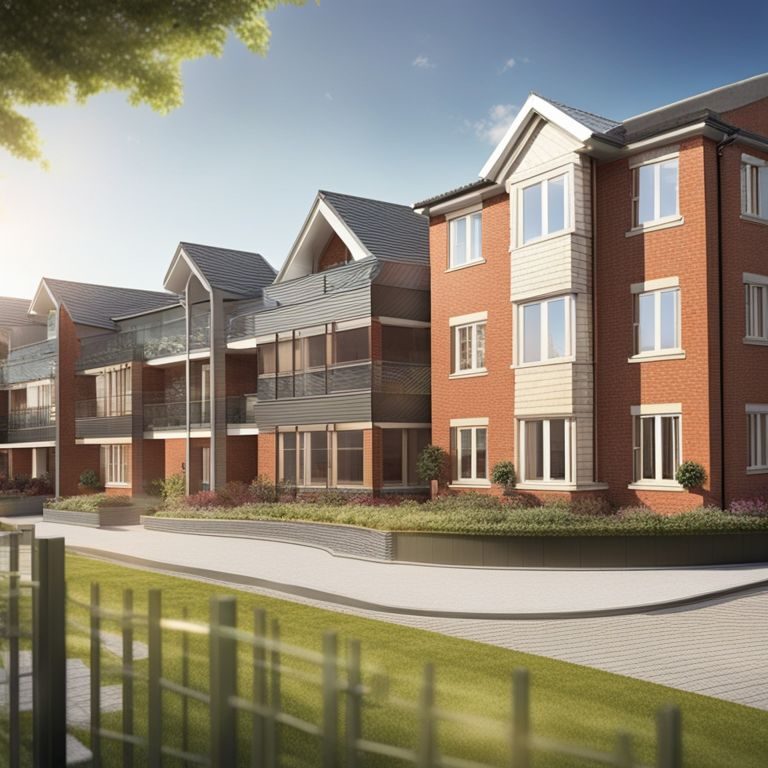
Three-storey brick care home with balconies and landscaped gardens
Have you had any plans drawn up?

This site is protected by reCAPTCHA and the Google Privacy Policy and Terms of Service apply.