How to Extend an Existing Care Home in the UK: Planning, Cost, and Process (2026)
June 17, 2026
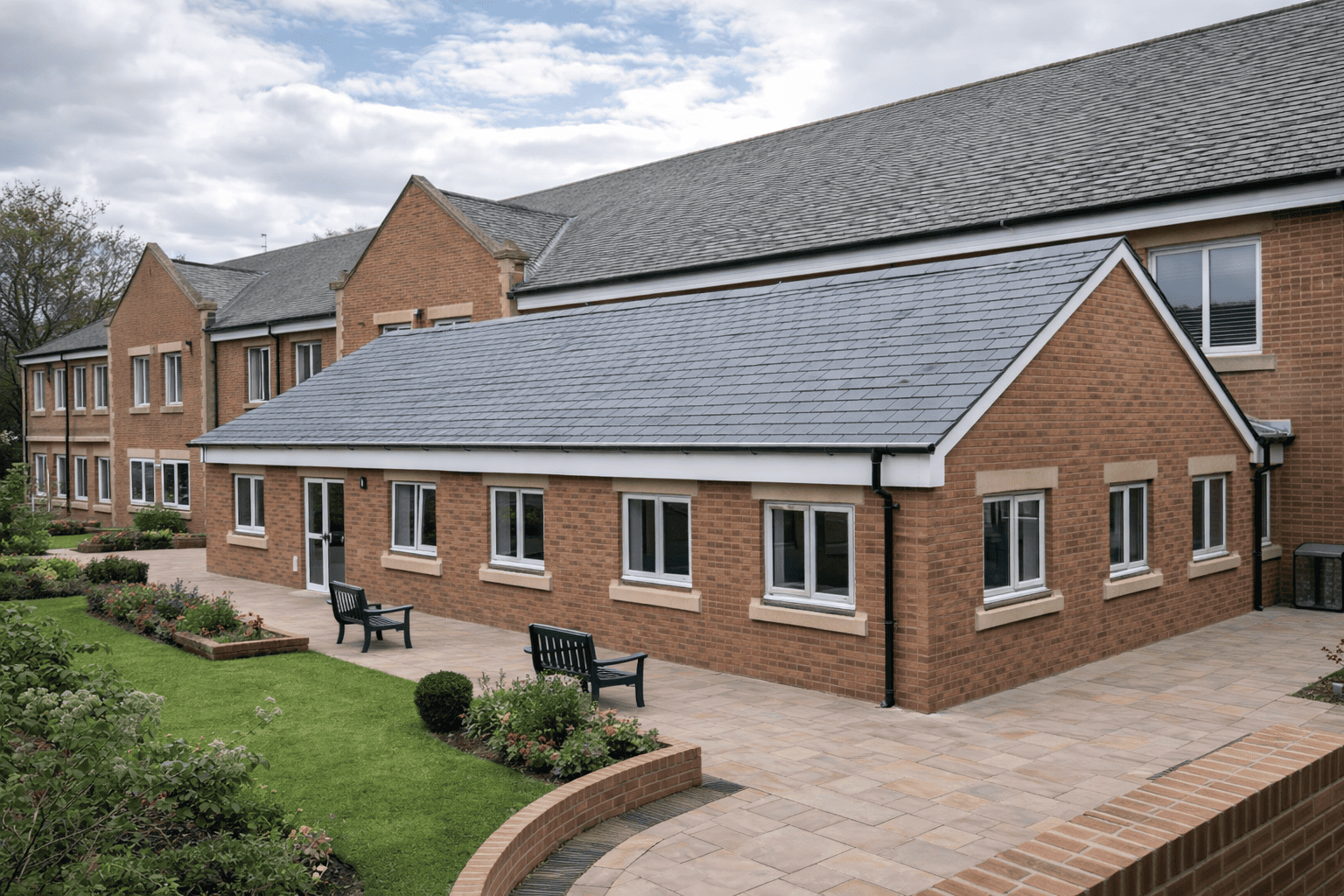
Most operators increase capacity by extending their existing care homes rather than building new ones.
Last year, care home extensions in the UK delivered more new beds than new-build projects, as detailed in our guide to buying versus building. If your home operates below the efficient scale or your site has room to expand, extending is often a faster and lower-risk way to increase capacity. However, extensions involve different planning requirements, construction processes, and cost structures compared to standalone new builds.
This guide covers how care home extensions actually work in 2026: the planning route, what changes when you build on a live site, what it really costs against building new, and where the savings genuinely come from. It isn’t where most people assume.
|
6,551
beds added to UK care homes through extensions last year — more than new-build homes created combined
|
79%
of UK care homes are now over 20 years old, and many sit below an efficient operating scale
|
12–18 months
typical programme for a care home extension, from feasibility to opening the new beds
|
Why Extend Rather Than Build New?
The case for extending goes beyond convenience; market data and care home economics both support this approach.
The Market Is Pushing Operators Toward Their Existing Sites
According to Knight Frank’s Healthcare Development Opportunities Report 2026, 79% of UK care homes are now over 20 years old, and 38% were converted from another use entirely — meaning a large share of the existing stock was never purpose-built in the first place.
At the same time, new-build planning approvals fell in 2026 compared with 2025, narrowing the development pipeline just as demand keeps rising.
Knight Frank’s own Development Hotspots Index names Berkshire as one of the three strongest areas in the UK for care home development, which puts the South East, the region we build in, directly in the path of that demand.
Building a single new home does not address these challenges, but expanding existing sites can make a significant impact.
It’s the Fastest Way to Reach the Efficient Scale
Our guide to ideal care home sizing explains why 60–80 beds is the most profitable range for UK care homes. Many existing homes fall below this, with a national average of approximately 47 beds.
For operators of 45 or 50-bed homes, extending the current facility is typically the fastest way to reach 65–70 beds. Existing infrastructure such as the kitchen, laundry, lift, management, and reception are already in place and operational.
A 20-bed extension to a 50-bed home achieves the optimal size without the need to fund or staff a second full set of fixed infrastructure.
You’ve Already Cleared the Hardest Part of Planning
A brand-new C2 development has to prove the principle of the use from scratch: that care accommodation is needed on that site, in that location, at that scale.
An existing care home has already met these requirements: it is operational, registered, accepted by the local authority, and familiar to neighbors. While an extension still requires a full planning application, the focus shifts from justifying the use to addressing scale and design.
The Planning Route for a Care Home Extension
There are virtually no permitted development rights for extending an institutional (C2) building at this scale. Almost every care home extension needs a full planning application, just as a change of use to C2 does.
The key difference lies in the focus of the application. An extension for an established, operational care home typically needs to address:
- A Design and Access Statement focused on the extension itself, scale, massing, and how it reads against the existing building, rather than a justification for the use of the existing at all
- A transport assessment scaled to the increase in beds, extra staff shifts, visitor trips, and deliveries — rather than a full traffic study built from zero
- Residential amenity: daylight, overlooking, and outlook for neighbouring properties near the new wing, usually the single biggest source of local objection
- Parking provision for the additional beds and staff, checked against current local authority standards, which may have tightened since the original permission was granted.
- A heritage statement if the building is listed or sits in a conservation area
- Section 106 or CIL contributions, recalculated against the increase in floorspace and beds.
Seek pre-application advice before commissioning drawings. Planning officers can clarify whether your local authority treats added beds the same as added floorspace for CIL purposes, and whether a new transport assessment is required or an update to the original will suffice.
It gets harder in a few specific situations: Green Belt sites, conservation areas, listed buildings, and homes with a history of neighbour objections from when they were first built or converted. None of these rules out an extension. They just mean the design and access statement has to work harder.
What Changes When You Build on a Live Site
Check the Back-of-House Capacity Before You Draw Anything
Before beginning design work, assess the capacity of the existing kitchen, laundry, lift, and electrical supply relative to the planned increase in beds. For example, a kitchen designed for 50 residents may be at capacity with 55; increasing to 70 without upgrades can lead to issues identified during CQC inspections rather than in architectural plans.
The same consideration applies to the electrical supply, heating plant, and drainage capacity. Insufficient capacity may only become apparent once the extension is fully operational.
The Fire Strategy Covers the Whole Building, Not Just the New Wing
Adding a wing alters travel distances, escape routes, and compartmentation for both the existing and new structures. A fire engineer should review the fire strategy for the entire building, not just the new section.
The connection between old and new needs HTM 60-compliant fire doors and a compartmentation line that doesn’t compromise either side.
Structural Connection Is Rarely as Simple as It Looks on Paper
Floor heights, foundation types, and movement joints between existing and new structures often do not align precisely. Unplanned costs frequently arise here. Conduct a structural survey of the connection point before finalizing the design.
The Build Still Has to Happen Around Your Residents
The same phasing discipline that applies to any live refurbishment applies here; we’ve covered the details of that in our guides to the most common refurbishment mistakes and types of care home refurbishment. The wing furthest from resident areas can usually be built with minimal disruption right up until the connection point, that’s where dust, noise, and access control need the most attention.
What It Actually Costs — and Where the Saving Really Comes From
Construction cost per added bed runs at roughly the same rate per square metre as a new build of equivalent specification — figures we set out in full in how much it costs to build a care home. Bedrooms and en-suites cost what they cost, whether they’re freestanding or attached.
The savings aren’t in the construction rate. It’s in two things: you’re not buying land, and, if there’s genuine spare capacity, you’re not duplicating the kitchen, laundry, lift, dining, and lounge space that a standalone scheme has to pay for in full. A bedroom wing tied into the existing back-of-house only needs to build the bedroom, en-suite, and a share of the corridor: roughly half the floor area per bed of a complete standalone home.
This advantage diminishes quickly if the existing kitchen, laundry, dining room, or parking are already at or near capacity. Extending these facilities later does not avoid duplication and often incurs higher costs, as the work must be completed on an occupied site rather than a vacant one.
The most common mistake in extension projects is assuming the existing kitchen, laundry, and M&E systems can support additional beds without verification. Always assess back-of-house capacity before commissioning any drawings.
Construction cost per added bed, assuming the new wing only needs to build a bedroom, en-suite, and a proportional share of corridor not a full share of communal and back-of-house space:
|
Specification
|
Cost per m² (2026)
|
Construction cost per added bed*
|
| Standard | £2,000–£2,400 | £50,000–£75,000 |
| Mid-Range | £2,400–£2,800 | £58,000–£90,000 |
| High Specification | £2,800–£3,200 | £73,000–£110,000 |
*Construction only. Excludes land (not required) and assumes existing kitchen, laundry, lift, and communal space have spare capacity. If they don’t, the cost stack moves toward the full new-build figures.
Worked Example: Extending a 50-Bed Home to 70 Beds, South East
For illustration, consider a 50-bed mid-range home in the South East extending by 20 beds to achieve the optimal 60–80 bed range.
|
Line Item
|
Figure
|
| Construction: 20 beds × 28m² × £3,000/m² (South East mid-range) | £1,680,000 |
| Tie-in works: M&E connection, fire compartmentation, structural connection | £200,000 |
| Professional fees (14% of construction contract) | £235,000 |
| Contingency (15% — in line with our guidance for building conversions) | £252,000 |
| FF&E (20 beds × £9,500 per bed) | £190,000 |
| Finance (12-month programme, c.£2.5m facility at 7%) | £90,000 |
| Land | £0 — site already owned |
| TOTAL DEVELOPMENT COST | £2,647,000 (≈£2.65m) |
| Per added bed | £132,500 |
This scenario assumes the existing kitchen, laundry, lift, and communal space can accommodate 20 additional residents. A standalone 20-bed scheme would require its own site (typically £500,000–£1,500,000+ for a small plot in the South East), as well as a full kitchen, laundry, and lift for a small number of beds. The main advantage of extending is avoiding duplicate investment in fixed infrastructure.
Extending vs Building New: Side by Side
|
Factor
|
Extending an Existing Home
|
Building New
|
| Land | None needed — site already owned | Must be acquired: £25k–£100k+ per bed depending on region |
| Planning route | Full application, but the use is already established | Full application, must prove need for the use from scratch |
| Back-of-house | Reuses existing kitchen, laundry, lift, plant — if spare capacity exists | Built from scratch in full |
| Time to opening beds | 12–18 months typical | 30+ months from land purchase |
| Fill-up period | Days to weeks — added to a trading, referred home | 12–18 months to reach stable occupancy |
| CQC process | Usually a variation of existing registration | New registration from scratch |
| Design fit | Constrained by existing structure and floor levels | Built exactly to your operating model |
| Disruption | Live site, phased works around residents | None — vacant site |
Where Extensions Go Wrong
- Assuming the planning application is a formality. Neighbors who have accepted a 50-bed home for years may still strongly object to a 20-bed extension that affects their property. An established use does not guarantee approval for a specific design. Omitting a structural survey at the connection point. Unplanned costs frequently arise here and can be avoided by conducting a survey before finalizing the design.
- Designing the new wing to outdated standards. Current requirements for Part M, bedroom sizes, and fire safety apply fully to the new wing, regardless of the standards used for the original building.
- Underestimating disruption at the connection point. This area often experiences the most dust, noise, and access issues, and is frequently used by residents.
- Assuming the CQC variation is a formality. Inadequate documentation can delay the opening of new beds by weeks, even if construction is completed on schedule.
Frequently Asked Questions
Do I need planning permission to extend a care home?
Yes. There are virtually no permitted development rights for extending a C2 (Residential Institutions) building at this scale, so almost every extension needs a full planning application, even though the use itself doesn’t change. The difference from a new-build or conversion application is the argument: you’re addressing scale and design, not the principle of the use.
How long does a care home extension take?
Most extensions run 12–18 months from feasibility through to opening the new beds, roughly half the 30+ months a standalone new build typically takes from land purchase to stabilised occupancy. Beds added to an established, trading home with a referral network and a CQC rating also tend to fill in weeks, rather than the 12–18 months it takes a brand-new home to reach stable occupancy.
Is it cheaper to extend a care home than to build a new one?
Usually, yes, but the saving comes from not buying land and not duplicating a kitchen, laundry, lift, and management structure that already exist, not from a lower construction rate per square metre. With genuine spare back-of-house capacity, total cost per added bed can run as low as £130,000–£190,000 in the South East, against £230,000–£270,000 all-in for a standalone new build. If the kitchen, laundry, or communal space is already at capacity, the savings shrink fast.
Can a care home be extended while residents are still living there?
Yes, most extensions are built this way, since closing a care home isn’t realistic. The approach is the same phased, zoned construction used for any live refurbishment, with extra attention paid to the connection point between the old and new structures, since that’s where disruption concentrates.
Does extending a care home need a new CQC registration?
Usually not a new registration, it’s typically handled as a variation to the existing registration, covering the change in bed numbers and premises. It still needs proper documentation (fire strategy, accessibility audit, M&E commissioning records) before the new beds can be occupied, and a poorly prepared variation can delay opening even after construction finishes on time.
How many beds can I add to an existing care home?
It depends on site size, planning constraints, and critically, how much spare capacity your kitchen, laundry, lift, and communal areas actually have. We assess all of these before giving a number; assuming the existing infrastructure can absorb whatever the site will physically hold is the single most common mistake on extension projects.
Extending an Existing Care Home?
At Care Home Builders, we start every extension project with a capacity assessment, checking what your existing kitchen, laundry, M&E systems, and structure can actually handle before a single drawing is commissioned. We deliver care home extensions and refurbishments throughout London and the South East. If you’re considering adding beds to a home you already run, we’d like to hear from you.
Recent Blogs
- CQC Registration for a New Care Home: The Full Process, Timeline, and What Goes Wrong
- Care Home Development Finance Explained: Senior Debt, Mezzanine, and Forward Funding
- How Your Building Design Affects Staffing Costs — and Why It’s Worth More Than You Think
- Care Home Insurance and Warranties: What Every Developer and Investor Needs to Know
- Care Home Build Cost vs Fee Income: The Numbers That Actually Matter for Investors